
Authentic Spaghetti Carbonara
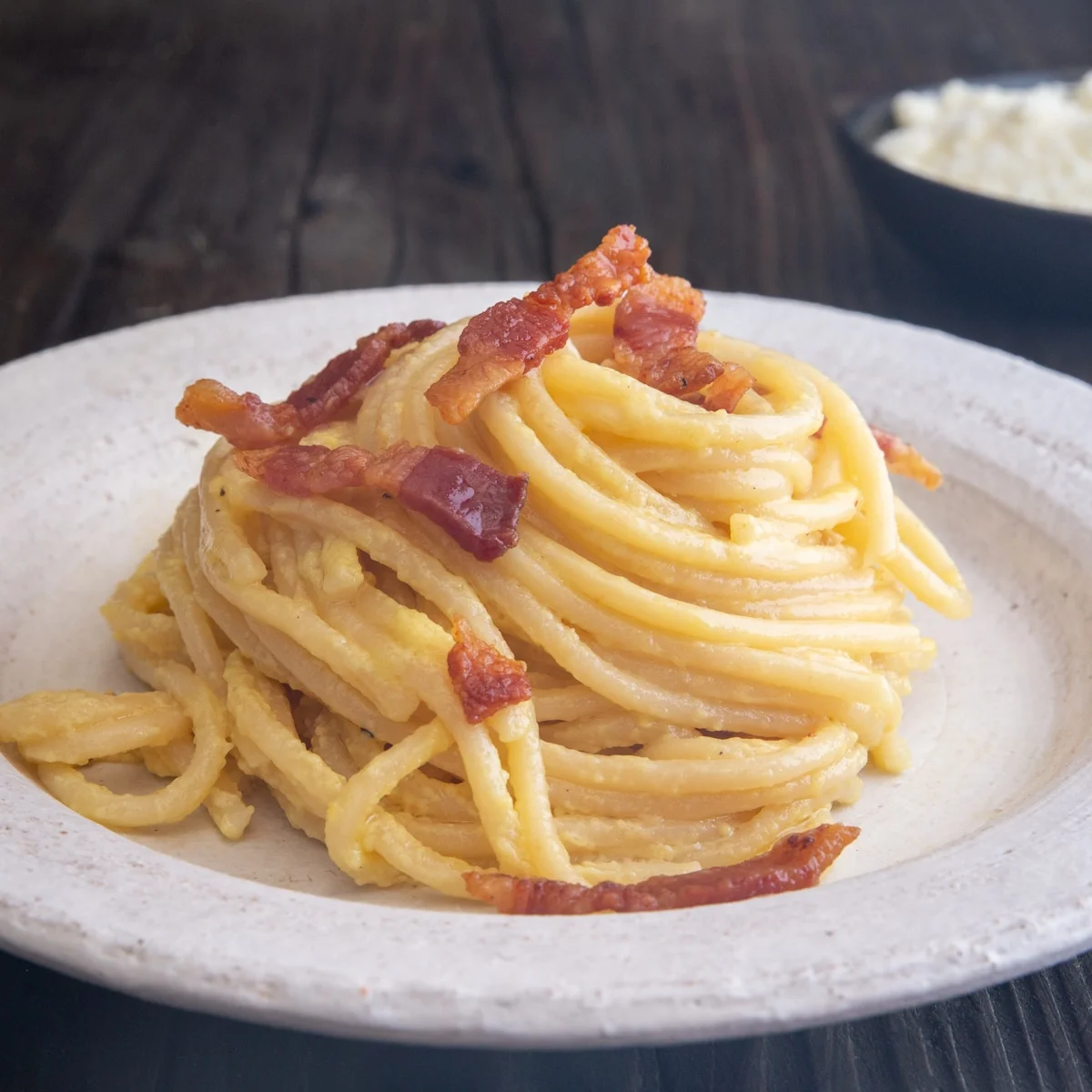
Authentic spaghetti carbonara is a quick Italian pasta dish coated in a creamy sauce of egg yolks and Pecorino, with crisp-edged guanciale and plenty of black pepper. The sauce comes together off the heat, making it a satisfying meal with a short ingredient list.
Ingredients
- 600 g cooked (about 300 g dry; about 10 oz dry)spaghetti
- 4large egg yolks
- about 100 g (1 cup)freshly grated Pecorino
- 2.5–5 ml (½–1 teaspoon)black pepper, freshly ground if possible
- 30 ml (2 tablespoons)olive oil
- 120–180 ml (½–¾ cup)guanciale
- 15–20 g (2–3 tablespoons)freshly grated Pecorino
- A littlesalt, for the pasta water
Instructions
- 1
Boil the pasta
Bring a large pot of water to a rolling boil, add a little salt and the spaghetti, then stir and cook until just beyond al dente.
- 2
Mix the sauce
Beat the egg yolks in a small or medium bowl. Add 1 cup of grated Pecorino and the pepper, then beat to combine. Just before using, mix in 80–120 ml (⅓–½ cup) hot pasta water.
- 3
Cook the guanciale
Cut the guanciale into short, thin strips. Heat the olive oil and guanciale in a large pan over medium heat until cooked to your preferred crispness. Transfer it to a clean plate, leaving the oil and fat in the pan.
- 4
Toss and serve
Over medium-high heat, add the pasta to the pan with 80–120 ml (⅓–½ cup) hot pasta water and stir. Take the pan off the heat, add the egg mixture and combine quickly. Pour in another 80–120 ml hot, not boiling, pasta water and toss continuously until creamy and well mixed. Fold in the guanciale gently and serve straight away with the remaining grated Pecorino and black pepper.
What is spaghetti carbonara?
Carbonara is a Roman pasta dish traditionally made with pasta, cured pork, eggs, hard cheese and black pepper. Its sauce is made by combining eggs, cheese and starchy pasta water rather than cooking a separate cream sauce.
This version uses guanciale, cured pork cheek, and Pecorino for a savoury, peppery finish. The egg mixture is added off the heat so it coats the pasta without turning into scrambled eggs.
Nutrition and macros by portion
The nutrition label shows one serving as written: 519 calories, 23g protein, 46g carbs, 27g fat.
| Portion | Adjustment | kcal | Protein | Carbs | Fat |
|---|---|---|---|---|---|
| Lighter | Smaller pasta portion | 363 kcal | 16g | 32g | 19g |
| This serving | As written | 519 kcal | 23g | 46g | 27g |
| Hungry | Larger pasta portion | 779 kcal | 35g | 69g | 41g |
The spaghetti supplies most of the carbohydrates, while the olive oil, guanciale and egg yolks contribute much of the fat. The eggs and Pecorino provide protein, with the guanciale adding some as well. Pair a serving with a green salad or vegetables for a more balanced plate.
The role of Pecorino
Grated Pecorino brings saltiness and a sharp, savoury flavour to the egg yolks. Finely grated cheese is easier to mix into a smooth sauce.
Keep some cheese aside for serving, as the recipe does, and add it at the table for a more pronounced finish.
Preparing the guanciale
Cut the guanciale into short, thin strips so it cooks evenly and is easy to twirl up with the spaghetti. The recipe starts it in olive oil over medium heat.
Cook it to your preferred texture, then lift it out while leaving its rendered fat and the oil in the pan. That fat helps coat the pasta and carries the guanciale's flavour through the dish.
Getting the sauce creamy
Temper the egg and cheese mixture with hot pasta water just before it goes into the pan. This loosens the mixture and helps it combine with the pasta.
Take the pan off the heat before adding the eggs, then toss continuously with more hot, but not boiling, pasta water. The sauce should look glossy and cling to the strands rather than sit in a pool.
Pasta timing and texture
Cook the spaghetti until just beyond al dente, as directed, and reserve the hot cooking water for the sauce. The pasta will be tossed again in the pan, so keep an eye on its texture while boiling.
Work promptly once the pasta is ready: the method depends on hot pasta and water to bring the sauce together. Have the egg mixture and cooked guanciale ready before draining.
Serving carbonara
Serve the pasta immediately, while the sauce is warm and creamy. Finish with the reserved Pecorino and freshly ground black pepper.
A simple green salad or lightly dressed vegetables can add freshness alongside this rich pasta. Serve them separately rather than mixing them into the carbonara.
Recipe notes & tips
- Grate the Pecorino finely so it blends more readily into the egg yolks.
- Keep a mug or jug ready for the hot pasta water before draining the spaghetti.
- Cut the guanciale into evenly sized strips to help them cook at a similar pace.
- Prepare the egg mixture before the pasta finishes cooking so you can work quickly.
- Add the second addition of pasta water gradually while tossing, watching for a creamy coating.
Variations
- More pepper: grind extra black pepper over each serving for a sharper finish.
- Pasta shape: use another long pasta shape if spaghetti is unavailable.
- Cheese balance: reserve a little more Pecorino for serving if you like a cheesier finish.
- Guanciale texture: cook the strips for less time if you prefer them less crisp.
- Pasta water: adjust the final splash gradually to reach the sauce consistency you prefer.
Common mistakes to avoid
- Adding eggs over the heat: they can set into curds; take the pan off the heat first.
- Using boiling water in the egg mixture: very hot water can make the eggs seize; use hot, not boiling, pasta water.
- Draining away all the pasta water: reserve enough to loosen and emulsify the sauce.
- Leaving the pasta to cool: toss it with the sauce promptly while it is hot.
- Removing the pan fat: keep the oil and rendered fat in the pan to coat the pasta.
How to store
Carbonara is best eaten immediately, as the sauce can thicken and the pasta soften as it sits. If needed, refrigerate leftovers in an airtight container for up to 2 days and reheat gently in a pan with a splash of water, stirring often.
Frequently asked questions
Can I make carbonara without guanciale?
Guanciale is the ingredient specified here and gives the dish its characteristic cured-pork flavour. Another cured pork may work as a substitute, though the result will differ.
Can I use pre-grated Pecorino?
Freshly grated Pecorino is called for and tends to blend smoothly into the egg mixture. If using pre-grated cheese, mix it thoroughly with the yolks and add the pasta water gradually.
Why should the pan come off the heat?
The egg mixture needs to coat the pasta without cooking into scrambled eggs. Removing the pan from the heat helps you control that process as you toss.
How much pasta water should I add?
The method uses 80–120 ml (⅓–½ cup) with the egg mixture and another 80–120 ml during tossing. Add it as directed, then judge the final consistency as you mix.
Can I prepare carbonara ahead?
It is best assembled just before serving, because the sauce relies on hot pasta and pasta water. You can grate the cheese and cut the guanciale ahead to make the final steps quicker.
Cook it from the original
This recipe comes from anitalianinmykitchen.com. Their page has the author’s own photos, notes and tips — the best place to cook it from.
Open the recipe on anitalianinmykitchen.com