
Chewy coconut biscuits
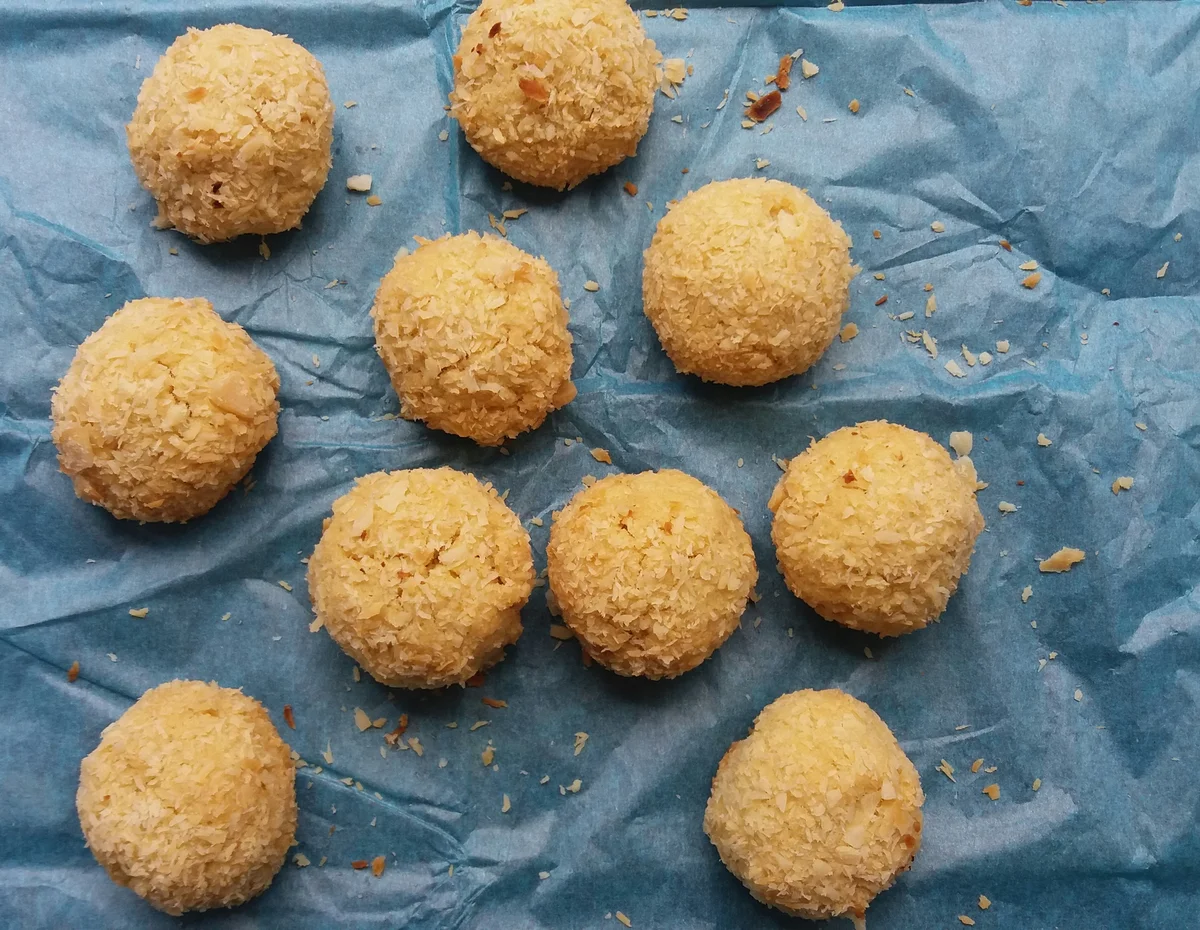
These coconut biscuits have a tender, chewy centre and a coating of desiccated coconut that turns lightly golden in the oven. They’re a straightforward bake when you want a sweet biscuit with plenty of coconut flavour.
Ingredients
- 230 g (2 cups), plus 28 g (¼ cup) for rollingdesiccated coconut
- 113 g (½ cup)margarine
- 50 g (¼ cup)sugar
- 113 g (1 cup)pastry flour
- 1egg
- 1 teaspoonvanilla essence
- ½ teaspoonbaking powder
Instructions
- 1
Heat the oven
Preheat the oven to 200°C and lightly grease a baking sheet.
- 2
Sift dry ingredients
Sift the flour and baking powder together, then set them aside.
- 3
Mix margarine and sugar
Put the margarine and sugar in a mixing bowl and mix until well combined.
- 4
Add the coconut
Mix in 230 g (2 cups) of the desiccated coconut.
- 5
Add egg and vanilla
Add the egg and vanilla essence, then mix.
- 6
Mix in the flour
Add the sifted flour and baking powder mixture, mixing until well incorporated.
- 7
Shape and coat
Scoop tablespoon-sized portions of dough and roll them into balls. Dip each ball in the remaining 28 g (¼ cup) of coconut, coating it well.
- 8
Bake until golden
Arrange the dough balls on the baking sheet and bake for about 20–25 minutes, until lightly golden.
- 9
Cool the biscuits
Leave the biscuits on the baking sheet for about 2 minutes, then transfer them to a cooling rack to cool completely.
What are coconut biscuits?
Coconut biscuits are sweet baked treats made with desiccated coconut in the dough, often with more coconut on the outside. This version uses margarine and pastry flour for a simple, soft dough, while the coating adds extra coconut flavour and texture.
The recipe doesn’t specify a particular regional tradition, so its appeal is in the familiar combination of coconut, vanilla and a lightly crisped exterior.
Nutrition and macros by portion
The nutrition label shows one serving as written: 799 calories, 9g protein, 76g carbs, 54g fat.
| Portion | Adjustment | kcal | Protein | Carbs | Fat |
|---|---|---|---|---|---|
| Lighter | Smaller biscuits | 559 kcal | 6g | 53g | 38g |
| This serving | As written | 799 kcal | 9g | 76g | 54g |
| Hungry | Larger portion | 1199 kcal | 14g | 114g | 81g |
The coconut, flour and sugar provide most of the carbohydrates, while the margarine contributes much of the fat; the egg adds a little protein. Pair a biscuit with plain yoghurt or fruit for a more balanced snack.
Why the coconut is divided
In the dough: the larger quantity gives the biscuits their coconut-rich flavour and chewy texture. Mix it in before adding the egg and vanilla.
For rolling: the remaining coconut coats the shaped dough balls, creating a textured surface that becomes lightly golden as it bakes.
Mixing the dough
Creaming: mix the margarine and sugar until evenly combined; the recipe does not require a particular volume or a long creaming time.
Combining: stir in the coconut, egg and vanilla, then add the sifted flour and baking powder. Stop once the dry ingredients are incorporated to avoid overworking the dough.
Shaping and coating
Even portions: use tablespoon-sized scoops and roll them into balls so they bake at a similar pace. If the dough sticks to your hands, work gently and keep the portions compact.
Full coating: roll each ball in the reserved coconut and check that the surface is covered before placing it on the baking sheet.
Watch the bake
The method gives a baking time of about 20–25 minutes at 200°C, even though the stated total time is 10 minutes. Allow for the longer oven time when planning, and use light golden colour as the recipe’s doneness cue.
The biscuits may still feel soft when they come out. Cooling them on the tray for about 2 minutes before moving them to a rack helps them keep their shape.
Serving and texture
Let the biscuits cool completely on a rack before serving; this gives their outside time to set while the centre stays chewy. They’re easy to serve with tea, coffee or a glass of milk.
For a balanced snack, pair a biscuit with plain yoghurt or fresh fruit rather than serving several biscuits on their own.
Recipe notes & tips
- Measure the coconut for the dough separately from the amount reserved for rolling.
- Sift the flour and baking powder together so they are evenly distributed.
- Use tablespoon-sized portions to help the biscuits bake consistently.
- Coat each dough ball thoroughly so the coconut forms an even outer layer.
- Check for a lightly golden colour, as oven performance can vary.
- Give the biscuits the full 2 minutes on the baking sheet before transferring them.
Variations
- Citrus: add finely grated lemon zest to the dough for a fresh note.
- Spice: mix a pinch of cinnamon into the sifted flour for gentle warmth.
- Chocolate: fold a small amount of chopped chocolate into the dough.
- Nutty: replace a little of the desiccated coconut with finely chopped nuts.
- Extra vanilla: add a little more vanilla essence for a stronger vanilla flavour.
Common mistakes to avoid
- Skipping the sift: flour and baking powder may not distribute evenly; sift them together before mixing.
- Using all the coconut in the dough: the balls will have no coating; reserve ¼ cup for rolling.
- Uneven portions: biscuits may bake at different rates; scoop tablespoon-sized amounts.
- Crowding the tray: biscuits can bake unevenly when packed together; leave space between the dough balls.
- Moving them too soon: warm biscuits can break; leave them on the baking sheet for about 2 minutes first.
How to store
Once completely cool, keep the biscuits in an airtight container at room temperature and use within 3–4 days. If they soften, warm them briefly in a low oven and let them cool before serving.
Frequently asked questions
How long do these coconut biscuits take to bake?
The method specifies about 20–25 minutes at 200°C, until lightly golden. The listed total time of 10 minutes does not include that oven time.
How do I know when the biscuits are done?
Look for a lightly golden colour on the outside. They may still feel soft when removed, so cool them as directed before judging their final texture.
Can I make the dough ahead?
You can prepare the dough ahead and keep it covered in the fridge, then shape and coat it before baking. Chilled dough may need a little time to soften enough to roll easily.
Can I use plain flour instead of pastry flour?
Plain flour can be used, though the texture may be a little less delicate. Keep the quantity the same and mix only until combined.
Why are my biscuits crumbly?
They may have been overbaked or the dough may not have been mixed evenly. Follow the lightly golden cue and allow the biscuits to cool on the tray before moving them.
Cook it from the original
This recipe comes from biscuitsandladles.com. Their page has the author’s own photos, notes and tips — the best place to cook it from.
Open the recipe on biscuitsandladles.com