
Baked milk custard with caramel
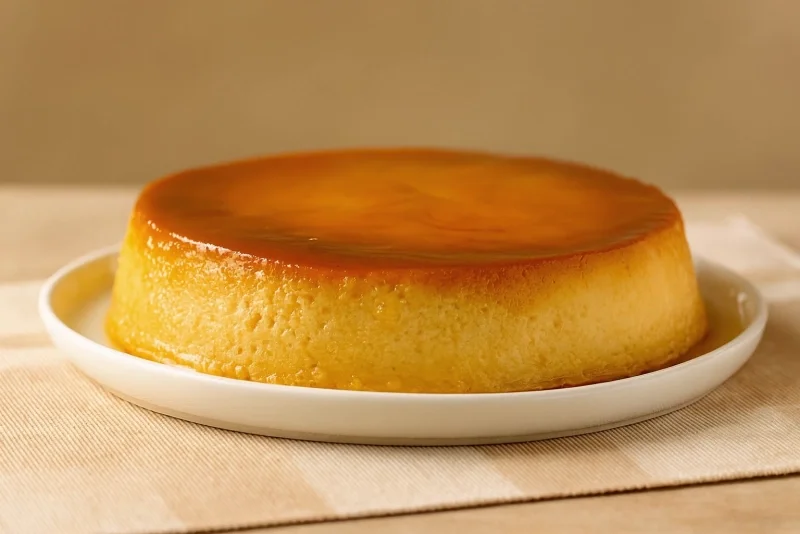
Baked milk custard with caramel is a gently baked egg-and-milk dessert topped with a layer of golden caramel. Make it when you want a smooth, make-ahead pudding that can be turned out to reveal its glossy sauce.
Ingredients
- 1 litrewhole milk
- 5eggs
- 200 gsugar
- 1 tbspvanilla essence
- 1 pinchsalt
- 100 gsugar, extra (for the caramel)
Instructions
- 1
Make the caramel
Put the extra sugar in a small saucepan and heat over a medium heat until it melts and turns golden.
- 2
Coat the dish
Pour the liquid caramel into the bottom of an ovenproof dish. Tilt the dish so the caramel spreads before it sets.
- 3
Beat the eggs
In a large bowl, beat the eggs with the pinch of salt until combined, taking care not to make them too frothy.
- 4
Add the sugar
Gradually add the sugar to the beaten eggs, mixing gently until it has dissolved completely.
- 5
Add milk and vanilla
Pour in the whole milk and vanilla essence, then beat until the mixture is even.
- 6
Strain the mixture
For a finer texture, pass the mixture through a sieve before pouring it over the caramel in the dish.
- 7
Bake the custard
Put the dish in the preheated oven and bake in a bain-marie until the surface is golden and the centre is just set.
- 8
Cool and unmould
Leave the custard to cool until lukewarm at room temperature, then refrigerate for a few hours before turning it out so the caramel runs over it.
What is baked milk custard with caramel?
Known as leche asada in parts of Latin America, this dessert is a baked milk-and-egg custard with caramel. Its name means “roasted milk”, and recipes vary by household and region.
This version keeps the mixture simple: whole milk, eggs, sugar and vanilla. Baking it gently in a water bath helps it set softly, while the caramel becomes a sauce when the chilled custard is unmoulded.
Nutrition and macros by portion
The nutrition label shows one serving as written: 290 calories, 0g protein, 0g carbs, 0g fat.
| Portion | Adjustment | kcal | Protein | Carbs | Fat |
|---|---|---|---|---|---|
| Lighter | Serve a smaller slice | 203 kcal | 0g | 0g | 0g |
| This serving | As written | 290 kcal | 0g | 0g | 0g |
| Hungry | Serve a larger slice | 435 kcal | 0g | 0g | 0g |
The eggs and whole milk provide most of the protein and fat, while the sugar in the custard and caramel supplies most of the carbohydrate. Serve a slice with fresh fruit to add a fresh contrast to the rich, sweet custard.
Getting the caramel right
Sugar: Heat the extra sugar in a small saucepan and watch it closely as it melts. Take it to a golden colour; very dark caramel can taste bitter.
Working quickly: Pour the caramel into the dish as soon as it is ready, then tilt to cover the base before it hardens. Use care, as melted sugar is extremely hot.
A smooth custard mixture
Eggs and sugar: Beat the eggs with the salt just until combined, then add the sugar gradually. Avoid whipping in lots of air, which can leave bubbles in the finished custard.
Straining: Passing the mixture through a sieve is optional, but it can catch small strands of egg and help give the custard a finer texture.
Baking and doneness
Water bath: Set the ovenproof dish in a larger container of water for the bain-marie. The water moderates the heat around the custard as it bakes.
Centre: Look for a golden surface and a centre that is just set, as directed in the method. It will firm further as it cools, so avoid waiting for it to become rigid in the oven.
Cooling before turning out
Chilling: Let the dish cool until lukewarm before refrigerating it for a few hours. This gives the custard time to firm up for easier unmoulding.
Unmoulding: Run a thin knife around the edge, place a serving plate over the dish and turn them over together. Allow a moment for the caramel to flow over the custard.
Serving ideas
Serve the custard chilled, with the caramel spooned over each portion. Its sweet, creamy texture works well as a simple finish after a meal.
For contrast, add fresh fruit alongside rather than changing the custard itself. Cut portions with a thin knife and use a broad spatula to lift them neatly.
Recipe notes & tips
- Keep a close eye on the sugar as it melts, since caramel can darken quickly.
- Tilt the dish as soon as you pour in the caramel so it coats the base before setting.
- Mix the custard gently to avoid incorporating too much air.
- Strain the mixture if you want to remove any small egg strands.
- Chill the custard for a few hours before trying to turn it out.
Variations
- Citrus zest: Add a little finely grated lemon or orange zest to the milk mixture.
- Cinnamon: Infuse the milk with a cinnamon stick, then remove it before mixing.
- Coffee: Stir cooled, strong coffee into the milk for a coffee-flavoured custard.
- Individual portions: Divide the caramel and custard mixture between small ovenproof dishes.
- Fruit accompaniment: Serve each slice with berries or sliced seasonal fruit.
Common mistakes to avoid
- Burnt caramel: Remove the pan from the heat once the sugar is golden, as it continues to cook briefly.
- Caramel left to set in the pan: Pour and tilt it straight away so it coats the dish before hardening.
- Overbeaten eggs: Mix only until combined to avoid a foamy custard.
- Skipping the sieve: Strain the mixture if you want to remove egg strands for a smoother result.
- Turning out too soon: Chill the custard for a few hours first so it has time to firm up.
How to store
Cover and refrigerate leftovers promptly; they keep for up to 3 days. Serve cold, as reheating can soften the custard and caramel.
Frequently asked questions
Can I make this dessert ahead?
Yes. It needs a few hours in the fridge before unmoulding, so it is well suited to preparing in advance.
Do I have to strain the custard?
No, straining is optional. It can make the texture finer by removing small strands of egg.
How can I tell when the custard is baked?
The method calls for a golden surface and a centre that is just set. The custard will firm further as it cools.
Why is a bain-marie used?
The water bath surrounds the dish with gentler heat, helping the custard cook evenly. Take care when handling the hot water and dish.
How do I turn it out without breaking it?
Chill it for a few hours, loosen the edges with a thin knife, then invert the dish over a serving plate.
Cook it from the original
This recipe comes from comidasparaguayas.com. Their page has the author’s own photos, notes and tips — the best place to cook it from.
Open the recipe on comidasparaguayas.com