
Pão de Ló de Alfeizerão
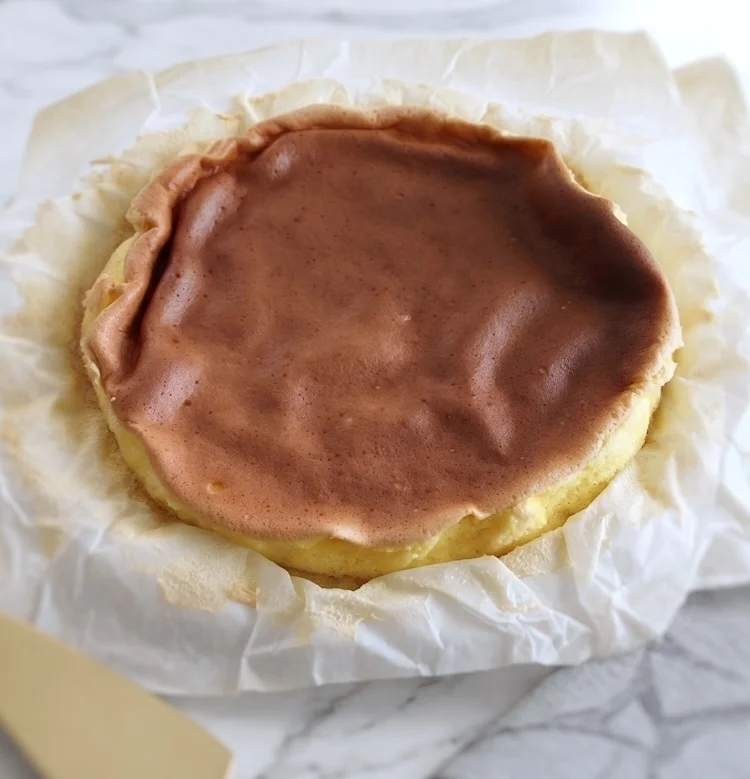
Pão de Ló de Alfeizerão is a Portuguese sponge cake with a light, airy outside and a soft, slightly creamy centre. With just four ingredients and a short bake, it makes an elegant dessert without much preparation.
Ingredients
- 2whole eggs
- 6egg yolks
- 75 gsugar
- 50 gcornflour (cornstarch)
Instructions
- 1
Prepare the tin
Preheat the oven to 220°C. Line a round cake tin measuring 25 × 6 cm with baking parchment.
- 2
Beat the eggs
Using an electric mixer on medium speed, beat the whole eggs with the sugar until light and creamy. Add the egg yolks and beat for a further 2–3 minutes, until fully combined and smooth. Gently fold in the cornflour with a spatula.
- 3
Bake the cake
Pour the batter into the prepared tin and bake for about 8–10 minutes; the exact time depends on your oven. The centre should remain slightly creamy.
- 4
Stop the baking
As soon as the top of the cake starts to turn golden, switch off the oven straight away to prevent it from overcooking.
- 5
Cool before serving
Carefully remove the cake from the oven and turn it out onto a plate. Leave it to cool completely at room temperature before serving.
What is Pão de Ló de Alfeizerão?
This is a Portuguese sponge cake associated with Alfeizerão, known for a delicate exterior and a soft, custardy centre. This version uses whole eggs, extra yolks, sugar and cornflour for a simple batter with a rich egg flavour.
The brief, hot bake is central to its character: the outside sets while the middle stays tender. It is a good choice when you want a traditional-style cake without a long ingredient list.
Nutrition and macros by portion
The nutrition label shows one serving as written: 80 calories, 2g protein, 10g carbs, 3g fat.
| Portion | Adjustment | kcal | Protein | Carbs | Fat |
|---|---|---|---|---|---|
| Lighter | Serve a smaller slice | 56 kcal | 2g | 7g | 2g |
| This serving | As written | 80 kcal | 2g | 10g | 3g |
| Hungry | Take a larger slice | 120 kcal | 4g | 15g | 4g |
The eggs and yolks provide most of the protein and fat, while the sugar and cornflour supply most of the carbohydrates. Serve a slice with fresh fruit for a contrasting, refreshing accompaniment.
Why use extra yolks?
Whole eggs: beating them with the sugar first gives the batter its initial lightness. Continue until the mixture looks pale and creamy.
Egg yolks: these enrich the batter and help give the centre its soft texture. Beat them in fully before adding the dry ingredient.
Fold in the cornflour gently
Cornflour: fold it in with a spatula rather than beating it into the mixture. Use broad, gentle strokes and stop once no dry patches remain, so you keep as much air in the batter as possible.
Watch the centre, not just the clock
The recipe gives a guide of 8–10 minutes, but oven performance can vary. Look for a top that is just starting to turn golden and a centre that is still slightly creamy.
Switch off the oven as soon as the top begins to brown, as instructed. A longer bake can take the cake beyond its intended soft-centred texture.
Prepare for a quick bake
Tin and lining: line the 25 × 6 cm round tin with baking parchment before you start mixing. The bake is short, so having the tin ready avoids leaving the batter standing.
Oven: preheat to 220°C before making the batter. Keep an eye on the cake during the final minutes rather than relying on the timer alone.
Serving and cooling
Turn the cake out carefully onto a plate, then let it cool completely at room temperature before serving. Its delicate centre makes a gentle hand useful when removing it from the tin.
Serve it on its own or alongside fresh fruit. A small spoonful of lightly whipped cream is another simple accompaniment.
Recipe notes & tips
- Bring the eggs to room temperature before mixing for easier beating.
- Have the lined tin ready before you start whisking the eggs.
- Fold in the cornflour gently and stop as soon as it is evenly incorporated.
- Start checking the cake at 8 minutes, since oven timing can vary.
- Turn the cake out carefully to help preserve its delicate texture.
Variations
- Citrus zest: fold a little finely grated lemon zest into the batter for a fragrant note.
- Cinnamon: dust the cooled cake lightly with cinnamon before serving.
- Fresh fruit: serve each slice with berries or sliced seasonal fruit.
- Cream: add a spoonful of lightly whipped cream alongside each portion.
- Vanilla: add a small amount of vanilla extract to the egg mixture for a different aroma.
Common mistakes to avoid
- Overbaking: the centre can lose its creamy texture, so switch off the oven as soon as the top starts to brown.
- Skipping the preheat: the short bake depends on a hot oven, so preheat to 220°C before mixing.
- Beating in the cornflour: vigorous mixing can knock air from the batter; fold it in gently with a spatula.
- Leaving the tin unlined: the soft cake can be difficult to remove, so line the tin with baking parchment.
- Turning it out roughly: handle the cake with care and use a plate to support it.
How to store
Once completely cool, store the cake covered in the fridge and eat within 2 days. Bring it towards room temperature before serving; reheating may change the soft centre.
Frequently asked questions
How do I know when the cake is ready?
The top should just begin to turn golden, while the centre remains slightly creamy. Start checking around 8 minutes, as ovens vary.
Can I bake it for longer if the centre looks soft?
The slightly creamy centre is intentional in this recipe. Switch off the oven when the top starts to brown rather than baking until the middle is fully set.
Can I use plain flour instead of cornflour?
The recipe specifies cornflour, which contributes to the cake's delicate texture. Using plain flour may produce a different result.
Why does the recipe use whole eggs and extra yolks?
The whole eggs are beaten with the sugar to create a light base, while the additional yolks enrich the mixture and contribute to its soft centre.
Should I serve the cake warm or cold?
The method calls for cooling it completely at room temperature before serving. This also makes it easier to handle after turning it out.
Cook it from the original
This recipe comes from foodfromportugal.com. Their page has the author’s own photos, notes and tips — the best place to cook it from.
Open the recipe on foodfromportugal.com