
Real baker’s brioche (no milk)
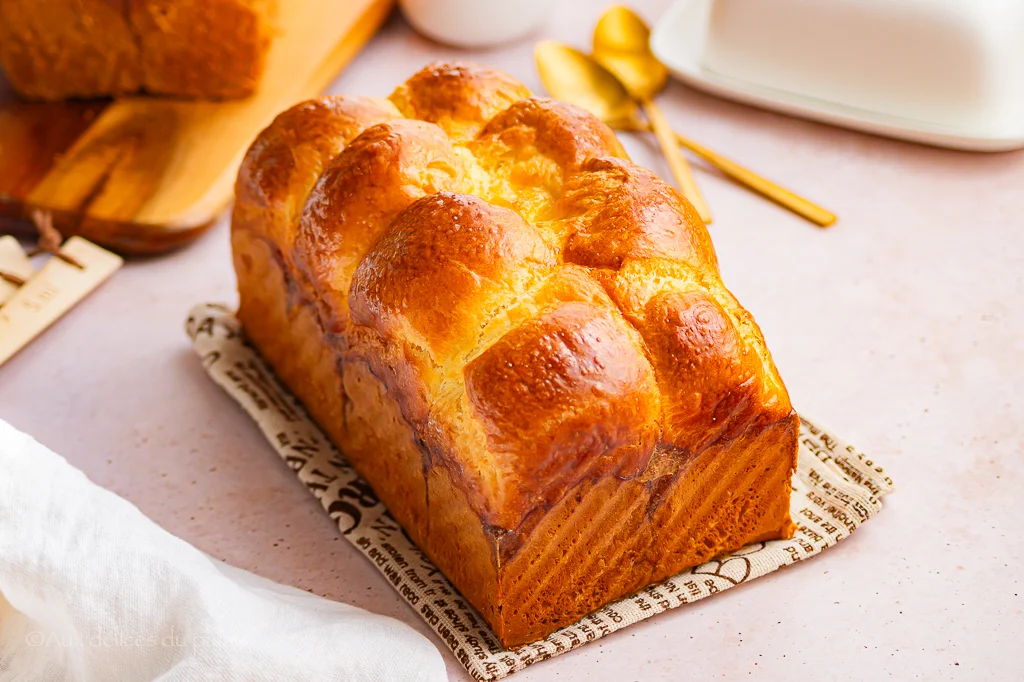
This is a French Nanterre-style brioche: a rich, milk-free loaf with a soft, buttery, stringy crumb. The dough is made ahead and chilled overnight, then shaped into rows of small balls for its classic, beautifully rounded top.
Ingredients
- 250 gGruau flour or T45 flour
- 250 gT55 flour
- 20 gfresh baker’s yeast
- 85 gcaster sugar
- 10 gsalt
- 6 eggs (300 g)eggs
- 250 gunsalted butter
- 1egg, for glazing
Instructions
- 1
Mix the dough
Put the flour, yeast, sugar, salt and eggs in a stand-mixer bowl or large mixing bowl, keeping the salt from direct contact with the yeast. Knead with a dough hook at medium speed or by hand for 5 minutes.
- 2
Add the butter
Gradually work in the cold butter, cut into small pieces. Continue kneading until it is fully incorporated, about 15–20 minutes, until the dough pulls away from the sides of the bowl.
- 3
Prove the dough
Transfer the dough to a large floured bowl and cover with cling film. Leave to rise at room temperature, away from draughts, for 2 hours.
- 4
Chill overnight
Turn the risen dough onto a floured work surface and gently press it to release the air; it will deflate and then spring back. Return it to the floured bowl, cover with cling film and refrigerate overnight for at least 12 hours. Alternatively, make the dough early in the morning and bake it in the evening.
- 5
Shape the loaves
The next morning, take the dough from the refrigerator and turn it onto a floured work surface. Divide it into 2 equal portions, shape each portion into 8 balls and arrange them in a buttered rectangular tin. Repeat with the second portion.
- 6
Prove and glaze
Cover both brioches with cling film and leave them to rise for 2 hours. Beat the remaining egg and brush it over the loaves.
- 7
Bake until golden
Bake in a preheated fan oven at 170°C for 20–25 minutes, keeping an eye on the loaves; they should be nicely golden.
- 8
Cool in the tin
Leave the brioches to cool briefly in their tins so they are easier to turn out.
What is Nanterre brioche?
Brioche is a French enriched bread, made with eggs, butter and sugar for a tender, rich crumb. The Nanterre style is baked in a rectangular tin, with pieces of dough arranged in rows so the top forms a distinctive series of rounded humps.
This version uses no milk: eggs and butter provide its richness. A long, cold rest gives the dough time to develop flavour and makes it easier to handle when shaping.
Nutrition and macros by portion
The nutrition label shows one serving as written: 330 calories, 0g protein, 0g carbs, 0g fat.
| Portion | Adjustment | kcal | Protein | Carbs | Fat |
|---|---|---|---|---|---|
| Lighter | Smaller slice, fruit alongside | 231 kcal | 0g | 0g | 0g |
| This serving | As written | 330 kcal | 0g | 0g | 0g |
| Hungry | Larger slice | 495 kcal | 0g | 0g | 0g |
The flour and sugar provide most of the carbohydrates, while butter and eggs contribute much of the fat; eggs also provide protein. Pair a slice with fruit or yoghurt for a more rounded breakfast. The supplied nutrition figures list 330 kcal per serving but give zero for all macros, so those macro values are not a usable breakdown.
The flour and yeast
Flour choice: the recipe combines Gruau or T45 flour with T55 flour. Keep the stated proportions so the dough has the balance intended by the recipe.
Yeast and salt: add both to the bowl, but avoid placing the salt directly against the fresh yeast. This is a simple precaution while the ingredients are being combined.
Kneading in the butter
Cold butter: cut it into small pieces and add it gradually after the initial kneading. Adding it in stages helps it become incorporated rather than sitting in large lumps.
Dough cue: expect a long knead after the butter goes in—about 15–20 minutes. The recipe’s sign that it is ready is dough that pulls away from the sides of the bowl.
Why chill the dough overnight?
First rise: leave the covered dough at room temperature for 2 hours, away from draughts. It should rise before you gently press out the air.
Cold rest: refrigerate it for at least 12 hours. The recipe also gives a same-day schedule: prepare the dough early in the morning and bake in the evening.
Shaping and proving
Even portions: divide the chilled dough into 2 equal pieces, then shape each piece into 8 balls. Arrange the balls in buttered rectangular tins for the Nanterre shape.
Final rise: cover the loaves and leave them for 2 hours before brushing with beaten egg. Handle the shaped dough gently so the balls keep their form.
Baking and serving
Golden finish: bake at 170°C in a preheated fan oven for 20–25 minutes, watching for an even golden colour. The recipe does not specify a tin size, so use rectangular tins that comfortably fit the arranged dough.
Serving ideas: enjoy the brioche plain, or serve it with jam, honey or fresh fruit. Let it cool briefly in the tin before turning it out.
Recipe notes & tips
- Keep the salt away from direct contact with the fresh yeast as you add the ingredients.
- Cut the cold butter into small pieces so it can be added gradually.
- Allow the full 15–20 minutes for kneading after adding the butter.
- Cover the dough during both rises and keep it away from draughts during the first rise.
- Use the overnight chill, or follow the recipe’s early-morning-to-evening schedule.
- Watch the loaves closely towards the end of baking, as the recipe judges them by their golden colour.
Variations
- Serve with jam: offer slices with your favourite fruit preserve.
- Add honey: drizzle a little over a slice just before serving.
- Pair with fruit: serve fresh fruit alongside for a brighter breakfast.
- Make French toast: use leftover slices for a richer-style French toast.
- Toast a slice: lightly toast it and serve with butter.
Common mistakes to avoid
- Salt touching yeast: keep them apart when first adding the ingredients.
- Adding butter all at once: add the cold pieces progressively so they incorporate fully.
- Stopping kneading too early: continue until the dough pulls away from the bowl sides.
- Skipping the cold rest: chill the dough for at least 12 hours as directed.
- Crowding the tin: arrange the 8 balls in each rectangular tin with room for the final rise.
- Baking by time alone: check for the specified golden colour within the 20–25-minute baking window.
How to store
Once completely cool, keep the brioche in an airtight container at room temperature and enjoy within 2–3 days for the best texture. Rewarm a slice briefly in a low oven, or toast it. Freeze well-wrapped portions for longer storage and thaw before serving.
Frequently asked questions
Can I make the dough without a stand mixer?
Yes. The method allows you to knead by hand in a large bowl, using the same timings as a guide.
Can I make the dough on the same day?
Yes. The recipe suggests preparing it early in the morning and baking it in the evening instead of chilling it overnight.
How long does the dough need to chill?
Chill it overnight for at least 12 hours, after its first 2-hour rise and gentle deflation.
How do I know when the dough is kneaded enough?
After adding the butter, knead for about 15–20 minutes. The recipe’s cue is that the dough pulls away from the sides of the bowl.
Can I use only one type of flour?
The recipe specifies 250 g of Gruau or T45 flour plus 250 g of T55 flour. It does not give instructions for replacing the blend with a single flour.
How can I tell when the brioche is baked?
Bake at 170°C for 20–25 minutes and watch for a nicely golden surface, as directed.
Cook it from the original
This recipe comes from auxdelicesdupalais.net. Their page has the author’s own photos, notes and tips — the best place to cook it from.
Open the recipe on auxdelicesdupalais.net