
Greek Orzo Salad
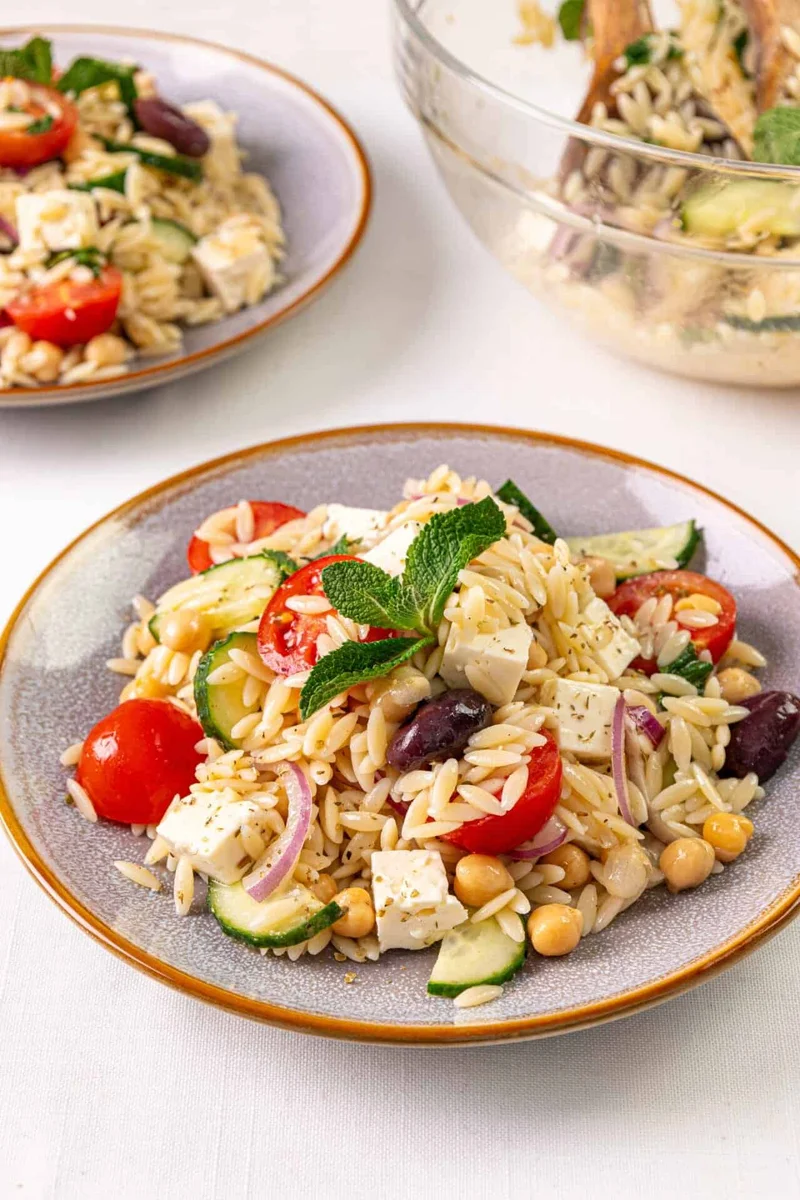
This Greek-inspired orzo salad brings together pasta, crisp vegetables, chickpeas, feta and Kalamata olives in a bright red-wine vinegar and lemon dressing. It makes a colourful, make-ahead-friendly meal or side dish.
Ingredients
- 225 g (1½ cups)dry orzo pasta
- 1 tablespoonred wine vinegar
- 1 tablespoonfresh lemon juice
- ½ teaspoondried oregano
- ¼ teaspoonsea salt
- 2Persian cucumbers, halved and sliced
- 300 g (2 cups)cherry tomatoes, halved
- 165 g (1 cup)cooked chickpeas, drained and rinsed
- 115 g (4 oz)feta cheese, cubed
- 50 g (⅓ cup)red onion, thinly sliced
- 75 g (½ cup)pitted Kalamata olives
- 25 g (1 cup)fresh basil and/or mint leaves, roughly chopped
- To tastefreshly ground black pepper
Instructions
- 1
Cook the orzo
Bring a pot of salted water to the boil and cook the orzo until just past al dente. Drain it, toss with a little olive oil to stop it sticking, then spread it out to cool.
- 2
Whisk the dressing
Whisk together the red wine vinegar, lemon juice, oregano and sea salt.
- 3
Mix the salad
Combine the orzo, cucumbers, tomatoes, chickpeas, feta, red onion and olives in a large bowl. Add the dressing, half the herbs and black pepper, then toss thoroughly.
- 4
Finish and serve
Scatter the remaining herbs over the salad. For the best flavour, leave it to sit for a few minutes before serving.
What is Greek orzo salad?
Orzo is a small, rice-shaped pasta used in dishes across the Mediterranean. This salad takes cues from Greek flavours, combining briny olives and feta with fresh vegetables, herbs and a sharp dressing.
The combination works because the chickpeas and pasta make it substantial, while cucumber, tomatoes, lemon and vinegar keep each bite fresh. It is served cool, making it handy for a shared meal or a packed lunch.
Nutrition and macros by portion
The nutrition label shows one serving as written: 268 calories, 11g protein, 41g carbs, 7g fat.
| Portion | Adjustment | kcal | Protein | Carbs | Fat |
|---|---|---|---|---|---|
| Lighter | More cucumber, less orzo | 188 kcal | 8g | 29g | 5g |
| This serving | As written | 268 kcal | 11g | 41g | 7g |
| Hungry | Larger portion | 402 kcal | 17g | 62g | 11g |
The orzo supplies most of the carbohydrates, while chickpeas add both carbohydrates and protein; feta and olives contribute much of the fat. Pair a serving with extra vegetables or a lean protein if you want a more balanced plate.
Choosing the ingredients
Orzo: Cook it just beyond al dente so it stays tender when chilled, rather than turning firm in the salad.
Feta and olives: Both bring a salty, savoury edge, so taste before adding any extra salt at the table.
Herbs: Basil, mint or a mixture gives the salad a fresh finish. Roughly chop the leaves so they distribute easily without disappearing into the dressing.
Getting the texture right
Cool the pasta: Spreading the drained orzo out helps it cool before it meets the vegetables and cheese. Tossing it with a little olive oil helps keep the grains from clumping.
Cut the vegetables: Halved tomatoes and sliced cucumber make pieces that sit comfortably alongside the small pasta. Keep the onion thinly sliced for a more even bite.
Balancing the dressing
Acidity: Red wine vinegar and lemon juice give the salad its tang. Whisk them with oregano and salt first so the flavour is evenly distributed.
Seasoning: Feta and Kalamata olives contribute plenty of savouriness, so add black pepper to taste and check the finished salad before reaching for more salt.
When it is ready
The orzo should be tender but still hold its shape, and the vegetables should remain crisp. Once everything is tossed together, give the salad a few minutes to rest so the dressing can coat the pasta and other ingredients.
What to serve alongside
Serve it as a main dish on its own or alongside grilled vegetables, fish or chicken. For a larger spread, pair it with warm flatbread and other simple Mediterranean-style sides.
Recipe notes & tips
- Rinse the chickpeas well and drain them thoroughly so they do not water down the dressing.
- Let the orzo cool before combining it with the feta and fresh vegetables.
- Keep some herbs aside for the final garnish, as the recipe directs.
- Taste the salad after tossing, since the feta and olives affect how much extra seasoning it needs.
- If preparing ahead, keep the salad covered and chilled until serving.
Variations
- Use other herbs: Swap in extra basil or mint, or use a combination of the two.
- Add leafy greens: Fold in a handful of chopped spinach just before serving.
- Change the beans: Use cooked white beans instead of chickpeas for a different texture.
- Add roasted pepper: Stir in sliced roasted red pepper for a sweeter, smoky note.
- Make it more lemony: Add a little extra lemon juice to the dressing to taste.
Common mistakes to avoid
- Overcooking the orzo: Cook it only until just past al dente so it holds its shape in the salad.
- Mixing in hot pasta: Let the orzo cool first to keep the vegetables crisp and the feta intact.
- Leaving the pasta in a clump: Spread it out after draining and toss with a little olive oil.
- Adding too much salt: Taste after mixing, because feta and olives are already salty.
- Adding all the herbs at once: Reserve half for the top so the salad has a fresh finish.
How to store
Store leftovers in an airtight container in the fridge and eat within 3 days. Serve chilled, or let the salad stand briefly at room temperature; it is best not reheated.
Frequently asked questions
Can I make Greek orzo salad ahead?
Yes. Prepare it ahead and keep it covered in the fridge. Add the reserved herbs just before serving for the freshest finish.
Can I serve it warm?
It is designed to be served cool or at room temperature. Allow the orzo to cool before tossing it with the vegetables and feta.
What can I use instead of orzo?
Small pasta shapes such as macaroni or ditalini can work. Cook them according to their packet instructions and cool before mixing.
Can I use dried chickpeas?
Yes, provided you cook them until tender first. Drain and rinse them before measuring out the amount for the salad.
How can I make the salad less salty?
Use fewer olives or choose a less salty feta, then taste before adding any extra salt. The recipe's sea salt is whisked into the dressing.
Cook it from the original
This recipe comes from bakedbree.com. Their page has the author’s own photos, notes and tips — the best place to cook it from.
Open the recipe on bakedbree.com