
Doughnut
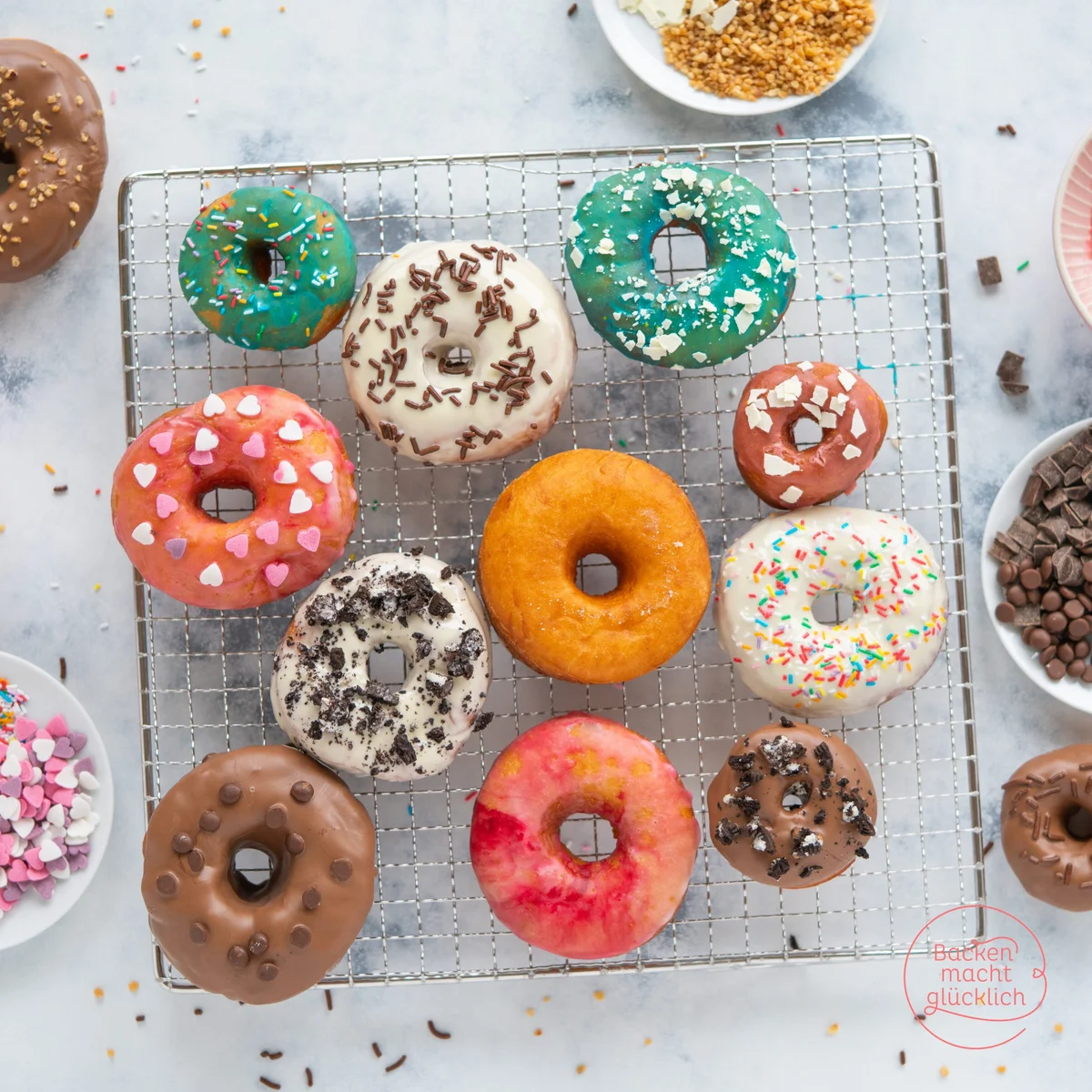
These fluffy American-style yeast doughnuts are made from a soft, enriched dough and fried until golden. They take a little time to rise, but you can shape them with a glass instead of a special doughnut cutter.
Ingredients
- 500 gplain flour
- 200 mlmilk, lukewarm
- 30 g fresh yeast (or 1½ sachets of dried yeast)fresh yeast
- 80 gsugar
- 90 gbutter, very soft
- 1 mediumegg
- 1 mediumegg yolk
- ¼ teaspoonsalt
Instructions
- 1
Mix the yeast
Crumble the yeast into half of the lukewarm milk. Add 1 teaspoon of the sugar and stir until the yeast has dissolved.
- 2
Start the dough
Put the flour in a bowl and make a well in the centre. Pour in the yeast mixture and stir it with a little flour from the edge of the bowl. Cover with a cloth and leave in a warm place for 10 minutes.
- 3
Knead and rise
Add the remaining sugar and lukewarm milk, the soft butter, egg, egg yolk and salt. Mix, then knead for about 5 minutes to make a fairly soft dough. Cover again and leave in a warm place for 30 minutes.
- 4
Shape the doughnuts
Roll the dough on a lightly floured surface to about 1 cm thick. Cut out circles with a large round cutter or glass, then cut a small hole in the centre of each. Arrange them spaced apart on two baking-paper-lined trays, cover and leave to rise for 30–60 minutes.
- 5
Fry until golden
Heat 1–2 litres of frying fat or oil in a fairly deep saucepan to about 170°C. Carefully add 2–3 doughnuts at a time and fry for 1–2 minutes, then turn and continue frying. Lift them out and drain on kitchen paper.
- 6
Decorate and serve
Once cool, decorate the doughnuts as you like. They are best fresh, but can also be frozen.
What are American doughnuts?
American-style doughnuts are typically soft, ring-shaped buns made from enriched yeast dough and fried until golden. This version uses butter, milk and eggs for a tender, gently rich crumb.
The recipe follows a home-baking approach rather than relying on special equipment. A glass or large round cutter can shape the rings, with a smaller cutter or similar tool for the holes.
Nutrition and macros by portion
The nutrition label shows one serving as written: 180 calories, 6g protein, 35g carbs, 8g fat.
| Portion | Adjustment | kcal | Protein | Carbs | Fat |
|---|---|---|---|---|---|
| Lighter | Smaller doughnuts | 126 kcal | 4g | 25g | 5g |
| This serving | As written | 180 kcal | 6g | 35g | 8g |
| Hungry | Serve two doughnuts | 270 kcal | 8g | 53g | 11g |
The flour and sugar provide most of the carbohydrates, while butter and absorbed frying fat contribute much of the fat. Flour, egg and milk supply some protein; the exact amount of fat absorbed during frying can vary. Pair a doughnut with fruit or yoghurt if you want a more balanced snack.
Building the yeast dough
Yeast mixture: dissolving the yeast in lukewarm milk with a little sugar helps it blend evenly into the flour. The short covered rest gives it time to start working.
Soft dough: the butter should be very soft so it mixes into the dough without leaving hard pieces. The finished dough is meant to be fairly soft, so avoid adding extra flour unless it is unmanageable.
Shaping even rings
Thickness: roll the dough to about 1 cm so the doughnuts have enough depth to become fluffy as they rise and fry. Try to keep the thickness even for more consistent cooking.
Spacing: leave room between the shaped doughnuts on the trays, as they expand during the second rise. Handle them gently when moving them so they do not lose their puff.
Judging the second rise
Timing: the shaped doughnuts need 30–60 minutes of covered rising, depending on how warm the room is and how quickly the dough responds. Use the stated range as a guide rather than rushing them straight into the oil.
Readiness: they should look visibly puffed. Keep them covered while they rise so their surfaces do not dry out.
Frying safely and evenly
Oil temperature: aim for about 170°C, as specified in the method. Frying only 2–3 doughnuts at a time makes them easier to turn and helps avoid crowding the pan.
Turning: fry each side for 1–2 minutes, turning once, and lift the doughnuts out carefully. Drain them on kitchen paper before decorating.
Decorating and serving
Finishes: these doughnuts can be left plain or decorated after they have cooled. A simple sugar coating or icing gives you an easy way to tailor them to the occasion.
Serving: enjoy them fresh, when their texture is at its softest. Serve with coffee, tea or fruit for a simple sweet spread.
Recipe notes & tips
- Use lukewarm rather than hot milk so it does not overheat the yeast.
- Keep the dough covered during both rises to prevent a dry surface.
- Flour the work surface lightly so the dough remains soft.
- Leave space between the doughnuts on the trays as they rise.
- Fry only 2–3 at a time so you can turn them carefully.
- Wait until the doughnuts have cooled before adding a finish that could melt.
Variations
- Sugar coating: toss the warm, drained doughnuts in sugar for a simple finish.
- Cinnamon sugar: mix cinnamon into the sugar coating for a spiced version.
- Vanilla icing: drizzle cooled doughnuts with a simple vanilla icing.
- Chocolate topping: dip the cooled tops in melted chocolate.
- Filled doughnuts: shape without the centre hole and fill once cool.
Common mistakes to avoid
- Milk too hot: it can hinder the yeast, so use milk that feels gently warm.
- Too much extra flour: it can make the doughnuts less tender, so keep the dough fairly soft.
- Skipping the second rise: the shaped doughnuts need 30–60 minutes to puff before frying.
- Crowding the pan: the doughnuts are harder to turn, so fry just 2–3 at a time.
- Oil too cool: the doughnuts may absorb more fat, so heat the oil to about 170°C.
- Decorating while hot: toppings can melt or slide off, so let the doughnuts cool first.
How to store
These doughnuts are best eaten fresh. Freeze any leftovers once cool, then thaw and warm gently before serving.
Frequently asked questions
Can I use dried yeast instead of fresh yeast?
Yes. The ingredient list gives 1½ sachets of dried yeast as an alternative to 30 g fresh yeast.
Do I need a doughnut cutter?
No. A large glass can cut the outer circles; use a small cutter to make the centre holes.
How long should the shaped doughnuts rise?
Cover them and leave them for 30–60 minutes. They should look visibly puffed before frying.
How many doughnuts should I fry at once?
Fry 2–3 at a time in a fairly deep saucepan, as the recipe directs. This leaves room to turn them carefully.
Can I freeze these doughnuts?
Yes. The recipe recommends freezing them, ideally after they have cooled.
Cook it from the original
This recipe comes from backenmachtgluecklich.de. Their page has the author’s own photos, notes and tips — the best place to cook it from.
Open the recipe on backenmachtgluecklich.de