
Classic Pizza Margherita
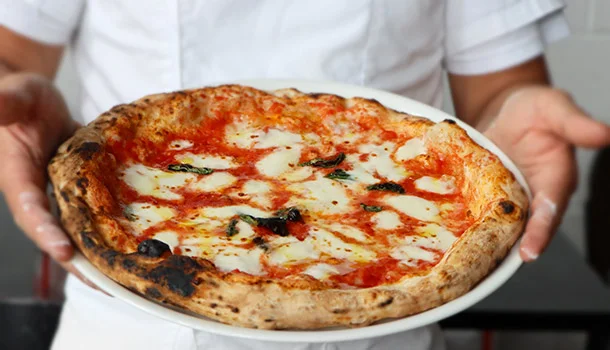
Classic Pizza Margherita pairs a soft, elastic Neapolitan-style base with San Marzano tomatoes, fior di latte, Pecorino Romano and fresh basil. It is a simple, ingredient-led pizza, though the dough needs a long prove and a very hot oven.
Ingredients
- 1 kgLe 5 Stagioni Pizza Napoletana flour
- 600 mlwater
- 2 gfresh yeast
- 30 gsea salt
- 1 tinSan Marzano tomatoes
- a handfulfresh basil
- a handfulPecorino Romano cheese
- 100 gfior di latte mozzarella
- a pinchsalt
- a drizzleextra virgin olive oil (EVOO)
Instructions
- 1
Mix and prove
Pour 600 ml water into a mixing bowl and dissolve the sea salt in it by hand. Mix in 100 g flour, then crumble in the fresh yeast and stir until it disappears. Gradually add the remaining flour, mixing as you go. When the dough thickens, turn it out onto a floured bench, scrape any sticky dough from your hands back into the mix, and knead by pressing the dough forwards and folding it back until soft and elastic. Cover and leave at room temperature for 18 hours. Divide into 270 g balls, place in a covered tray and prove for a further 4–6 hours.
- 2
Stretch the base
Dust a board with flour. Lift one dough ball from the tray with a little flour to stop it sticking, then place it on the board. Work your fingertips from the bottom of the dough upwards, leaving a 1 cm rim around the edge. Turn the dough over and repeat to move the air towards the crust. Gently repeat twice on each side, then lift and flip the base from one hand onto the bench to stretch it into a circle.
- 3
Add the toppings
Put the tin of San Marzano tomatoes in a bowl and crush them by hand or with a hand blender, stopping while the sauce is still thick. Add a pinch of salt and mix in the basil, whole or torn. Spoon some sauce over the base and spread it out. Cut the fior di latte into pieces and arrange it over the sauce, then scatter over the Pecorino Romano and a few basil leaves. Finish with a drizzle of extra virgin olive oil.
- 4
Bake the pizza
Bake in a wood-fired oven at 450°C for a maximum of 90 seconds. Turn the pizza 180° halfway through cooking and check underneath so the base does not burn.
What is Pizza Margherita?
Pizza Margherita is a Neapolitan pizza topped with tomato, mozzarella and basil, a combination associated with Naples and Italian pizza-making. This version adds Pecorino Romano for a savoury, salty note.
Its success depends on keeping the toppings restrained and using a properly fermented dough. The recipe makes a generous batch of dough, then uses one 270 g ball for a pizza.
Nutrition and macros by portion
The nutrition label shows one serving as written: 4000 calories, 175g protein, 787g carbs, 50g fat.
| Portion | Adjustment | kcal | Protein | Carbs | Fat |
|---|---|---|---|---|---|
| Lighter | Less cheese, more salad | 2800 kcal | 122g | 551g | 35g |
| This serving | As written | 4000 kcal | 175g | 787g | 50g |
| Hungry | Serve an extra pizza | 6000 kcal | 263g | 1181g | 75g |
The flour supplies most of the carbohydrates, while mozzarella and Pecorino contribute fat and protein; the olive oil adds further fat. Pair a slice with salad or vegetables for a more balanced plate. The supplied nutrition figures are listed for one serving, but the recipe also makes multiple dough balls, so the serving basis is unclear.
The dough needs time
Slow proving: the dough rests for 18 hours at room temperature, followed by another 4–6 hours after it has been divided into balls. That makes the stated seven-minute total time unrealistic; allow at least the full proving time, as well as preparation and baking.
Handle the dough gently
Kneading: press the dough forwards and fold it back until it feels soft and elastic. A lightly floured bench and hands make it easier to work without adding too much extra flour.
Shaping: press from the centre towards the outside, keeping a 1 cm rim. Turn the base and repeat gently so the dough stretches without flattening the edge.
Keep the tomato sauce thick
Tomatoes: crush the San Marzano tomatoes by hand or briefly with a hand blender. Stop while the sauce is thick rather than processing it into a thin liquid.
Seasoning: add the pinch of salt and basil to the tomatoes, then spread only some of the sauce over the base. Too much wet topping can make the centre harder to cook through.
Balance the toppings
Mozzarella: cut the fior di latte into pieces and distribute it over the sauce, leaving some room for the dough to show through. Pecorino adds a sharper, saltier finish, so scatter it rather than piling it on.
Basil and oil: add a few leaves before baking, as directed, and finish with a light drizzle of extra virgin olive oil.
Watch the bake closely
A 450°C wood-fired oven cooks this pizza in a maximum of 90 seconds, so keep watch throughout. Turn it 180° halfway through and check the underside to catch any scorching.
The method is written for a wood-fired oven at a very high temperature. If your oven cannot reach that heat, this exact bake time will not apply.
What to serve alongside
Serve the pizza as soon as it comes out of the oven, while the crust is hot and the mozzarella is soft. A simple green salad or lightly dressed vegetables make a fresh contrast to the dough and cheese.
Recipe notes & tips
- Weigh the dough balls at 270 g as specified so each base is a consistent size.
- Use only enough flour on the bench and your hands to prevent sticking.
- Crush the tomatoes briefly and keep the sauce thick.
- Leave the 1 cm edge clear when spreading the sauce and toppings.
- Have the toppings ready before stretching the dough, as the wood-fired bake is very quick.
- Turn the pizza halfway through baking and check the base for browning.
Variations
- More basil: add a few fresh leaves after baking for a brighter finish.
- Extra mozzarella: increase the fior di latte for a cheesier topping.
- Less salty: use less Pecorino Romano, which has a pronounced savoury flavour.
- No wood-fired oven: use the hottest setting your oven allows, but expect a different bake time and result.
- Sauce texture: crush the tomatoes by hand for a more rustic consistency.
Common mistakes to avoid
- Rushing the prove: the dough needs the stated 18-hour rest and 4–6 hours after balling.
- Overworking the tomatoes: stop blending while the sauce is thick.
- Flattening the rim: leave a 1 cm border and stretch gently to preserve the crust.
- Using too much sauce: spread a modest layer so the centre is not overloaded.
- Walking away during baking: a 90-second bake at 450°C needs close attention.
- Skipping the turn: rotate the pizza 180° halfway through and check the underside.
How to store
For the best texture, eat the pizza straight after baking. Refrigerate leftovers in a covered container and reheat in a hot oven or frying pan until warmed through; the crust will not be quite like freshly baked.
Frequently asked questions
How long does this recipe take?
The listed total time of 7 minutes does not include the dough proving stages. The method calls for 18 hours at room temperature, then another 4–6 hours after dividing the dough into balls.
How many pizzas does the dough make?
The method divides the dough into 270 g balls, but does not state the exact number. The ingredient quantities make a batch of dough, while the topping quantities are presented for one pizza.
Can I make the dough ahead?
Yes. Follow the stated room-temperature rests, then keep the covered dough balls chilled if you need to hold them longer. Bring them back towards room temperature before stretching.
Can I use a regular oven?
The method specifies a wood-fired oven at 450°C, which most home ovens cannot reach. Use the hottest setting available and judge the bake by the crust and underside rather than relying on the 90-second timing.
Should I blend the tomatoes completely smooth?
No. Crush them by hand or use a hand blender briefly, stopping when they are thick. The method cautions against overworking the tomatoes.
Why is the pizza dough hard to stretch?
It may need more resting time or may be cold. The method describes an elastic dough and recommends flouring the board and handling the base gently as you stretch it.
Cook it from the original
This recipe comes from Vincenzo's Plate. Their page has the author’s own photos, notes and tips — the best place to cook it from.
Open the recipe on vincenzosplate.com