
Pancakes with oat drink
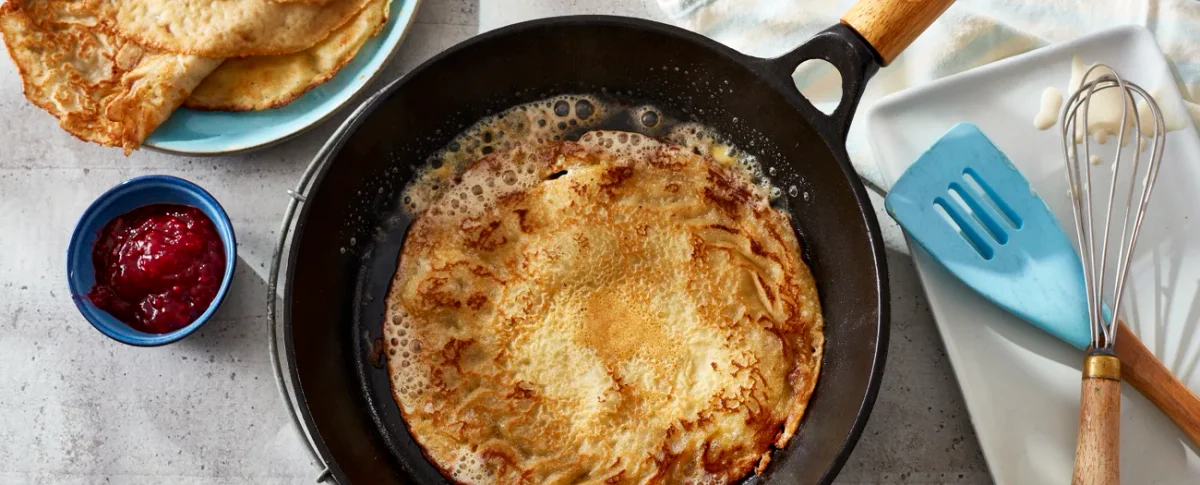
These thin pancakes use oat drink in place of dairy milk, while keeping the familiar soft, lightly golden result. Make them for a simple breakfast or dessert and serve with your favourite toppings, from jam and lemon to fresh fruit and ice cream.
Ingredients
- 225 gplain flour
- 1 tsp (5 ml)sugar
- 1 tsp (5 ml)baking powder
- ½ tsp (2.5 ml)coarse salt
- 600 mloat drink
- 25 gbutter, dairy or plant-based
- 25 gbutter, dairy or plant-based, for frying
Instructions
- 1
Mix dry ingredients
Put the flour, sugar, baking powder and salt into a bowl.
- 2
Whisk the batter
Add half the oat drink and whisk until the batter is smooth and lump-free. Whisk in the remaining oat drink.
- 3
Add melted butter
Melt 25 g butter in a frying pan, add it to the batter and whisk thoroughly.
- 4
Cook the pancakes
Cook the pancakes in a little of the frying butter over medium heat until golden.
- 5
Keep them warm
This batter makes 10–12 pancakes, depending on their size and thickness. Keep cooked pancakes warm in a conventional oven at about 75°C.
What are pancakes with oat drink?
These are thin, pan-cooked pancakes made with oat drink instead of dairy milk. The recipe is labelled French, and its simple batter is suited to the familiar style of delicate pancakes served folded or rolled.
Oat drink keeps the batter pourable, while melted butter adds richness. A little baking powder is included, so whisking the batter smooth helps the pancakes cook evenly.
Nutrition and macros by portion
The nutrition label shows one serving as written: 166 calories, 2g protein, 25g carbs, 6g fat.
| Portion | Adjustment | kcal | Protein | Carbs | Fat |
|---|---|---|---|---|---|
| Lighter | Use less frying butter | 116 kcal | 1g | 18g | 4g |
| This serving | As written | 166 kcal | 2g | 25g | 6g |
| Hungry | Serve a larger stack | 249 kcal | 3g | 38g | 9g |
The supplied nutrition figures are per serving, while the method says the batter makes 10–12 pancakes, so the stated serving and batch yield may not align. In the ingredients, flour provides most of the carbohydrate, while butter contributes fat; oat drink contributes some of the protein. Serve with fresh fruit for a more balanced plate.
Getting a smooth batter
First addition: whisk in only half the oat drink with the dry ingredients. A thicker mixture is easier to work smooth before you loosen it with the rest.
Final addition: pour in the remaining oat drink and whisk again until no floury lumps remain. Scrape around the bowl as you mix.
Butter and pan heat
In the batter: melt the first 25 g of butter in the pan, then whisk it into the mixture. This distributes the fat through the batter.
For frying: use the separate 25 g butter in small amounts. Keep the pan at medium heat so the pancakes can turn golden without scorching.
When the pancakes are ready
Colour cue: cook each pancake until golden, as directed. If the surface darkens very quickly, reduce the heat before cooking the next one.
Thickness matters: the recipe makes 10–12 pancakes depending on how large and thick you make them. Keep each pour consistent if you want a more even stack.
Serving and keeping warm
Warm stack: transfer cooked pancakes to a conventional oven set to about 75°C while you finish the batch. This keeps them warm for serving.
Toppings: try jam, sugar and lemon juice, or pair the pancakes with ice cream and fresh fruit. Add toppings just before serving so the pancakes stay easy to fold.
Choosing the ingredients
Oat drink: use an unsweetened variety if you want the sweetness to come mainly from your chosen toppings. Shake the carton first if its contents have settled.
Butter: the recipe allows dairy or plant-based butter in both places. Keep the frying butter separate from the butter mixed into the batter.
Recipe notes & tips
- Whisk the first half of the oat drink into the dry ingredients before adding the rest.
- Melt the batter butter in the frying pan, then whisk it in thoroughly.
- Use only a little butter in the pan for each pancake.
- Cook over medium heat and look for a golden finish.
- Keep finished pancakes in a conventional oven at about 75°C while the rest cook.
Variations
- Jam and lemon: spread with jam and add a little lemon juice before folding.
- Sugar topping: sprinkle with sugar while warm and serve straight away.
- Fresh fruit: add sliced fresh fruit alongside the pancakes.
- Ice cream: serve with a scoop of ice cream for a dessert-style plate.
- Plant-based: use plant-based butter in both parts of the recipe.
Common mistakes to avoid
- Adding all the oat drink at once: add half first and whisk smooth before adding the remainder.
- Leaving lumps: whisk thoroughly, especially after the first addition of oat drink.
- Overheating the pan: use medium heat so the pancakes have time to turn golden without burning.
- Using too much frying butter: add just a little to the pan for each pancake.
- Mixing up the butter amounts: keep the 25 g for the batter separate from the 25 g reserved for frying.
How to store
Cool leftover pancakes, then store them covered in the fridge and eat within 2 days. Reheat gently in a frying pan or microwave until warmed through; avoid overheating, which can dry them out.
Frequently asked questions
How many pancakes does this recipe make?
The method says it makes 10–12, depending on the pancakes' size and thickness.
Can I use plant-based butter?
Yes. The recipe specifies that dairy or plant-based butter can be used both in the batter and for frying.
How do I avoid lumps?
Whisk half the oat drink into the dry ingredients first, then whisk in the rest once the batter is smooth.
What heat should I use?
Cook over medium heat until the pancakes are golden. Lower the heat if they colour too quickly.
How can I keep the pancakes warm?
Place the cooked pancakes in a conventional oven set to about 75°C while you cook the rest.
What can I serve with them?
The recipe suggests jam, sugar and lemon juice, or ice cream and fresh fruit.
Cook it from the original
This recipe comes from arla.dk. Their page has the author’s own photos, notes and tips — the best place to cook it from.
Open the recipe on arla.dk