
Baked Rice Pudding Recipe
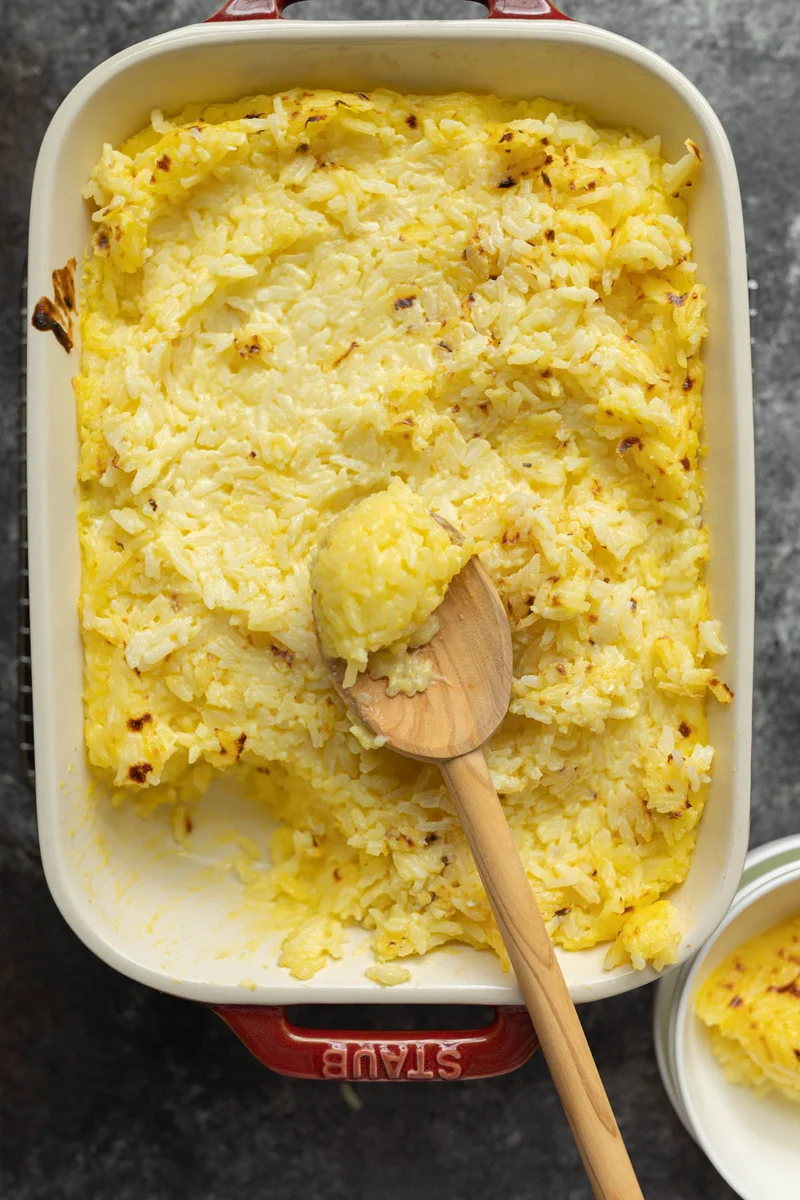
This Ukrainian-style baked rice pudding combines rice simmered in whole milk with butter, eggs and sugar, then bakes until creamy inside with golden edges. It makes a comforting breakfast or warm dessert from a short list of everyday ingredients.
Ingredients
- 370 g (2 cups)uncooked white rice, such as jasmine
- 1.2 litres (5 cups)whole milk
- 71 g (5 tbsp)unsalted butter
- 3eggs, beaten
- 100 g (½ cup)organic cane sugar
Instructions
- 1
Prepare the dish
Butter an 28 × 20 cm (11 × 8 inch) baking dish and set it aside.
- 2
Simmer rice and milk
Put the rice and milk in a saucepan and bring to the boil, stirring occasionally. Add the butter and simmer over medium-low heat for about 10 minutes, stirring often, until the mixture has thickened slightly. Take the pan off the heat.
- 3
Beat the eggs
While the rice cooks, beat the eggs with a fork in a small bowl.
- 4
Add eggs and sugar
Slowly whisk the beaten eggs into the rice and milk, whisking constantly to prevent them from cooking in the hot mixture. Stir in the sugar.
- 5
Bake until set
Transfer the mixture to the buttered baking dish. Bake uncovered in an oven preheated to 176°C (350°F) for 30 minutes, or until a skewer inserted in the centre comes out clean. The pudding should remain creamy, with a browned crust around the edges. Serve hot.
What is baked rice pudding?
This dish is a baked version of rice pudding: rice is first simmered in milk, then enriched with butter, eggs and sugar before going into the oven. Its name in the description, Risovaya Zapekanka, refers to a baked rice dish.
The recipe is presented as a Ukrainian-style childhood breakfast. Cooking the rice on the hob before baking helps create a soft, creamy centre and gives the edges time to brown.
Nutrition and macros by portion
The nutrition label shows one serving as written: 263 calories, 7g protein, 38g carbs, 9g fat.
| Portion | Adjustment | kcal | Protein | Carbs | Fat |
|---|---|---|---|---|---|
| Lighter | Use less butter | 184 kcal | 5g | 27g | 6g |
| This serving | As written | 263 kcal | 7g | 38g | 9g |
| Hungry | Take a larger portion | 395 kcal | 11g | 57g | 14g |
The rice and sugar provide most of the carbohydrates, while whole milk, butter and eggs contribute much of the fat. The eggs and milk also supply protein. Pair a portion with fruit or yoghurt for a more balanced plate.
Choosing the ingredients
Rice: The recipe uses white rice and notes jasmine as one option. Keep to white rice so it cooks through in the milk within the stated simmering and baking times.
Milk and butter: Whole milk gives the rice a rich base, while butter adds flavour and helps make the mixture feel velvety.
Eggs and sugar: The eggs help the pudding set in the oven, and the sugar sweetens it. Beating the eggs first makes them easier to whisk in gradually.
Simmer the rice gently
Stir the rice and milk occasionally as they come to the boil, then stir often during the simmer. Milk can catch on the bottom of the pan, especially as the mixture thickens.
The hob stage lasts about 10 minutes and only needs to thicken the mixture slightly. The rice will continue cooking in the oven.
Whisk in the eggs carefully
Eggs: Take the pan off the heat before adding them. Whisk them in slowly and continuously so they disperse through the hot rice mixture rather than forming cooked strands.
Sugar: Mix it in after the eggs. This keeps the method simple and distributes the sweetness through the pudding.
Look for set edges and a creamy centre
Bake the pudding uncovered at 176°C for 30 minutes. A skewer inserted in the centre should come out clean, while the edges should have developed a brown crust.
The finished pudding is meant to be creamy rather than dry. Avoid extending the bake simply to make the entire surface deeply browned.
Serve it warm
The recipe recommends serving the pudding hot, when its centre is at its softest. Cut it into portions once it has settled briefly after baking.
For a fuller breakfast, pair a portion with fresh fruit or plain yoghurt. It can also be served on its own as a warm, gently sweet dish.
Recipe notes & tips
- Use a saucepan large enough to stir the rice and milk without splashing.
- Stir more frequently once the milk begins to simmer and the mixture starts thickening.
- Take the pan off the heat before you whisk in the eggs.
- Pour the egg mixture in gradually while whisking constantly.
- Check the centre with a skewer at the end of the stated baking time.
- Serve soon after baking for the warm, creamy texture described in the recipe.
Variations
- Cinnamon: Sprinkle a little over the top before serving for a warmly spiced finish.
- Vanilla: Stir vanilla into the mixture with the sugar for a fragrant note.
- Citrus zest: Add finely grated lemon or orange zest with the sugar for a fresh flavour.
- Dried fruit: Fold raisins into the rice mixture before transferring it to the dish.
- Fresh fruit: Serve with berries or sliced fruit for a bright contrast to the creamy pudding.
Common mistakes to avoid
- Milk catching on the pan: Stir frequently during the simmer and use medium-low heat.
- Eggs scrambling: Remove the pan from the heat and whisk the eggs in slowly and continuously.
- Rice staying firm: Keep simmering until the mixture thickens slightly, then allow the full baking time.
- Overbaking: Check at 30 minutes and stop when a skewer comes out clean and the edges are browned.
- Skipping the buttered dish: Grease the baking dish well so the pudding is easier to serve.
How to store
Cool leftovers, cover and refrigerate for up to 3 days. Reheat individual portions in the microwave or warm the covered dish in the oven until heated through.
Frequently asked questions
Can I use jasmine rice?
Yes. Jasmine rice is the variety used for this recipe, and the method is written for uncooked white rice.
Can I prepare the rice mixture ahead?
The recipe is designed to move from the saucepan to the oven in one session. For the intended texture, bake it after mixing in the eggs and sugar.
How can I tell when the pudding is done?
After about 30 minutes at 176°C, insert a skewer into the centre; it should come out clean. The edges should be browned, while the pudding remains creamy.
Why should I whisk the eggs in slowly?
The rice and milk mixture is hot, so adding the eggs gradually while whisking helps prevent them from cooking into strands.
Can I serve it cold?
Yes, though the recipe recommends serving it hot. Chilled leftovers will be firmer and can be reheated if you prefer a warm, creamy portion.
What can I serve with baked rice pudding?
Try fresh fruit or plain yoghurt alongside it. It can also be served on its own as a warm breakfast or dessert.
Cook it from the original
This recipe comes from alyonascooking.com. Their page has the author’s own photos, notes and tips — the best place to cook it from.
Open the recipe on alyonascooking.com