
The Final Fried Eggs
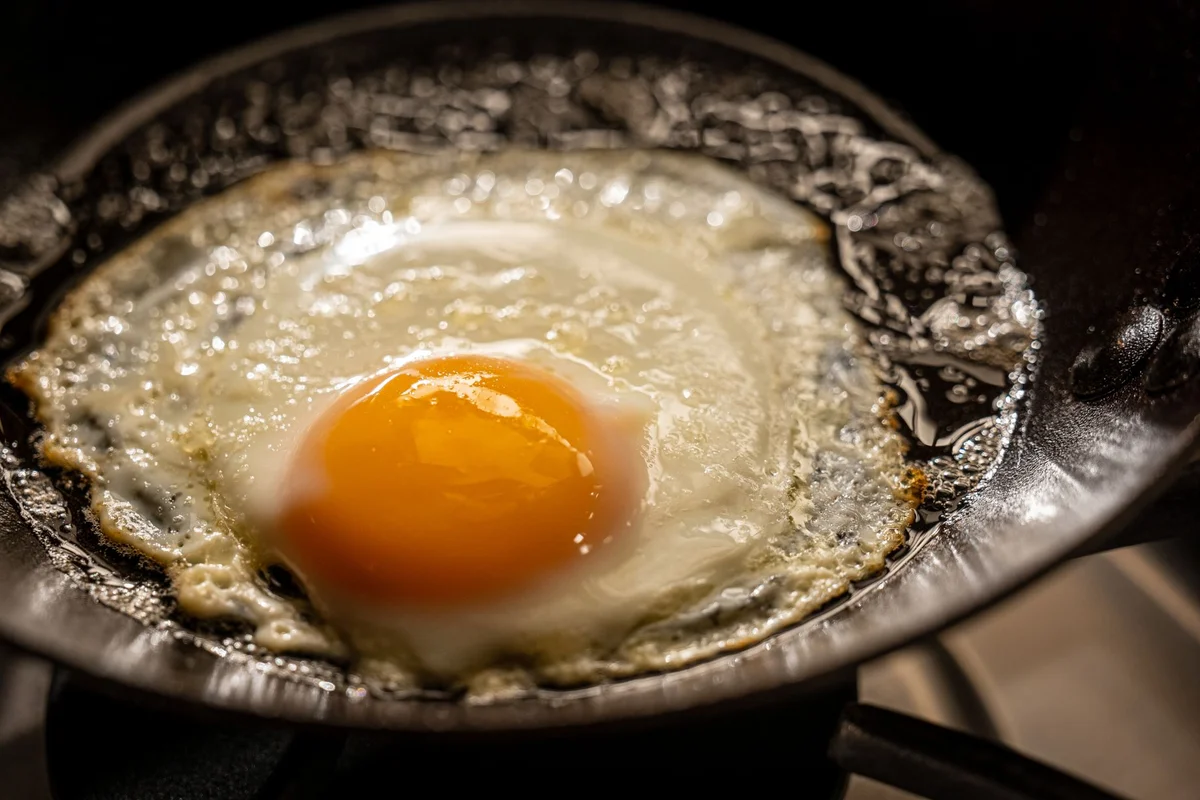
These fried eggs are cooked in a preheated pan that has been taken off the heat, giving the whites time to set while the yolks stay runny. The carefully controlled method is ideal when you want crisp, lacy edges without overcooking the eggs.
Ingredients
- 1 tablespoon (14 g)unsalted butter
- 2 large, coldeggs
- 1 pinchkosher salt
Instructions
- 1
Heat the pan
Find a lid that fits your favourite 25 cm carbon-steel pan; a 30 cm lid may fit. Put the pan in the centre of the oven and heat the oven to 230°C. Once it reaches temperature, leave the pan in the oven for a further 30 minutes.
- 2
Soften the butter
Measure the butter onto a small square of parchment paper. Leave it until soft but not melted.
- 3
Crack the eggs
When the pan is thoroughly hot, crack both eggs into a small bowl or custard cup.
- 4
Butter the pan
Carefully take the pan out of the oven using an oven mitt, pot holder or folded tea towel, then set it on the unlit hob. Add the butter and swirl to coat the pan. Before the butter has completely melted, pour in the eggs, season with the salt and cover with the lid.
- 5
Time the eggs
Set a timer for exactly 4 minutes. Warm a plate while the eggs cook.
- 6
Serve the eggs
When the timer sounds, remove the lid and use a thin spatula to loosen the eggs, paying attention to the edges where they may stick slightly. Slide them onto the warm plate and serve.
- 7
Cook one egg
For one egg, use an 20 cm skillet with a close-fitting lid, ½ tablespoon (7 g) of butter and a smaller pinch of salt. Cook for 3½ minutes.
- 8
Cook a larger batch
For more servings, heat two or three 25 cm skillets in the oven. Take one pan out at a time and cook two eggs in it; wipe it out and return it to the oven to reheat while you use another pan.
What are over-easy fried eggs?
Over-easy eggs are fried eggs turned briefly so the whites set while the yolks remain soft. This version takes a different route: the eggs cook under a lid in a hot pan that has been removed from the oven.
The recipe appeared in Season 2 of Good Eats: Reloaded. Its distinctive approach is precise, residual heat rather than an active hob, which helps make the short cooking time more controlled.
Nutrition and macros by portion
The nutrition label shows one serving as written: 246 calories, 13g protein, 1g carbs, 21g fat.
| Portion | Adjustment | kcal | Protein | Carbs | Fat |
|---|---|---|---|---|---|
| Lighter | Use less butter | 172 kcal | 9g | 1g | 15g |
| This serving | As written | 246 kcal | 13g | 1g | 21g |
| Hungry | Add toast and another egg | 369 kcal | 20g | 2g | 32g |
Most of the protein comes from the eggs, which also provide some fat; the butter adds most of the remaining fat, including saturated fat. The eggs contain very little carbohydrate, so serve with toast and a vegetable side for a more balanced plate.
Why use indirect heat?
Preheated pan: heating the skillet in the oven gives it a thorough, even warmth before the eggs go in. Taking it out before cooking means the eggs are not sitting over a lit burner.
Lid: covering the pan holds in heat and helps the whites cook from above as well as below. Keep the lid away from the hob while the pan heats, especially if the hob is part of the same range.
Choosing the eggs and butter
Fresh eggs: use the freshest you can find, as their whites tend to hold together more closely in the pan. Crack them into a small bowl first so they are ready to pour in as soon as the butter coats the skillet.
Soft butter: the butter should be pliable, not melted, when measured. It coats the hot pan quickly and adds flavour to the edges.
The crucial timing
Four minutes: start the timer as soon as the pan is covered, and stick to the recipe’s timing. The method relies on the heated pan and trapped warmth, so leaving the eggs covered longer can change the yolk texture.
Warm plate: heat the serving plate while the eggs cook. A warm plate helps keep them pleasant to eat straight from the pan.
How to tell when they are done
Set whites: after cooking, the whites should be set enough to lift with a thin spatula. Work around the edges, where a little sticking is expected.
Runny yolks: the recipe is designed to leave the yolks soft and flowing. If you prefer firmer yolks, this short-timed method may not suit your preference.
Serving ideas
Toast: serve the eggs with toast or another bread to mop up the yolk. A simple side keeps the eggs as the focus.
Fresh side: add tomatoes, mushrooms or leafy greens for colour and a more substantial plate. Cook any sides separately so the eggs can be served as soon as their timer ends.
Recipe notes & tips
- Use a pan and lid that fit snugly together so heat stays inside.
- Have the eggs cracked into a small bowl before removing the hot pan from the oven.
- Use a proper oven mitt or pot holder when handling the skillet.
- Keep the hob switched off; the pan cooks the eggs using its stored heat.
- Use a thin spatula to loosen the edges gently before lifting the eggs.
- Warm the serving plate before the four-minute timer ends.
Variations
- One egg: Use an 20 cm lidded skillet, 7 g butter, a smaller pinch of salt and a 3½-minute cooking time.
- More servings: Heat two or three skillets and cook two eggs at a time, reheating each wiped pan between batches.
- Pepper: Add freshly ground black pepper with the salt before covering the pan.
- Herbs: Scatter chopped chives over the eggs just before serving.
- Toast: Serve with toasted bread to catch the runny yolk.
Common mistakes to avoid
- Using a cold pan: The timing depends on a thoroughly heated skillet; leave it in the oven for the full extra 30 minutes.
- Cooking over a lit burner: The method uses residual heat, so set the pan on the unlit hob.
- Heating the lid on the hob: Keep it away from the range top while the pan heats, or it may become too hot.
- Overcooking: Set a timer for exactly 4 minutes and remove the lid when it sounds.
- Skipping the warm plate: Heat the plate during cooking so the eggs do not land on a cold surface.
- Roughly scraping the eggs: Use a thin spatula and work carefully around the edges to release any stuck spots.
How to store
These eggs are best eaten straight away, as the yolks firm up as they cool. If needed, refrigerate leftovers in a covered container and eat within 1 day; reheat gently, knowing the yolks may no longer be runny.
Frequently asked questions
Can I use a different type of skillet?
The recipe specifies a 25 cm carbon-steel pan. Another oven-safe skillet may work if it can be heated safely and has a well-fitting lid, but the cooking result may differ.
Why does the pan go in the oven?
The oven heats the skillet before cooking. Once removed, the pan’s stored heat cooks the eggs without a lit burner underneath.
Can I cook the eggs for longer?
The method calls for exactly 4 minutes to keep the yolks runny. Longer cooking will make them firmer, so check your preference with the stated timing first.
How do I make just one egg?
Use an 20 cm skillet with a close-fitting lid, 7 g butter, a smaller pinch of salt and a 3½-minute cooking time.
How can I cook eggs for a crowd?
Heat two or three 25 cm skillets in the oven and cook two eggs in one pan at a time. Wipe each used skillet and return it to the oven to reheat while you use another.
Why should the eggs be fresh?
Fresh eggs tend to have a higher proportion of thick white, which helps the whites hold together as they cook.
Cook it from the original
This recipe comes from altonbrown.com. Their page has the author’s own photos, notes and tips — the best place to cook it from.
Open the recipe on altonbrown.com