
Simmered Breaded Swai Fish Fillets
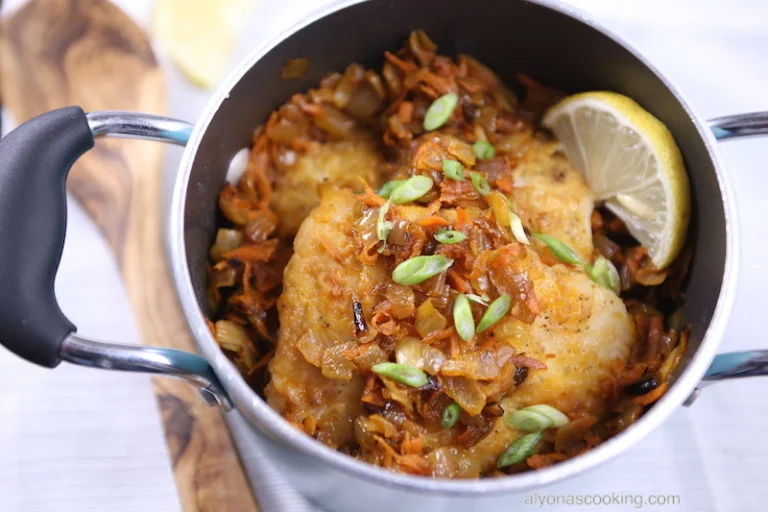
Swai fillets are seasoned, lightly coated in flour and browned before simmering beneath a soft onion, carrot and ketchup sauté. This one-pan-at-heart method makes a delicate, saucy fish supper that is ready in about 25 minutes.
Ingredients
- 3 large fillets (680 g; 1 1/2 lb)swai fillets
- 3 g (1/2 tsp)salt
- 0.5 g (1/4 tsp)ground black pepper
- 60 g (1/2 cup)plain flour
- 2 smallonions
- 2carrots
- 45 ml (3 tbsp)ketchup
- 120 ml (1/2 cup)water
- 135 ml (9 tbsp)oil, for frying and sautéing
Instructions
- 1
Cut the fillets
Cut each swai fillet in half.
- 2
Season the fish
Mix the salt and pepper in a small bowl, then sprinkle the mixture over both sides of each piece of fish.
- 3
Coat with flour
Put the flour in a shallow bowl and coat each fish piece evenly. Set the coated pieces aside.
- 4
Prepare the vegetables
Peel and dice the onions. Peel and wash the carrots, then grate them.
- 5
Brown the fish
Heat 60 ml (4 tbsp) oil in a large frying pan over medium-high heat. Fry the breaded fish for 2–3 minutes on each side, until golden.
- 6
Cook the sauté
Remove the fish and wipe the pan clean with a paper towel. Add 75 ml (5 tbsp) oil and fry the carrots and onion for about 10 minutes, until soft and much reduced in size. Stir in 45 ml (3 tbsp) ketchup and sauté for another 2 minutes. Set the mixture aside.
- 7
Layer the fish
Spoon 2 tablespoons of the sauté mixture into the bottom of a small saucepan, then add 2 fish pieces and cover them with 3 heaped tablespoons of the mixture. Repeat the layers, finishing with sauté mixture. Pour in 120 ml (1/2 cup) water and bring to the boil over medium heat.
- 8
Simmer covered
As soon as the mixture reaches a gentle boil, reduce the heat to medium-low. Cover and simmer the fish for 15 minutes.
What is simmered breaded swai?
Swai is a mild, white-fleshed fish used here in an American-style stovetop dish. The fillets are browned in a flour coating, then layered with a carrot-and-onion sauté and gently simmered.
Browning gives the fish a little colour before the covered simmer softens the coating and lets it take on the savoury, lightly sweet sauce. The result is more tender and saucy than crisp.
Nutrition and macros by portion
The nutrition label shows one serving as written: 360 calories, 18g protein, 13g carbs, 22g fat.
| Portion | Adjustment | kcal | Protein | Carbs | Fat |
|---|---|---|---|---|---|
| Lighter | Use less frying oil | 252 kcal | 13g | 9g | 15g |
| This serving | As written | 360 kcal | 18g | 13g | 22g |
| Hungry | Add potatoes or rice | 540 kcal | 27g | 20g | 33g |
The swai supplies most of the protein, while the flour, onion, carrot and ketchup provide carbohydrates. Most of the fat comes from the oil used for frying and sautéing, so serving it with extra vegetables and a modest portion of potatoes or rice makes a balanced plate.
Why the flour coating matters
Even coating: dust each piece all over, then shake off any loose flour so it browns rather than forming patches in the pan.
Gentle handling: swai is delicate, so use a broad spatula when turning the fillets and avoid crowding the pan. If needed, brown them in batches.
Build the vegetable topping
Grated carrot: it cooks down more quickly than chunks and blends into the onion to make a soft topping.
Cook until reduced: give the vegetables their full 10 minutes, stirring as needed, so they soften before the ketchup goes in. The extra 2 minutes helps the ketchup meld into the sauté.
Layering and simmering
Start with sauté: putting some of the vegetable mixture beneath the fish helps prevent the bottom layer from sitting directly on the saucepan.
Covered heat: bring the pan to a light boil, then turn it down to medium-low for the 15-minute simmer. Keep the lid on to retain the moisture the method relies on.
How to tell it is done
The fish should be opaque and flake easily when gently tested with a fork after the covered simmer. Because the pieces are layered, check a piece from the centre as well as one near the top.
The topping should be soft and saucy rather than watery. Lift the fish carefully, as the flour coating will have softened during cooking.
Serving ideas
Serve the fish hot with the vegetable mixture spooned over each portion. Boiled potatoes, rice or bread can soak up the sauce.
For a fresher contrast, add a simple green salad or steamed green vegetables alongside. Keep extra sides plain so the sweet-savoury topping remains the focus.
Recipe notes & tips
- Pat the fish dry before seasoning if it looks wet, so the flour adheres more evenly.
- Use a shallow dish wide enough to coat each piece without bending it.
- Let excess flour fall away before the fish goes into the hot oil.
- Check that the pan is hot before adding the fish so the coating begins to brown promptly.
- Grate the carrots before heating the oil to keep the sauté moving smoothly.
- Use a small saucepan that fits the fish layers snugly, as directed, to keep them covered by the topping and liquid.
Variations
- Add garlic: stir finely chopped garlic into the carrot and onion sauté near the end of its cooking time.
- Use fresh herbs: scatter chopped parsley over the finished fish for a fresh finish.
- Add chilli: mix a pinch of chilli flakes into the vegetable sauté for gentle heat.
- Swap the fish: use another mild white fish fillet of similar thickness and check it for doneness.
- Serve with greens: add steamed green beans or broccoli on the side for colour and crunch.
Common mistakes to avoid
- Crowding the frying pan: the fish may steam instead of browning; fry in batches if necessary.
- Turning the fish too soon: let the first side brown for 2–3 minutes before carefully turning it.
- Leaving large carrot pieces: grate the carrots as specified so they soften in the sauté time.
- Boiling hard: a vigorous boil can break up delicate fish; reduce to medium-low once the mixture reaches a light boil.
- Lifting the lid repeatedly: keep the saucepan covered for the 15-minute simmer so the fish cooks in the trapped moisture.
How to store
Refrigerate leftovers in a covered container and eat within 2 days. Reheat gently in a covered saucepan over low heat until hot throughout, adding a small splash of water if the sauce has thickened.
Frequently asked questions
Can I use a different white fish?
Yes, another mild white fish can work. Choose fillets of similar thickness and handle them gently, as thinner pieces may cook faster.
Can I make this without flour?
The flour creates the coating that browns in the pan. You can omit it, but the fish will not have the same browned exterior.
Why is the fish soft rather than crispy?
The fish is covered and simmered for 15 minutes after browning, which softens the flour coating. The method is designed to make a tender, saucy dish rather than crisp breaded fish.
How can I tell when the fish is cooked?
It should be opaque and flake easily with a fork. Check a piece from the centre of the layers after the simmer.
Can I prepare the vegetables ahead?
You can peel and grate or dice the vegetables ahead, then keep them covered in the refrigerator until you are ready to cook.
Can I serve it cold?
The recipe description notes that it can be eaten hot or cold. Chill leftovers promptly and keep them refrigerated until serving.
Cook it from the original
This recipe comes from alyonascooking.com. Their page has the author’s own photos, notes and tips — the best place to cook it from.
Open the recipe on alyonascooking.com