
Ukrainian Bulochki Recipe (Filled Sweet Buns)
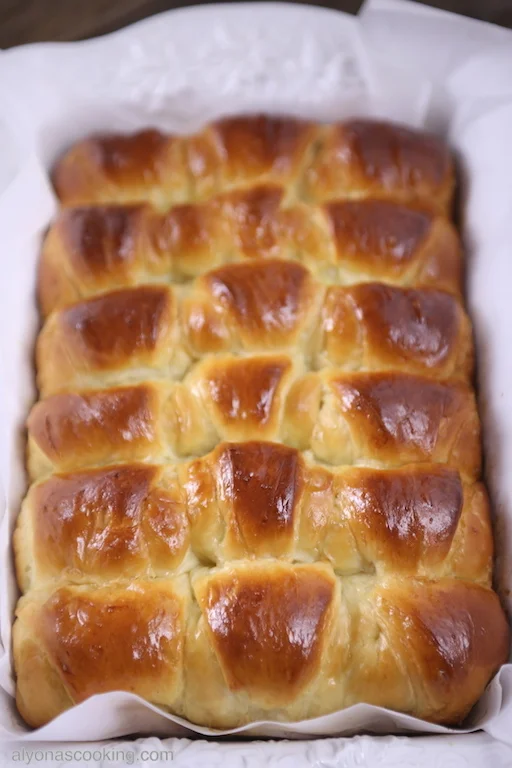
Bulochki are soft, sweet yeast buns rolled around a poppy seed filling. They take time to rise, but make a generous batch of tender, lightly glazed buns for sharing.
Ingredients
- 42 gunsalted butter
- 480 ml whole milk, dividedwhole milk
- 1 tbspyeast
- 1 tbspsugar
- 3eggs
- 200 gsugar
- 810 g, plus more for dustingall-purpose flour
- 1 1/2 tspsalt
- 1/4 tspbaking powder
- 1 tspvanilla sugar
- 240 g, at room temperaturesour cream
- 80 mlvegetable oil
- 1egg, beaten
- 60 mlwater
- 2 tbspsugar
- about 500 gready-made poppy seed filling
Instructions
- 1
Beat the eggs
Put 3 eggs and 200 g sugar in the bowl of a stand mixer. Beat on high for about 3 minutes, until thick and pale.
- 2
Heat the milk
Heat 240 ml milk with 42 g butter in the microwave until it reaches boiling point, for up to 3 minutes. Watch it closely so it does not boil over.
- 3
Make the first mixture
Add 120 g flour to the beaten eggs and mix at medium speed. With the mixer running, slowly pour in the steaming milk and mix for about 1 minute. Cover and leave for 15 minutes.
- 4
Activate the yeast
Warm the remaining 240 ml milk in the microwave for about 1 minute; it should be warm, not hot, around 27–32°C (80–90°F). Stir in 1 tbsp yeast and 1 tbsp sugar, then leave for 15 minutes.
- 5
Mix the dough
After 15 minutes, add the yeast mixture to the egg mixture. Add the baking powder, vanilla sugar, salt, sour cream and 300 g flour, then whisk well. Cover and leave for 45 minutes.
- 6
Knead and rise
After 45 minutes, add 360 g flour and 80 ml oil. Knead on low speed for 10 minutes, adding the remaining 30 g flour towards the end. Cover the bowl and leave the dough to rise for 2 hours, or until doubled in size.
- 7
Divide the dough
Turn the risen dough out onto a well-floured surface. Shape it into a log about 51 cm (20 in) long and cut it into five equal pieces.
- 8
Shape the triangles
Work with one piece at a time. Shape it into a ball by turning it over and pinching the edges underneath, then roll it into a circle about 30 cm (12 in) across. Use a pizza cutter to divide the circle into eight equal triangles.
- 9
Fill the buns
Put a heaped teaspoon of poppy seed filling at the wide end of each triangle. Pinch the sides and top together to seal the filling, fold the flap over lightly and pinch its tip to the underside of the bun.
- 10
Proof the buns
Line two 33 × 23 cm (13 × 9 in) pans with parchment paper and arrange the buns in them, about three rows per pan. Cover and leave to rise in a warm place for 1 hour.
- 11
Bake the buns
Heat the oven to 175°C (350°F). Brush the buns with the beaten egg and bake for 35–40 minutes, rotating the pans if needed.
- 12
Brush with syrup
Dissolve 2 tbsp sugar in 60 ml water in a small bowl. Brush the mixture over the buns while they are hot.
What are bulochki?
Bulochki is a name used for small, soft rolls across Russian and Ukrainian baking traditions. This version is a sweet, enriched yeast dough wrapped around poppy seed filling, then finished with a simple sugar glaze.
The method builds flavour and softness in stages: a warm milk-and-butter mixture, a yeast rise and sour cream in the dough. Rolling each dough portion into a circle and cutting it into wedges gives the buns their familiar crescent-like shape.
Nutrition and macros by portion
The nutrition label shows one serving as written: 2400 calories, 52g protein, 370g carbs, 98g fat.
| Portion | Adjustment | kcal | Protein | Carbs | Fat |
|---|---|---|---|---|---|
| Lighter | Use less glaze | 1680 kcal | 36g | 259g | 69g |
| This serving | As written | 2400 kcal | 52g | 370g | 98g |
| Hungry | Serve two buns | 3600 kcal | 78g | 555g | 147g |
The flour and added sugars provide most of the carbohydrates, while the butter, oil, sour cream and poppy seed filling contribute much of the fat. Eggs, milk, sour cream and poppy seeds contribute protein. Pair a bun with fruit or plain yoghurt for a more balanced plate; the stated yield of three servings is unusually small for the number of buns made.
The dough ingredients
Warm milk and butter: the first portion is heated and mixed into the egg-and-sugar base. The remaining milk is kept just warm so the yeast can activate without being exposed to hot liquid.
Sour cream and oil: these enrich the dough and help keep the crumb tender. The flour is added in stages, so the dough can be mixed before the final kneading.
Working with the yeast
Yeast temperature: the milk for activating the yeast should feel gently warm, not hot; the recipe gives 27–32°C (80–90°F) as a guide. Leave it for 15 minutes before adding it to the egg mixture.
Rising time: cover the dough during its 45-minute rest and its longer rise after kneading. Use the visual cue of doubled volume for the main rise, rather than relying on the clock alone.
Shaping and sealing
Even wedges: roll each portion into a circle and cut it into eight similar triangles. Keeping the pieces a similar size helps them bake at roughly the same rate.
Filling: place it at the wide end of each triangle, then pinch the seams firmly closed. Tuck and pinch the tip underneath so the filling is less likely to escape as the buns rise.
Colour and doneness
Egg wash: brush the tops with beaten egg before baking for a glossy, golden finish. Rotate the pans during baking if one side of the oven colours faster.
Baking time: begin checking at 35 minutes and bake for up to 40 minutes. The buns should look well browned on top; the recipe does not give a separate internal-temperature cue.
Serving the buns
The sugar-water glaze goes on while the buns are hot, so brush it over as soon as they come out of the oven. Let them cool enough to handle before serving.
Serve them on their own with tea or coffee, or alongside plain yoghurt or fresh fruit for a less sweet contrast. The method makes a large batch, so they are also practical for sharing.
Recipe notes & tips
- Measure the flour by weight for a more consistent dough.
- Keep the yeast-activation milk warm rather than hot.
- Flour the work surface enough to prevent sticking, but avoid working extra flour into the dough.
- Use a pizza cutter to make clean, even wedges.
- Seal each bun carefully and tuck the point underneath before setting it in the pan.
- Rotate the pans if the buns are colouring unevenly.
Variations
- Citrus zest: add finely grated lemon or orange zest to the dough for a fragrant note.
- Nut filling: use a prepared nut filling in place of the poppy seed filling.
- Jam centre: use a small spoonful of thick jam, taking care not to overfill the wedges.
- Seed topping: scatter poppy seeds over the egg-washed tops before baking.
- Less glaze: brush on only a light coating of the sugar-water mixture.
Common mistakes to avoid
- Hot yeast milk: excessive heat can hinder the yeast; warm the milk only until it feels gently warm.
- Too much filling: overfilling makes the seams difficult to close; use a heaped teaspoon as directed.
- Loose seams: filling may leak during baking; pinch the edges closed and tuck the tip underneath.
- Uneven wedges: very different sizes can bake unevenly; divide each circle into eight similar pieces.
- Skipping the rises: the dough needs its covered resting times; allow the stated rises and look for doubled volume.
- Overbaking: the buns can become dry; check them from 35 minutes and stop once they are browned.
How to store
Once cool, store the buns in an airtight container at room temperature for up to 2 days, or freeze them for longer storage. Reheat briefly in a low oven until warmed through; brush with a little water if they seem dry.
Frequently asked questions
Can I make the dough without a stand mixer?
Yes. Beat the eggs and sugar with a hand mixer, then stir in the remaining ingredients. Knead by hand until the dough is smooth and elastic, allowing extra time if needed.
How can I tell if the yeast is active?
After 15 minutes, the yeast mixture should look foamy or visibly active. If it remains unchanged, check that the yeast is fresh and that the milk was not too hot.
Can I use homemade poppy seed filling?
Yes, provided it is thick enough to stay inside the buns. Cool it before shaping, and use a small amount so the seams can be sealed.
Why did the filling leak out?
The buns may have been overfilled or not sealed firmly. Use about a heaped teaspoon per wedge, pinch all the edges together and tuck the point underneath.
Can I prepare the buns ahead?
The recipe does not specify an overnight rise. For best results, follow the stated proofing times and bake the buns on the day you shape them.
How many buns does this recipe make?
The method divides the dough into five pieces and cuts each circle into eight wedges, which gives about 40 buns. That is more than the stated three servings, so treat the serving count as a guide rather than a piece count.
Cook it from the original
This recipe comes from alyonascooking.com. Their page has the author’s own photos, notes and tips — the best place to cook it from.
Open the recipe on alyonascooking.com