
Dulce de Membrillo
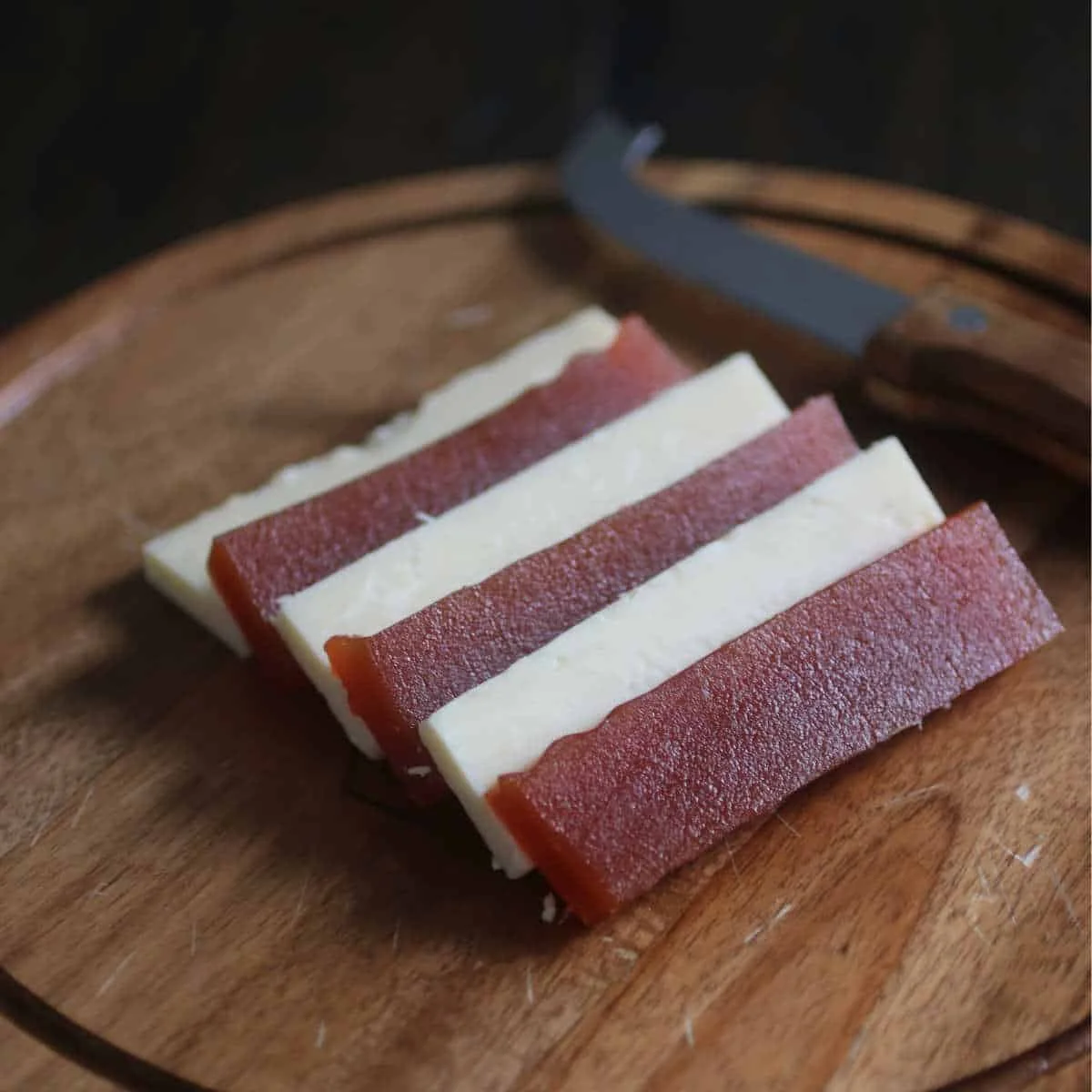
Dulce de membrillo is a firm Spanish quince paste, traditionally served in slices with Manchego or another cheese. It takes patience to simmer and set, but makes an easy make-ahead addition to a cheese board.
Ingredients
- 1.36 kgquince, peeled, seeded and diced
- 907 gcaster sugar
- 45 mllemon juice
- 240 ml (1 cup)water
- For the mouldbutter
- To serveManchego cheese or another hard or semi-hard cheese
- 1kitchen thermometer
- 1 square mould, 20 cm (8 inches)springform mould
- 1hand blender
- 1offset spatula
- As neededcling film
Instructions
- 1
Combine the quince
Put the quince, caster sugar and lemon juice in a saucepan over a medium heat.
- 2
Melt the sugar
Stir frequently as the sugar melts.
- 3
Simmer the mixture
When the sugar has melted and the mixture starts to bubble, turn the heat down low. Simmer uncovered for about an hour, stirring frequently.
- 4
Check the quince
After simmering, the thermometer should read around 110°C (230°F), and the diced quince should have turned ruby red.
- 5
Prepare the mould
Butter the square springform mould and put it in the refrigerator.
- 6
Purée the quince
Use a hand blender to purée the quince mixture.
- 7
Fill the mould
Pour the hot mixture into the buttered mould. Tap the mould against a work surface to release air bubbles.
- 8
Smooth the top
If needed, level the surface of the quince paste with an offset spatula.
- 9
Cool completely
Leave the paste to cool to room temperature.
- 10
Chill until firm
Cover the mould with cling film and refrigerate for 48 hours, until the paste is firm.
- 11
Unmould the paste
Turn the paste out of the mould onto a plate, then transfer it to a serving dish. If needed, carefully loosen it from the sides of the mould with a knife.
- 12
Cut into portions
Cut the quince paste into 30 portions.
- 13
Store in the fridge
Cover the paste with cling film and store it in the refrigerator for up to 3 months.
- 14
Serve with cheese
Serve with Manchego or another hard or semi-hard cheese, and bread and/or crackers.
What is dulce de membrillo?
Dulce de membrillo is a set quince paste from Spain, commonly served in slices alongside Manchego. It is also popular in many South American countries, where it is enjoyed as a sweet contrast to cheese.
This version cooks diced quince with sugar and lemon juice until ruby red, then blends it smooth and chills it in a mould. The long, gentle simmer and extended setting time help give it a firm texture that can be sliced.
Nutrition and macros by portion
The nutrition label shows one serving as written: 143 calories, 0g protein, 37g carbs, 0g fat.
| Portion | Adjustment | kcal | Protein | Carbs | Fat |
|---|---|---|---|---|---|
| Lighter | Smaller paste portion | 100 kcal | 0g | 26g | 0g |
| This serving | As written | 143 kcal | 0g | 37g | 0g |
| Hungry | Larger cheese-and-paste serving | 215 kcal | 0g | 56g | 0g |
Most of the carbohydrate in a portion comes from the quince and caster sugar; the fruit also contributes a little fibre. The sugar is the main source of energy, while the quince and lemon juice add very little fat or protein. Serve a slice with cheese and bread or crackers for a more balanced snack.
Choosing and preparing quince
Ripe quince: Peel, seed and dice the fruit as directed so it cooks evenly. Keep the pieces reasonably similar in size.
Caster sugar: Stir as it melts to help it combine evenly with the fruit. Once the mixture bubbles, lower the heat to a gentle simmer.
Getting the colour and consistency right
Gentle heat: Simmer the mixture uncovered for about an hour, stirring frequently to help prevent it catching on the bottom of the pan.
Doneness cue: Look for a ruby-red colour and a thermometer reading around 110°C. The recipe gives both as signs that the quince has cooked sufficiently before blending.
Blending and moulding
Smooth purée: Blend the cooked quince mixture with a hand blender before pouring it into the prepared mould. Take care with the hot mixture as you blend and transfer it.
Air bubbles: Tap the filled mould against a work surface to release trapped air. Use an offset spatula to smooth the top if it needs levelling.
Allowing enough time to set
Room-temperature cooling: Let the filled mould cool completely before covering it. This gives the paste time to cool before its long chill.
Chilling: Refrigerate for 48 hours so the paste firms up enough to unmould and slice. The listed total time does not include this setting period.
Serving with cheese
Classic pairing: Slice the paste and serve it with Manchego, or choose another hard or semi-hard cheese. The recipe also suggests bread and/or crackers.
For a board: Cut the paste into 30 portions and arrange them with the cheese and accompaniments. Keep the paste covered between servings.
Recipe notes & tips
- Stir frequently during the simmer to help stop the mixture catching on the bottom of the saucepan.
- Use a thermometer to check for around 110°C, alongside the ruby-red colour cue.
- Butter the mould before chilling it so it is ready when the hot purée is done.
- Tap the filled mould on a work surface to dislodge air bubbles before the paste cools.
- Allow the full 48 hours of refrigeration before trying to unmould the paste.
- Use a clean knife to loosen the paste gently from the mould if it sticks.
Variations
- Try another cheese: Serve the paste with a different hard or semi-hard cheese.
- Add bread: Offer slices of bread alongside the cheese and quince paste.
- Use crackers: Serve the paste and cheese with crackers instead of, or as well as, bread.
- Change the portions: Cut the set paste into larger or smaller pieces to suit your serving platter.
Common mistakes to avoid
- Rushing the simmer: Cook over low heat for about an hour, stirring frequently, until the quince is ruby red.
- Skipping the temperature check: Use a kitchen thermometer and look for a reading around 110°C.
- Pouring into an unbuttered mould: Butter the mould first to make it easier to release the set paste.
- Leaving air bubbles: Tap the filled mould against a work surface before the mixture cools.
- Unmoulding too soon: Chill the paste for 48 hours so it has time to firm up.
- Forcing a stuck edge: Gently loosen the sides with a knife rather than pulling at the paste.
How to store
Cover the quince paste with cling film and keep it in the refrigerator for up to 3 months, as directed in the recipe. This recipe gives no reheating instructions; serve it chilled or let a portion sit briefly at room temperature before serving.
Frequently asked questions
How long does dulce de membrillo take to set?
It needs 48 hours in the refrigerator after cooling to room temperature. The setting time is separate from the stated 85-minute total time.
How can I tell when the quince mixture is ready to blend?
After about an hour of simmering, it should be ruby red and read around 110°C on a kitchen thermometer.
What cheese goes well with quince paste?
Manchego is the suggested pairing. Another hard or semi-hard cheese also works.
Can I serve dulce de membrillo with bread or crackers?
Yes. The recipe suggests serving it with cheese as well as bread and/or crackers.
How many portions does this recipe make?
It makes 30 portions, according to the recipe.
How long can I keep quince paste in the refrigerator?
The recipe says to cover it with cling film and store it in the refrigerator for up to 3 months.
Cook it from the original
This recipe comes from 196flavors.com. Their page has the author’s own photos, notes and tips — the best place to cook it from.
Open the recipe on 196flavors.com