
Bulgogi
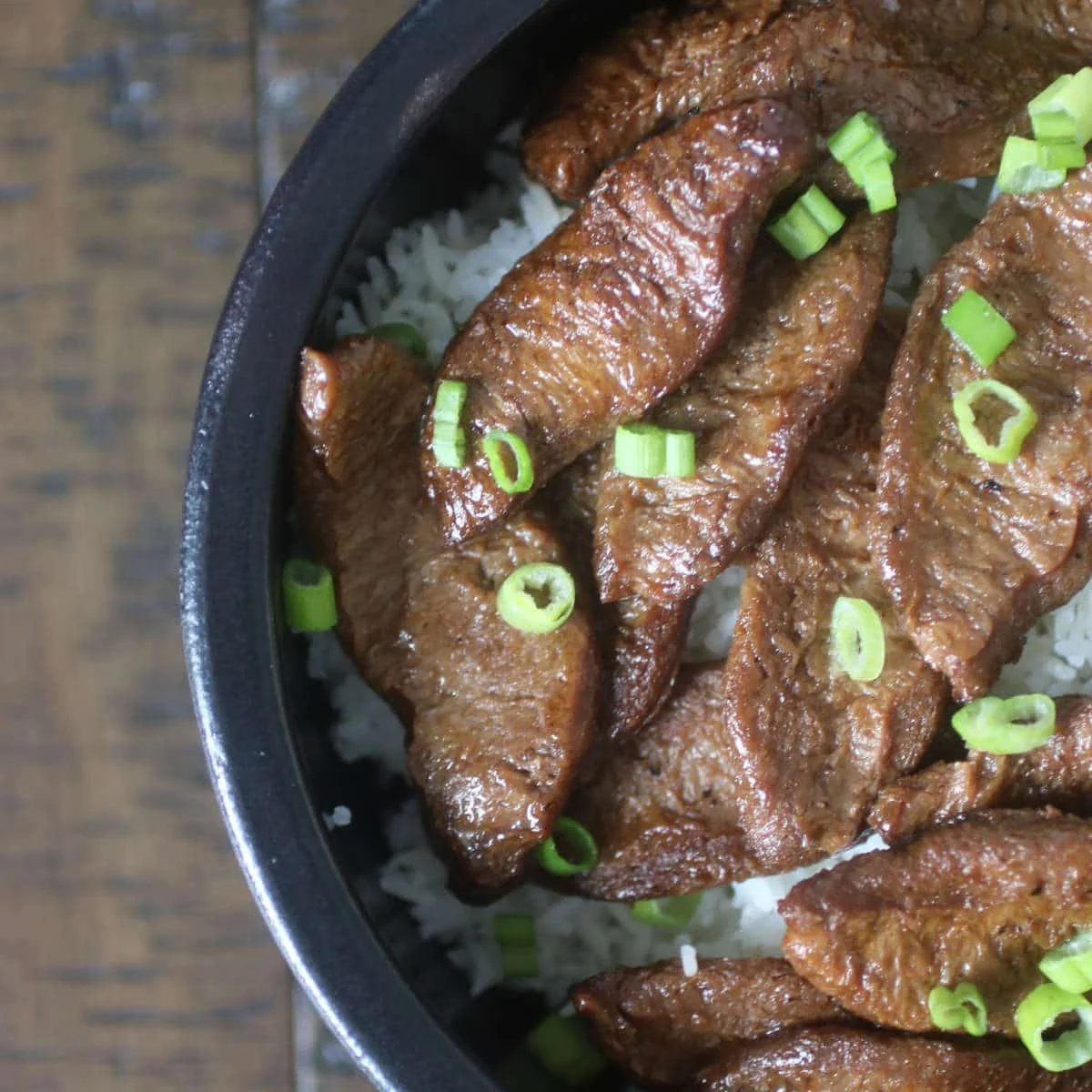
Bulgogi is Korean marinated beef cooked quickly over high heat until lightly browned and savoury-sweet. Thinly sliced sirloin and a short marinade make it a flavourful dish to serve straight from the barbecue pan.
Ingredients
- 800 gsirloin steak, thinly sliced
- 75 ml (5 tablespoons)soy sauce
- 15 ml (1 tablespoon)Korean soy sauce (gukganjang)
- 45 ml (3 tablespoons)light brown sugar
- 15 ml (3 teaspoons)runny honey
- 45 ml (3 tablespoons)Jinro makgeolli or another rice wine
- 30 ml (2 tablespoons)sesame oil
- 45 ml (3 tablespoons)chopped garlic
- 15 ml (1 tablespoon)ground black pepper
- 15 ml (3 teaspoons)toasted sesame seeds
- 60 ml (4 tablespoons)chopped spring onion
- 15 ml (1 tablespoon)puréed kiwi
- 30 ml (2 tablespoons)puréed pear
- 15 ml (1 tablespoon)puréed onion
- As neededKorean barbecue grill or pan
Instructions
- 1
Mix the marinade
Put all the marinade ingredients in a large bowl and stir them together.
- 2
Coat the beef
Add the sliced beef and mix thoroughly so the marinade covers it evenly.
- 3
Marinate the beef
Cover the bowl and leave the beef to marinate at room temperature for 45 minutes.
- 4
Cook in batches
Heat the Korean barbecue pan over high heat. Fry and toss the beef in small batches until lightly browned on both sides.
- 5
Keep the pan hot
Make sure the pan is very hot so the beef sizzles as soon as it touches the surface.
What is bulgogi?
Bulgogi is a Korean grilled meat dish; its name is often translated as “fire meat”. Thin slices of beef are marinated, then cooked quickly over high heat, traditionally on a Korean barbecue.
This version combines soy, sugar, honey, sesame oil and fruit purées for a sweet-savoury marinade. The beef is cooked in batches so it browns rather than stews in its own juices.
Nutrition and macros by portion
The nutrition label shows one serving as written: 590 calories, 44g protein, 28g carbs, 30g fat.
| Portion | Adjustment | kcal | Protein | Carbs | Fat |
|---|---|---|---|---|---|
| Lighter | More vegetables, less beef | 413 kcal | 31g | 20g | 21g |
| This serving | As written | 590 kcal | 44g | 28g | 30g |
| Hungry | Larger beef portion | 885 kcal | 66g | 42g | 45g |
Beef supplies most of the protein and a substantial share of the fat; sesame oil adds more fat, while the sugar, honey and fruit purées contribute carbohydrates. Serve a portion with rice and plenty of vegetables, adjusting the rice to suit the rest of the meal.
The marinade ingredients
Soy sauces: regular soy sauce brings savoury depth, while gukganjang adds a distinctly Korean seasoning. Both are salty, so taste the cooked beef before adding any extra seasoning.
Fruit and sweeteners: pear and kiwi purées accompany brown sugar and honey. The fruit adds flavour and helps coat the thin slices; the sweeteners encourage browning, so watch the beef closely.
Aromatics: garlic, spring onion, black pepper and sesame seeds give the marinade its fragrant, nutty character. Sesame oil adds richness, while the rice wine rounds out the mixture.
Why slice the beef thinly?
Thin slices take up the marinade quickly and cook in moments on a hot surface. If slicing the sirloin yourself, chilling it briefly can make it easier to cut into even pieces.
Even slices help the batch finish at roughly the same time. Keep the pieces separate as you add them to the pan so more of the surface makes contact with the heat.
Marinating and timing
The recipe calls for 45 minutes of marinating at room temperature. Keep the beef covered during that time and avoid extending the room-temperature rest.
Have the grill pan hot before cooking and work in small batches. The total cooking time depends on the heat and thickness of the slices, so use the light browning described in the method as your cue.
Getting a good sear
A very hot pan should make the beef sizzle on contact. If the meat releases liquid and begins to simmer, remove some pieces and cook smaller batches.
Turn or toss the slices so both sides brown lightly, then take each batch off the heat promptly. The thin cuts can overcook quickly if left on the pan.
Ways to cook it
The method uses a Korean barbecue pan, but a hot plate on a charcoal grill is also suggested. Keep the beef in small batches whichever surface you use.
You can also grill the beef on the oven’s upper shelf using the grill setting. Watch it closely throughout, as the sugary marinade can burn.
What to serve with bulgogi
Serve the beef hot with rice and vegetables for a complete meal. Crisp lettuce leaves, cucumber or lightly dressed greens offer a fresh contrast to the rich, sweet-savoury meat.
Keep any extra salty sauces to a minimum at the table, since the marinade already contains two kinds of soy sauce.
Recipe notes & tips
- Slice the beef thinly and as evenly as possible so it cooks at a similar rate.
- Mix the marinade thoroughly before adding the beef.
- Preheat the barbecue pan well so the beef sizzles on contact.
- Cook only a small batch at a time to avoid pooling juices.
- Watch the beef closely because the sweet marinade can darken quickly.
Variations
- Use another rice wine: substitute a different rice wine for the makgeolli.
- Choose a different cut: use another tender, thinly sliced beef cut.
- Add leafy wraps: serve the cooked beef in lettuce leaves with rice.
- Serve with vegetables: add fresh cucumber or greens alongside the beef.
- Use the oven grill: cook on the upper shelf, watching closely to prevent burning.
Common mistakes to avoid
- Crowding the pan: the beef can release liquid and stew instead of browning, so cook smaller batches.
- Starting with a cool pan: the meat will not sizzle properly, so heat the pan thoroughly first.
- Leaving the beef unattended: the sweet marinade can burn, so stay close while it cooks.
- Using uneven slices: pieces may cook at different rates, so aim for consistent thickness.
- Adding extra soy sauce automatically: the marinade is already salty, so taste before seasoning further.
How to store
Refrigerate leftover cooked bulgogi in a covered container and eat within 3 days. Reheat in a hot pan until steaming throughout; avoid prolonged cooking, which can dry out the thin slices.
Frequently asked questions
Can I cook bulgogi without a Korean barbecue pan?
Yes. The recipe suggests using a hot plate over a charcoal grill or the upper shelf of an oven on the grill setting. Watch closely when using the oven, as the marinade can burn.
Why does the pan need to be very hot?
High heat helps the beef sizzle and brown quickly. If the pan is not hot enough, the meat may release liquid before it browns.
Can I marinate the beef for longer?
This recipe specifies 45 minutes at room temperature. For a longer wait, keep the covered beef refrigerated rather than leaving it out.
How do I stop the beef from becoming watery?
Cook it in small batches on a well-heated pan. Overfilling the pan can lower its heat and allow juices to collect.
What goes well with bulgogi?
Rice and vegetables make a simple accompaniment. Lettuce, cucumber or greens provide a fresh contrast to the marinated beef.
Cook it from the original
This recipe comes from 196flavors.com. Their page has the author’s own photos, notes and tips — the best place to cook it from.
Open the recipe on 196flavors.com