
Bulgogi
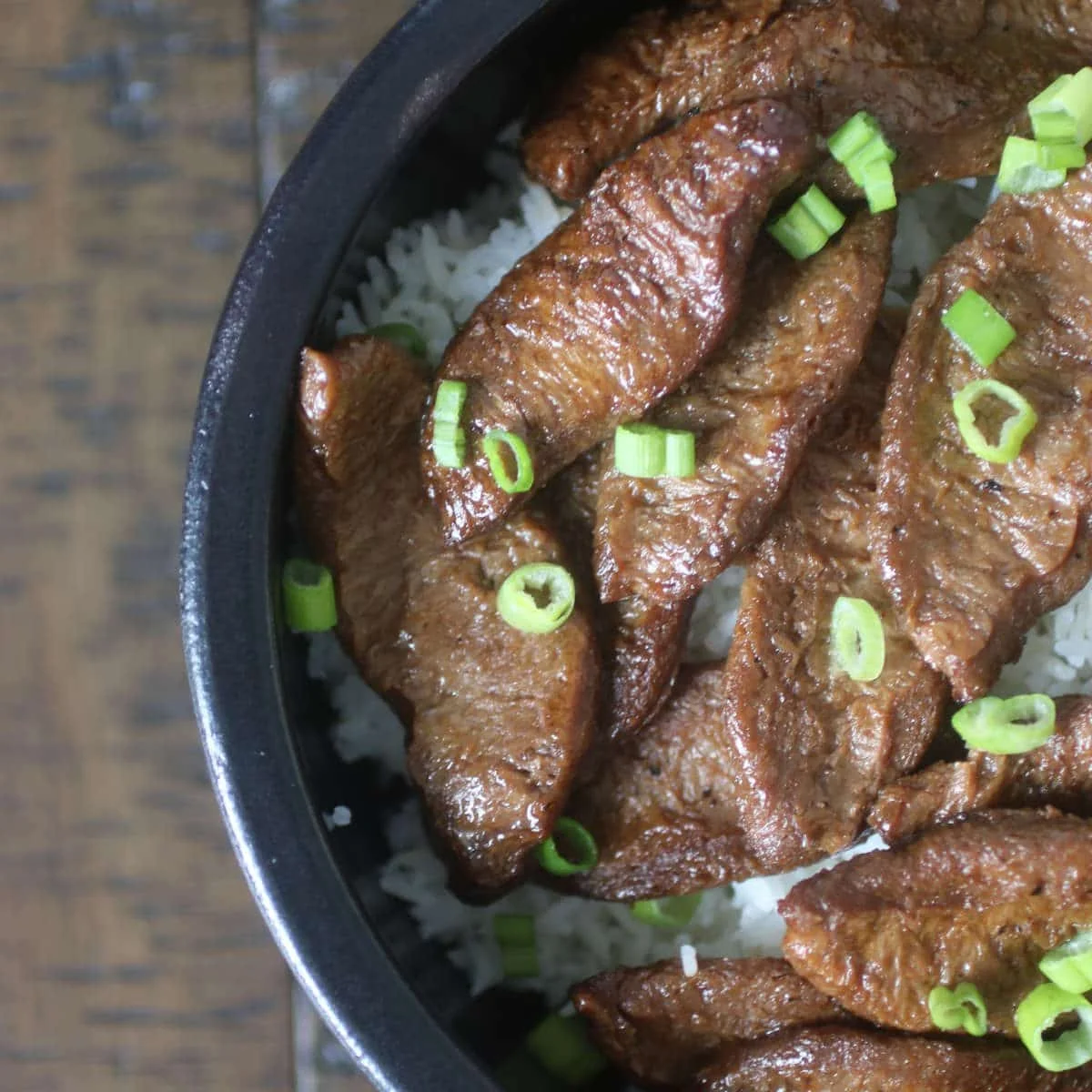
Bulgogi is a Korean dish of thinly sliced beef marinated in a sweet, savoury mixture and cooked quickly on a very hot barbecue griddle. This version uses pear and kiwi purée in the marinade and is ready in about 50 minutes, including marinating time.
Ingredients
- 800 gbeef ribeye, thinly sliced
- 5 tablespoonssoy sauce
- 1 tablespoonKorean soy sauce (gukganjang)
- 3 tablespoonslight brown sugar
- 3 teaspoonsrunny honey
- 3 tablespoonsJinro makgeolli (or another rice wine)
- 2 tablespoonssesame oil
- 3 tablespoonschopped garlic
- 1 tablespoonground black pepper
- 3 teaspoonstoasted sesame seeds
- 4 tablespoonschopped spring onion
- 1 tablespoonpuréed kiwi
- 2 tablespoonspuréed pear
- 1 tablespoonpuréed onion
- as neededKorean barbecue
Instructions
- 1
Mix the marinade
Put all the marinade ingredients in a large bowl and mix them together.
- 2
Coat the beef
Add the bulgogi beef to the prepared marinade and mix well so the slices are coated.
- 3
Marinate the beef
Cover the bowl and leave the beef to marinate at room temperature for 45 minutes.
- 4
Cook in batches
Heat the Korean barbecue griddle over high heat. Fry and toss the beef in small batches until lightly browned on both sides.
- 5
Check the griddle
Make sure the griddle is very hot so the meat sizzles as soon as it touches the surface.
What is bulgogi?
Bulgogi is a Korean grilled dish made with thin slices of marinated meat; its name is commonly translated as “fire meat”. It belongs to the gui tradition of Korean grilling, where the meat cooks rapidly over a hot surface.
In this version, soy, sesame oil and aromatics give the beef a savoury base, while sugar, honey and fruit purées bring sweetness and help coat the slices.
Nutrition and macros by portion
The nutrition label shows one serving as written: 430 calories, 26g protein, 12g carbs, 30g fat.
| Portion | Adjustment | kcal | Protein | Carbs | Fat |
|---|---|---|---|---|---|
| Lighter | More vegetables, less beef | 301 kcal | 18g | 8g | 21g |
| This serving | As written | 430 kcal | 26g | 12g | 30g |
| Hungry | Larger beef portion | 645 kcal | 39g | 18g | 45g |
The beef supplies most of the protein and fat, while the brown sugar, honey and fruit purées contribute carbohydrates. Soy sauces account for much of the sodium. Serve a portion with rice and vegetables, adjusting the rice to suit how substantial you want the meal to be.
The marinade ingredients
Soy sauces: the regular soy sauce brings savoury depth, while Korean gukganjang adds a distinct seasoning note. Both are salty, so coat the beef evenly rather than adding extra salt by default.
Fruit and onion: puréed kiwi, pear and onion spread through the marinade and cling to the thin beef slices. The recipe includes all three alongside garlic, spring onion and black pepper.
Sweetness and aroma: brown sugar and honey provide sweetness, while sesame oil and toasted sesame seeds contribute a nutty flavour. Makgeolli or another rice wine rounds out the marinade.
Why slice the beef thinly?
Thin slices take on the marinade quickly and cook in a short time over high heat. If your beef is difficult to slice, chilling it briefly can make it firmer and easier to cut evenly.
Try to keep the slices similar in thickness. That helps them brown at roughly the same rate without leaving some pieces overcooked while others are still cooking.
Marinating for 45 minutes
Mix the beef thoroughly with the marinade so the sliced pieces are coated rather than sitting under a pool of liquid. Cover the bowl and leave it at room temperature for the stated 45 minutes.
The recipe’s total time is 50 minutes, leaving a short cooking window after marinating. Have the griddle ready so the beef can go straight from the bowl to the hot surface.
Getting the griddle hot
High heat is central to this method: the meat should sizzle as soon as it reaches the griddle. Let the surface heat fully before adding the first batch.
Cook in small batches, as directed. Crowding the griddle can lower its temperature and make the beef steam instead of taking on the light browning the recipe calls for.
What to serve with bulgogi
Serve the beef straight from the griddle with rice for a simple meal. A crisp salad or lightly dressed vegetables can add freshness alongside its sweet, savoury flavour.
You can also set out lettuce leaves and let everyone wrap portions of beef at the table. Keep any extra accompaniments separate so the grilled meat remains the focus.
Recipe notes & tips
- Slice the beef as thinly and evenly as you can so it cooks consistently.
- Mix the marinade thoroughly before adding the beef.
- Let the griddle become very hot before cooking the first batch.
- Keep batches small so the beef can brown rather than steam.
- Have your serving dishes and accompaniments ready before you start cooking.
Variations
- Use another rice wine: Substitute a different rice wine for the makgeolli.
- Serve in lettuce: Offer lettuce leaves for wrapping the cooked beef.
- Add a rice side: Pair the bulgogi with plain cooked rice.
- Bring in fresh crunch: Serve with a crisp salad or vegetables.
- Cook on a barbecue: Use a suitable hot Korean barbecue surface instead of a griddle.
Common mistakes to avoid
- A cool griddle: Wait until the surface is very hot so the beef sizzles on contact.
- Crowding the surface: Cook smaller batches to help the meat brown instead of steam.
- Uneven slices: Cut the beef to a similar thickness so pieces cook at a similar pace.
- Skipping the coating: Mix the beef well with the marinade so the slices are evenly covered.
- Overcooking thin slices: Watch closely and take each batch off once lightly browned on both sides.
How to store
Refrigerate leftover cooked bulgogi in a covered container and use within 3 days. Reheat in a hot pan until steaming throughout; avoid prolonged cooking, which can make the thin beef tough.
Frequently asked questions
Can I marinate the beef for longer?
This recipe specifies 45 minutes at room temperature. For a longer wait, refrigerate the covered beef rather than leaving it out.
Can I use a different cut of beef?
Yes, choose a tender cut that can be sliced thinly. Even slices help the beef cook quickly and consistently.
What can I use instead of makgeolli?
The recipe allows another rice wine in its place.
How do I know the griddle is hot enough?
The beef should sizzle as soon as it touches the griddle. If it does not, let the surface heat further before cooking.
Why should I cook the beef in batches?
Small batches help the griddle stay hot, making it easier for the beef to brown rather than steam.
What goes well with bulgogi?
Rice and vegetables are straightforward accompaniments. Lettuce leaves also make handy wraps for the beef.
Cook it from the original
This recipe comes from 196flavors.com. Their page has the author’s own photos, notes and tips — the best place to cook it from.
Open the recipe on 196flavors.com