
Apple Pie Scones
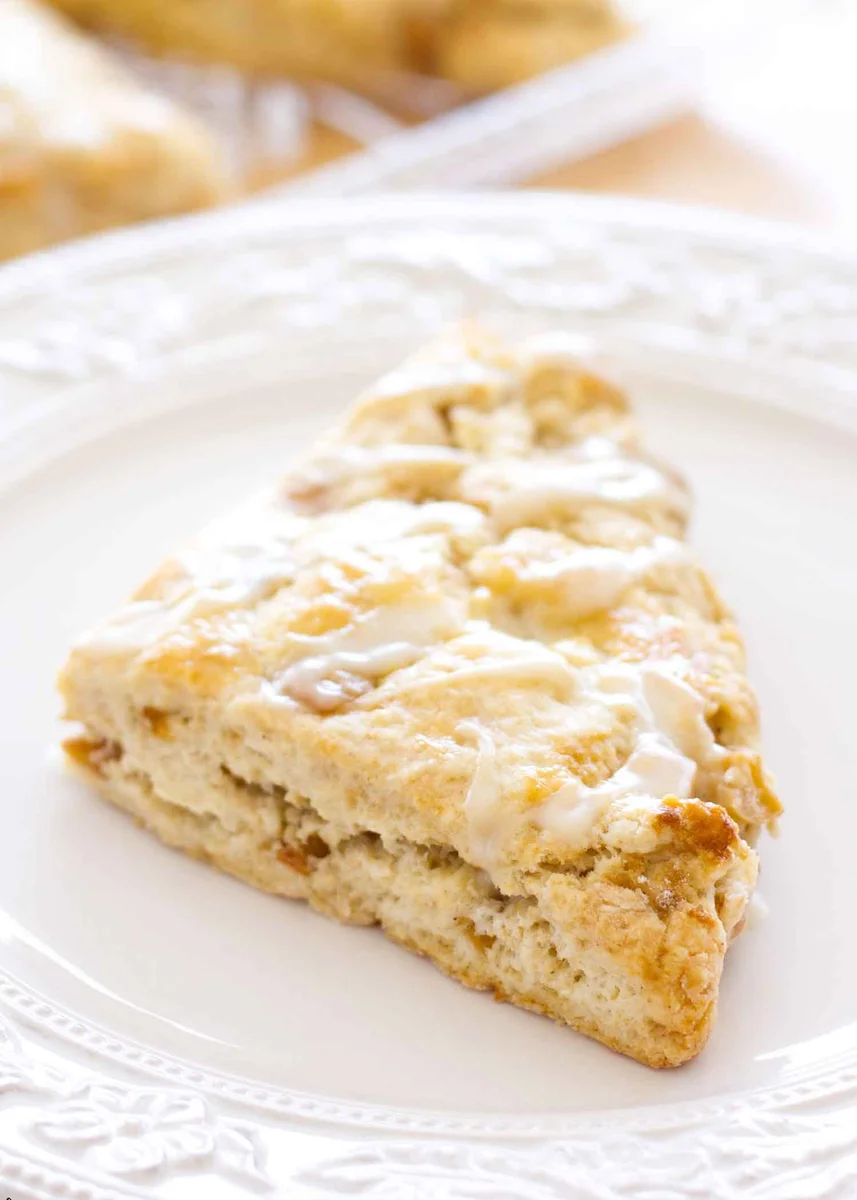
These American-style apple pie scones combine tender, buttery dough with warmly spiced diced apples and a simple maple glaze. Make them for breakfast, brunch or an afternoon treat; the apples are cooked briefly first to build flavour and keep the dough from getting too wet.
Ingredients
- 240 g (2 cups)plain flour
- 25 g (2 tbsp)sugar
- 25 g (2 tbsp)brown sugar
- 12 g (1 tbsp)baking powder
- 1.5 g (1/4 tsp)salt
- 1.3 g (1/2 tsp)ground cinnamon
- 113 g (8 tbsp), cold and cubedbutter
- 1egg
- 120 ml (1/2 cup), plus extra for brushingcream
- 115 g (3/4 cup), finely dicedapples
- 14 g (1 tbsp)butter
- 5 ml (1 tsp)vanilla extract
- 2.6 g (1 tsp)ground cinnamon
- 1 g (1/2 tsp)ground nutmeg
- 25 g (2 tbsp)brown sugar
- 120 g (1 cup)icing sugar
- 15–30 ml (1–2 tbsp)milk
- 15 ml (1 tbsp)maple syrup
Instructions
- 1
Heat the oven
Preheat the oven to 200°C (400°F).
- 2
Cook the apples
Put the diced apples, 14 g butter, vanilla, 2.6 g cinnamon, nutmeg and 25 g brown sugar in a small saucepan over low to medium heat. Cook for 5–8 minutes, stirring occasionally, so the flavours come together.
- 3
Mix the dough
While the apples cook, briefly mix the flour, both sugars, baking powder, salt and 1.3 g cinnamon in a mixer bowl. With the mixer on low, add the cold butter cubes one at a time. Once the mixture looks like coarse crumbs, add the egg and cream, mixing only until just combined.
- 4
Add the apples
Take the apples off the heat and use a slotted spoon to transfer them into the dough. Mix just until combined.
- 5
Shape and bake
Turn the dough onto a floured surface and pat it into a circle about 2.5 cm (1 inch) thick. Cut it into eight wedges, place them on a greased baking sheet and bake for 17–18 minutes, until golden brown.
- 6
Make the glaze
While the scones bake, mix the icing sugar and maple syrup in a small bowl. Add the milk 15 ml (1 tbsp) at a time until the glaze reaches your preferred consistency; the recipe typically uses 15 ml.
- 7
Glaze the scones
Let the scones cool for a couple of minutes, then pour the icing over them.
- 8
Serve the scones
Enjoy.
What are apple pie scones?
Scones are a familiar American bakery treat, often served for breakfast or alongside coffee. This version borrows the cosy combination of apple, cinnamon and nutmeg associated with apple pie.
Cooking the diced apples with butter, sugar and spices gives them a head start before they go into the dough. The result is a tender, buttery scone with pockets of spiced fruit and a light maple icing.
Nutrition and macros by portion
The nutrition label shows one serving as written: 425 calories, 6g protein, 62g carbs, 18g fat.
| Portion | Adjustment | kcal | Protein | Carbs | Fat |
|---|---|---|---|---|---|
| Lighter | Use less glaze | 298 kcal | 4g | 43g | 13g |
| This serving | As written | 425 kcal | 6g | 62g | 18g |
| Hungry | Serve two scones | 638 kcal | 9g | 93g | 27g |
The flour and sugars provide most of the carbohydrates, while butter and cream contribute much of the fat. The egg and cream supply some protein, but these are primarily a sweet, flour-based bake. Pair a scone with yoghurt or eggs and fresh fruit for a more balanced plate.
Choosing the apples
Apple pieces: Dice the apples finely so they distribute through the wedges and soften during their brief time in the pan and oven.
Spice mixture: Cinnamon and nutmeg flavour the fruit, while vanilla and brown sugar add a rounded sweetness. Use the slotted spoon to leave excess cooking liquid behind when adding the apples to the dough.
Keeping the dough flaky
Cold butter: Keep the butter chilled and cubed before mixing it into the flour. Stop once the mixture resembles coarse crumbs rather than working it into a smooth paste.
Light mixing: Add the egg and cream only until the dough comes together, then fold in the apples briefly. Overmixing can make scones dense instead of tender.
Shaping and baking
Even thickness: Pat the dough into a circle about 2.5 cm (1 inch) thick so the wedges bake at a similar rate. Flour the work surface enough to prevent sticking, but avoid working extra flour into the dough.
Doneness: Bake at 200°C (400°F) for 17–18 minutes. Look for golden-brown tops and edges; ovens can vary, so start checking at the earlier end of the range.
Getting the glaze right
Milk gradually: Mix the icing sugar and maple syrup first, then add the milk a tablespoon at a time. Stop when the glaze is thick enough to pour but not so runny that it disappears off the scones.
Slightly cooled: Let the scones rest for a couple of minutes before icing. They will still be warm, but the glaze is less likely to melt away immediately.
When to serve them
Breakfast or brunch: Serve a scone with plain yoghurt or fruit for a simple spread. They also work as an afternoon snack with tea or coffee.
On the side: If serving them as part of brunch, pair them with eggs or a savoury dish to balance their sweetness.
Recipe notes & tips
- Keep the butter cold until it is time to mix it into the flour.
- Use the slotted spoon to avoid adding too much liquid from the cooked apples.
- Mix the dough only until the ingredients come together.
- Flour the work surface lightly before shaping the dough.
- Add milk to the glaze gradually so you can control its thickness.
- Let the scones cool for a couple of minutes before icing.
Variations
- Tart apples: Choose a tart variety to give the sweet dough and glaze a brighter contrast.
- Extra cinnamon: Add a little more cinnamon to the apple mixture for a stronger spice note.
- Chopped nuts: Fold chopped pecans or walnuts into the dough with the apples for added crunch.
- No maple syrup: Leave out the syrup and use a little extra milk in the icing for a simple glaze.
- Coarser topping: Sprinkle a little brown sugar over the wedges before baking for a crisp, sweet finish.
Common mistakes to avoid
- Warm butter: Soft butter blends into the flour instead of forming crumbly pieces; keep it cold and cubed.
- Wet dough: Adding all the apple cooking liquid can make the dough sticky; lift the fruit out with a slotted spoon.
- Overmixing: Mixing until smooth can make the scones tough; stop as soon as the dough comes together.
- Uneven shaping: A lopsided or unevenly thick circle bakes inconsistently; pat it to an even 2.5 cm (1 inch) thickness.
- Runny glaze: Adding too much milk at once makes the icing thin; add it a tablespoon at a time.
- Icing too soon: Glazing straight from the oven can make the icing melt away; wait a couple of minutes.
How to store
Store cooled scones in an airtight container at room temperature for up to 2 days, or refrigerate for up to 4 days. Warm briefly in a low oven or microwave; the glaze may soften as it reheats.
Frequently asked questions
Which apples work best?
Use a firm apple that holds its shape when cooked. A tart variety gives a pleasant contrast to the sweet dough and glaze.
Can I make the dough ahead?
For best results, bake the scones soon after mixing, while the butter is still cold. You can prepare the spiced apple mixture ahead and cool it before adding it to the dough.
How do I know when the scones are done?
They should be golden brown after 17–18 minutes at 200°C (400°F). If they still look pale, give them a little longer and check again.
Can I freeze the scones?
Freeze them once completely cool, ideally without the glaze, in a sealed freezer-safe container. Thaw and warm them, then add freshly made icing.
What if the glaze is too thick?
Stir in milk a little at a time until it becomes pourable. If it turns too thin, mix in more icing sugar.
Can I leave out the glaze?
Yes. The scones are still sweet and spiced without it, or you can serve the glaze on the side.
Cook it from the original
This recipe comes from alattefood.com. Their page has the author’s own photos, notes and tips — the best place to cook it from.
Open the recipe on alattefood.com