
Baked Custard
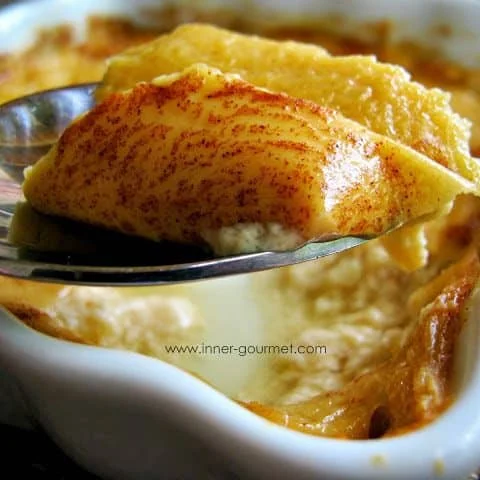
This baked custard is a gently spiced, milk-rich pudding with a soft set and lightly golden top. It is simple to mix, can be baked in one dish or individual ramekins, and is good served warm or chilled.
Ingredients
- 2eggs
- 5 ml (1 tsp)vanilla extract
- 2.5 ml (1/2 tsp)ground cinnamon
- 1.25 ml (1/4 tsp)ground nutmeg (optional)
- 30 ml (2 tbsp)custard powder
- 55 g (1/4 cup)brown demerara sugar or turbinado sugar
- 680 g (24 oz; 2 tins of 12 oz)evaporated milk
Instructions
- 1
Mix the custard
Heat the oven to 175°C (350°F). Whisk the eggs, vanilla, cinnamon, nutmeg if using, custard powder and sugar together in a bowl. Slowly pour in the evaporated milk, stirring until thoroughly combined.
- 2
Bake gently
Pour the mixture into a baking dish or individual ramekins and cover with foil. Bake at 175°C (350°F) for 35–40 minutes. Remove the foil for the final 5 minutes so the top can turn slightly golden. If using smaller dishes, bake for less time, until the centre is no longer watery.
- 3
Check and serve
The custard is ready when the centre is still slightly jiggly. Serve warm or cold.
What is baked custard?
Baked custard is a set pudding made by combining eggs and milk, then cooking the mixture gently until it thickens. Versions of baked custard are found in many culinary traditions, and this one gets its flavour from vanilla, cinnamon and a little nutmeg.
Evaporated milk gives this version a concentrated milky base, while custard powder helps bring a familiar custard flavour. The gentle bake aims for a tender set rather than a firm, dry texture.
Nutrition and macros by portion
The nutrition label shows one serving as written: 171 calories, 9g protein, 23g carbs, 6g fat.
| Portion | Adjustment | kcal | Protein | Carbs | Fat |
|---|---|---|---|---|---|
| Lighter | Smaller custard portion | 120 kcal | 6g | 16g | 4g |
| This serving | As written | 171 kcal | 9g | 23g | 6g |
| Hungry | Larger ramekin portion | 257 kcal | 13g | 35g | 9g |
The evaporated milk and eggs contribute most of the protein and fat, while the sugar and custard powder provide much of the carbohydrate. Serve a portion with fresh fruit for a simple way to add contrast and round out the plate.
The key ingredients
Evaporated milk: its reduced water content makes a rich-tasting base. Stir it in gradually so it blends evenly with the egg mixture.
Custard powder: whisk it thoroughly with the other dry ingredients to reduce the chance of lumps.
Spices: cinnamon is paired with vanilla, and the small amount of nutmeg is optional. Leave it out if you prefer a simpler flavour.
Mixing the custard
Smooth mixture: whisk the eggs, flavourings, custard powder and sugar first, then add the milk slowly while stirring. Scrape around the bowl so any powder caught at the sides is incorporated.
Even portions: if you are using ramekins, divide the mixture as evenly as you can so the portions cook at a similar rate.
Getting the texture right
Centre: look for a slight wobble rather than a completely firm middle; it will continue to set as it cools. The method also calls for the centre not to be watery, especially when baking smaller dishes.
Top: keep the foil on for most of the bake to protect the custard, then remove it for the final 5 minutes to encourage a little colour.
Timing and dish size
One dish: bake for 35–40 minutes at 175°C (350°F), then check for the slight jiggle described in the method.
Ramekins: smaller dishes need less time, but the recipe does not specify an exact shorter duration. Begin checking before the 35-minute mark and use the centre's appearance as your cue.
Serving the custard
Temperature: this pudding can be served warm or cold, so allow it to cool to your preference before serving.
Pairings: offer it on its own or with fresh fruit. A spoonful of stewed fruit can add a bright contrast to the sweet, spiced custard.
Recipe notes & tips
- Bring the milk into the egg mixture slowly while whisking to help it combine smoothly.
- Whisk the custard powder well before adding the milk so it does not remain in dry pockets.
- Cover the dish with foil for most of the baking time, as directed.
- Use the slight wobble in the centre as a doneness cue rather than waiting for the whole custard to look firm.
- Start checking ramekins earlier than a large dish, since smaller portions bake more quickly.
Variations
- Omit the nutmeg: leave it out for a milder, vanilla-forward flavour.
- Use turbinado sugar: choose it instead of demerara as the recipe allows.
- Add fruit at serving: spoon fresh fruit alongside the custard for a brighter finish.
- Serve chilled: cool the baked custard and serve it cold for a firmer, refreshing pudding.
- Bake in ramekins: divide the mixture into individual dishes and check them earlier for doneness.
Common mistakes to avoid
- Adding milk too quickly: pour it in gradually while stirring so the mixture combines evenly.
- Leaving powder lumps: whisk the custard powder thoroughly with the first ingredients before adding milk.
- Baking until completely firm: take the custard out when the centre is slightly jiggly, as it continues to set.
- Using the full timing for ramekins: smaller dishes need less time, so check them early.
- Removing the foil too soon: keep the custard covered until the final 5 minutes to limit browning.
How to store
Cool leftovers, cover them and refrigerate; use within 3 days. Serve cold or reheat gently until just warm, taking care not to overheat the custard.
Frequently asked questions
Can I bake this in ramekins?
Yes. Divide the mixture among individual ramekins and bake for less time than a larger dish. Check for a slightly jiggly centre and make sure it is not watery.
How do I know when the custard is done?
The centre should be slightly jiggly, not liquid or completely firm. Smaller dishes may be ready sooner.
Can I leave out the nutmeg?
Yes. Nutmeg is optional in the ingredient list, so you can omit it without changing the rest of the method.
Can I serve baked custard cold?
Yes. The recipe can be served warm or cold; let it cool before serving chilled.
Why is the centre still soft when I take it out?
A slight wobble is the stated doneness cue. The custard will continue to set as it cools, but it should not look watery.
Cook it from the original
This recipe comes from alicaspepperpot.com. Their page has the author’s own photos, notes and tips — the best place to cook it from.
Open the recipe on alicaspepperpot.com