
Fried Calamari (Fresh Whole Squid)
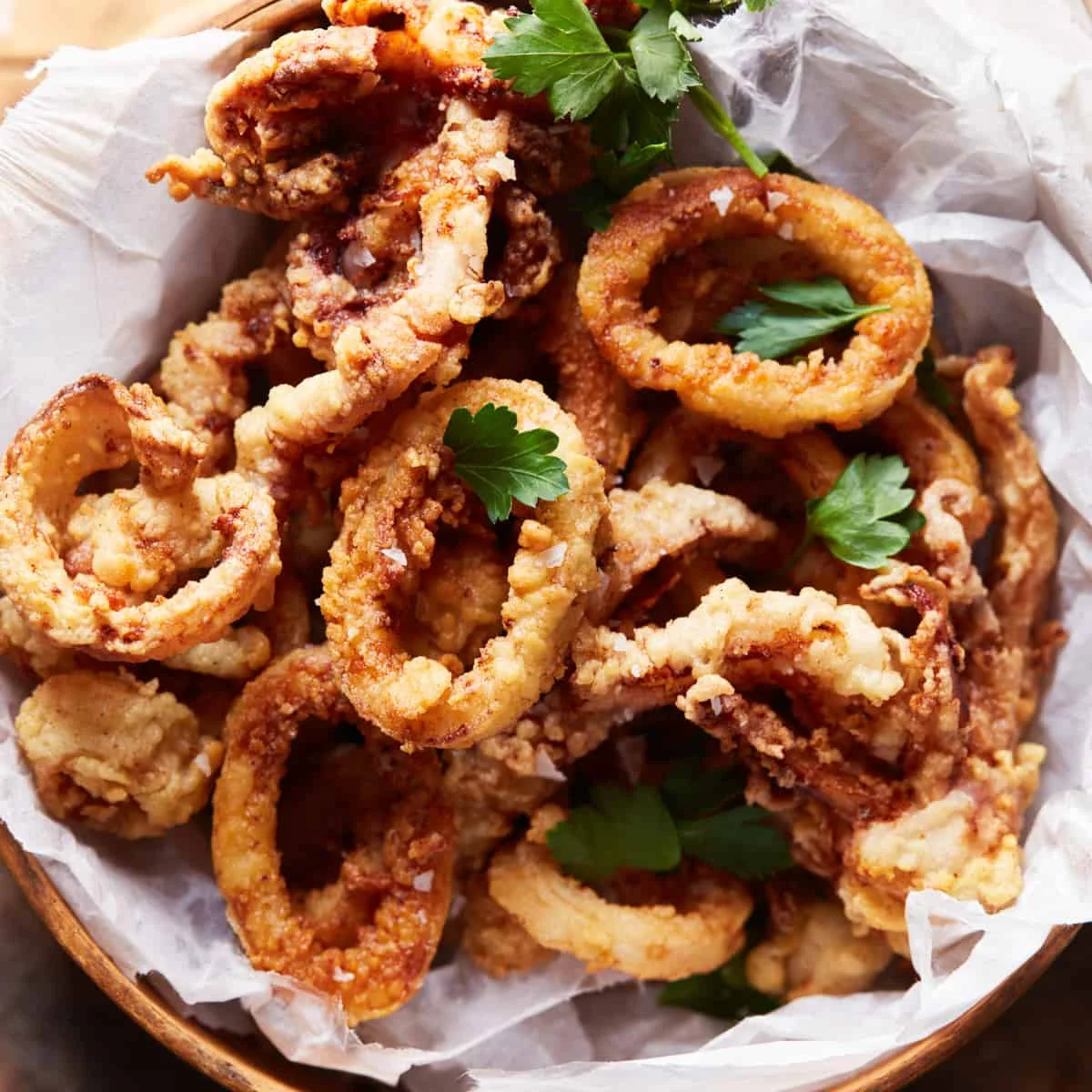
Fresh whole squid is soaked in salted milk, coated in a light flour-and-cornflour mixture, then fried until crisp and golden. It makes a quick seafood starter once the soaking time is complete, and is best served straight from the pan with lemon and tartare sauce.
Ingredients
- 454 g (1 lb)cleaned squid (about 2–3 whole squid)
- 480 ml (2 cups)milk
- 1 tspkosher salt
- 125 g (1 cup)plain flour
- 80 g (⅔ cup)cornflour
- 1 tspkosher salt
- ¼ tspground black pepper
- 946 ml (4 cups), or more or less depending on the pan sizesunflower oil
Instructions
- 1
Soak the squid
Cut the squid into 1.3 cm rings; leave the tentacles whole or cut them into smaller pieces if you prefer. Put the pieces in a bowl, cover with milk (using more or less as needed), add the salt and stir. Cover and refrigerate for 8–12 hours.
- 2
Heat the oil
Pour oil into a large pan to a depth of 5.1 cm and heat over a medium-high heat until it reaches 191–204°C. Set a wire rack over paper towels beside the pan.
- 3
Mix the coating
While the oil heats, combine the flour, cornflour, salt and pepper in a medium bowl.
- 4
Coat the squid
Use tongs or a fork to transfer a few pieces of squid at a time into the flour mixture. Toss to coat evenly, working in batches and avoiding crowding the bowl.
- 5
Fry until golden
Shake off excess flour, then lower the rings and tentacles into the oil one at a time. Fry for 60–90 seconds until golden brown. Turning is optional; fry in batches so the pan is not crowded and the oil temperature does not drop too much.
- 6
Drain the squid
Lift the fried squid from the oil with tongs or a spider skimmer and transfer it to the prepared wire rack.
- 7
Serve immediately
Serve straight away with lemon wedges, herbs, sea salt and tartare sauce if you like.
What is fried calamari?
Calamari is squid prepared as food; in this American-style appetiser, pieces are coated and quickly fried. Rings and tentacles give you a mix of shapes and textures in each batch.
Milk soaking and a flour-and-cornflour coating are the defining choices here. The short frying time helps the outside turn crisp while the squid stays tender.
Nutrition and macros by portion
The nutrition label shows one serving as written: 539 calories, 25g protein, 53g carbs, 25g fat.
| Portion | Adjustment | kcal | Protein | Carbs | Fat |
|---|---|---|---|---|---|
| Lighter | Smaller portion, extra salad | 377 kcal | 18g | 37g | 18g |
| This serving | As written | 539 kcal | 25g | 53g | 25g |
| Hungry | Larger portion | 809 kcal | 38g | 80g | 38g |
The flour and cornflour provide most of the carbohydrates, while the frying oil contributes much of the fat. Squid supplies the protein, with smaller contributions from the coating and milk. To balance the plate, serve a portion with a generous salad or vegetables and keep the tartare sauce on the side.
Why soak squid in milk?
Milk soak: the squid rests in salted milk in the fridge for 8–12 hours before frying. Plan ahead for this stage, as the hands-on cooking is brief but the overall recipe time is long.
After soaking: drain the squid well before coating so excess milk does not make the flour mixture clump.
Getting the coating right
Cornflour: combined with plain flour, it gives the squid a lighter, crisp coating. Mix the dry ingredients evenly so the salt and pepper are distributed throughout.
Small batches: coat only a few squid pieces at a time and shake off loose flour. A thin, even layer fries more cleanly than a thick, damp coating.
Managing the hot oil
Temperature: bring the oil to 191–204°C before adding the squid. Use a thermometer if available, and let the oil return to temperature between batches.
Room in the pan: lower the pieces in individually and avoid crowding. Too much squid at once can cool the oil and make the coating less crisp.
When is calamari done?
Colour: the coating should be golden brown after 60–90 seconds. The short cook is intentional, so remove each batch as soon as it reaches that colour.
Draining: place the cooked pieces on the wire rack above paper towels rather than piling them in a bowl. This lets excess oil drain while helping the coating stay crisp.
Serving it at its best
Serve the calamari immediately, while the coating is still crisp. Lemon wedges, herbs and a pinch of sea salt bring freshness, while tartare sauce offers a creamy accompaniment.
For a fuller appetiser spread, pair it with a simple green salad or other seafood-friendly sides. Keep any sauces separate until serving so the coating does not soften.
Recipe notes & tips
- Allow the full 8–12 hours for the milk soak when planning your cooking time.
- Cut the rings to an even 1.3 cm thickness so they cook at a similar rate.
- Arrange the wire rack and paper towels before heating the oil.
- Check that the oil has reached the stated temperature before frying the first batch.
- Use tongs or a spider skimmer to lift the squid carefully from the hot oil.
- Serve the calamari as soon as it has drained for the crispiest texture.
Variations
- Add lemon: serve with fresh lemon wedges for a bright finish.
- Use herbs: scatter chopped herbs over the cooked calamari just before serving.
- Change the dip: offer tartare sauce alongside the squid or leave it off.
- Keep the tentacles whole: fry them as they are for a varied mix of shapes.
- Season at the end: finish with a pinch of sea salt just before serving.
Common mistakes to avoid
- Skipping the soak: the recipe relies on an 8–12-hour rest, so refrigerate the squid well ahead.
- Wet squid: excess milk can make the coating clump; drain the pieces before dredging.
- Thick coating: too much loose flour can make the crust heavy; shake off the excess.
- Crowded pan: adding too many pieces lowers the oil temperature; fry in batches.
- Frying too long: the squid can become tough; take it out when golden, after 60–90 seconds.
- Leaving it to sit: the coating softens as it cools; serve soon after frying.
How to store
Fried calamari is best eaten immediately. If necessary, refrigerate leftovers in a covered container for up to 2 days and reheat briefly in a hot oven or air fryer; the coating may not be as crisp as when freshly fried.
Frequently asked questions
How long should the squid soak in milk?
Refrigerate it in the salted milk for 8–12 hours. This is the longest part of the recipe, so prepare it well ahead of frying.
Can I fry the tentacles whole?
Yes. The recipe leaves them whole, though you can cut them into smaller pieces if you prefer.
How do I know when the oil is ready?
It should reach 191–204°C before you add the squid. A cooking thermometer is the clearest way to check.
How long does calamari take to fry?
Fry each batch for 60–90 seconds, until the coating is golden brown.
Can I make the calamari ahead?
You can soak the squid ahead, but fry it just before serving. The coating is at its best immediately after cooking.
What should I serve with fried calamari?
Serve it with lemon wedges, herbs, sea salt and tartare sauce if you like. A simple salad or vegetables make a fresh side.
Cook it from the original
This recipe comes from alsothecrumbsplease.com. Their page has the author’s own photos, notes and tips — the best place to cook it from.
Open the recipe on alsothecrumbsplease.com