
The Best Recipe For Cinnamon Rolls
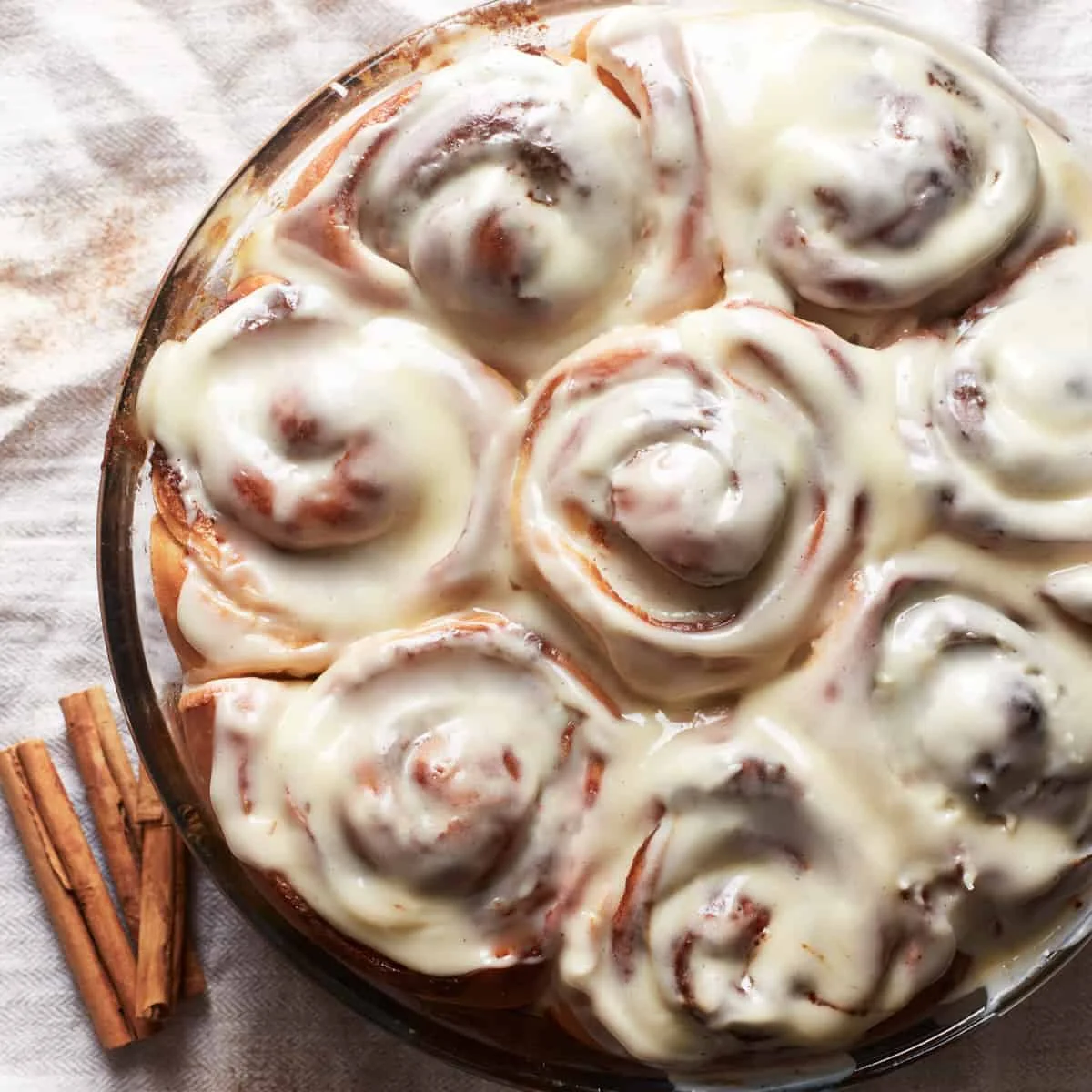
These American-style cinnamon rolls have a soft, enriched dough wrapped around a buttery cinnamon and dark brown sugar filling, finished with cream cheese frosting. They take time to rise, but the overnight chill makes them a lovely make-ahead breakfast for a family weekend.
Ingredients
- 375 g (3 cups)bread flour, spooned and levelled
- 25 g (2 tbsp)sugar
- 1 tspsalt
- 1¾ tspinstant yeast
- 180 ml (¾ cup)milk
- 2 largeeggs
- 71 g (5 tbsp)unsalted butter, at room temperature
- 140 g (⅔ cup, packed)dark brown sugar
- 1 tbspcinnamon
- 57 g (¼ cup)unsalted butter, at room temperature
- 57 g (¼ cup)unsalted butter, at room temperature
- 115 g (½ cup)cream cheese, softened
- 90 g (¾ cup), siftedpowdered sugar
- 1 tsppure vanilla extract
- A pinch (to taste)salt
Instructions
- 1
Mix the dough
Put the flour, sugar, salt, yeast, milk and eggs in a large bowl fitted with a dough hook. Mix on low for 3–4 minutes, scraping down the bowl halfway through, until the ingredients come together. Leave the dough to rest for 20–30 minutes.
- 2
Knead in butter
Knead on low speed, adding the butter gradually until it is fully incorporated. Increase the speed to high and knead for 5–8 minutes, until the dough is smooth, pulls away from the bowl and passes the windowpane test. It should feel soft, silky and slightly tacky; if it needs longer, give it a short rest to avoid overheating.
- 3
Chill overnight
Lightly oil a straight-sided container and the top of the dough, then transfer the dough into it and cover. Leave at room temperature for 10–20 minutes, until it has risen by about 10%, then refrigerate for 8–12 hours. It should at least double in size.
- 4
Shape the dough
Turn the dough out onto a work surface. Fold the edges into the middle, turn it seam-side down and shape it roughly into a ball. Leave it to rest for 15–20 minutes.
- 5
Mix the filling
Stir the dark brown sugar and cinnamon together in a small bowl, then set the mixture aside.
- 6
Prepare the tin
Lightly grease a round or square baking dish measuring 23–26 cm (9–10 inches) across.
- 7
Fill and roll
Lightly flour the work surface and dough, using only enough to prevent sticking. Flatten the dough slightly with your fingers, then roll it into a rectangle about 36 × 43 cm (14 × 17 inches) and 0.6 cm (¼ inch) thick. Spread the butter over it, scatter the cinnamon sugar evenly on top and press the mixture into the butter.
- 8
Cut and prove
Starting at a short end, roll the dough up tightly. Cut it into 8 equal rolls and arrange them in the prepared dish. Leave to rise for 45–90 minutes, until doubled in size.
- 9
Heat the oven
While the rolls rise, preheat the oven to 190°C (375°F).
- 10
Bake the rolls
Bake for 20–22 minutes. After 10–15 minutes, loosely cover the rolls with foil if they are browning too heavily.
- 11
Make the frosting
Beat the butter in a medium bowl with a whisk or paddle attachment until creamy. Add the cream cheese and beat for 1–2 minutes, until smooth and lump-free. Mix in the powdered sugar, then stir in the vanilla and salt. The frosting should be thick and creamy; for a thinner glaze, add 15 ml (1 tbsp) milk.
- 12
Frost the rolls
Take the rolls out of the oven and leave them to cool for 5–10 minutes. Spoon the frosting over the warm rolls and spread it evenly.
- 13
Serve or store
Serve straight away, or keep at room temperature for up to 2 days or in the fridge for up to 4 days. Reheat leftovers before serving if you like.
What are cinnamon rolls?
Cinnamon rolls are an American-style sweet yeast bake, made by rolling a soft dough around a spiced sugar filling and baking the slices together. This version uses an enriched dough with eggs and butter, then adds a tangy cream cheese frosting.
The long, chilled rise gives the dough time to develop while making the recipe easier to split over two days. The result is a tender centre with cinnamon sugar tucked into every spiral.
Nutrition and macros by portion
The nutrition label shows one serving as written: 622 calories, 12g protein, 98g carbs, 20g fat.
| Portion | Adjustment | kcal | Protein | Carbs | Fat |
|---|---|---|---|---|---|
| Lighter | Use a thinner frosting layer | 435 kcal | 8g | 69g | 14g |
| This serving | As written | 622 kcal | 12g | 98g | 20g |
| Hungry | Serve two rolls | 933 kcal | 18g | 147g | 30g |
The flour and sugar provide most of the carbohydrates, while the butter and cream cheese contribute much of the fat. Eggs, milk and the dairy in the topping contribute protein. Serve one roll with fruit or plain yoghurt for a more balanced breakfast.
Why the dough rests
Initial rest: the short pause after mixing gives the flour time to absorb the liquid before the butter is kneaded in. The dough is very soft, so add the butter gradually rather than all at once.
Overnight chill: refrigerating the dough for 8–12 hours is part of the method, not a shortcut to skip. The dough should at least double as it rests in the fridge.
Rolling and filling
Light flouring: use only enough flour to stop the dough sticking to the surface or rolling pin. Too much can make the finished rolls drier.
Even filling: spread the butter across the rolled dough, then scatter the cinnamon sugar evenly and press it gently into the butter. Rolling tightly from a short end helps create distinct spirals.
How to tell they are ready
Dough: after kneading, it should look smooth and silky, pull away from the bowl and stretch thin enough to pass the windowpane test. Keep it slightly tacky rather than adding extra flour to make it feel dry.
Final rise: give the cut rolls 45–90 minutes, looking for them to double in size. In the oven, watch their colour; loosely cover with foil after 10–15 minutes if they are browning too quickly.
Getting the timing right
Plan ahead: the total time is long because the dough rests overnight and needs another rise after shaping. Mix the dough the day before you want to bake the rolls.
Keep some flexibility: the final proof takes 45–90 minutes, so use the doubled size as your cue rather than relying only on the clock.
Serving and frosting
Warm rolls: leave the rolls to cool for 5–10 minutes before adding the frosting. They will still be warm, so the topping spreads easily without immediately running off.
A thinner topping: the frosting is meant to be thick and creamy. If you prefer it more like a glaze, the method suggests mixing in 15 ml (1 tbsp) of milk.
Recipe notes & tips
- Weigh the flour if possible, and spoon it into the measuring cup before levelling rather than packing it down.
- Add the dough butter gradually so it has time to incorporate.
- Use the windowpane test to check the dough instead of kneading beyond the stated time automatically.
- Keep the dough covered during rests so its surface does not dry out.
- Let the rolls double during the final rise before baking.
- Cover the dish loosely with foil if the tops are colouring too quickly.
Variations
- Softer glaze: mix 15 ml (1 tbsp) milk into the frosting for a thinner consistency.
- More cinnamon: increase the cinnamon in the filling slightly to suit your taste.
- Less frosting: spread a thinner layer over the warm rolls.
- Square bake: use a square 23–26 cm dish instead of a round one.
- Make ahead: prepare the dough the evening before, then shape and prove the rolls before baking.
Common mistakes to avoid
- Adding butter all at once: add it gradually so it incorporates into the dough.
- Over-flouring: too much flour can make the dough and rolls dry; use only enough to prevent sticking.
- Skipping the overnight rest: refrigerate the dough for 8–12 hours as directed.
- Under-proofing: wait until the shaped rolls have doubled in size before baking.
- Over-browning: loosely cover the rolls with foil after 10–15 minutes if needed.
- Frosting immediately: wait 5–10 minutes after baking so the topping can be spread over warm rolls without melting away.
How to store
Keep the rolls at room temperature for up to 2 days or refrigerate them for up to 4 days. Reheat leftovers before serving if desired.
Frequently asked questions
Can I make the dough the night before?
Yes. After its short room-temperature rise, cover the dough and refrigerate it for 8–12 hours, as directed.
How do I know when the dough is kneaded enough?
It should be smooth and silky, pull away from the sides of the bowl and pass the windowpane test. It will remain slightly tacky.
How long should the shaped rolls rise?
Allow 45–90 minutes, until the rolls have doubled in size. The time can vary, so use their size as your guide.
Can I make the frosting thinner?
Yes. Stir 15 ml (1 tbsp) of milk into the frosting for a thinner glaze.
When should I put the frosting on?
Wait 5–10 minutes after the rolls come out of the oven, then spoon the frosting over while they are still warm.
How should I store leftover cinnamon rolls?
Keep them at room temperature for up to 2 days or in the fridge for up to 4 days. Reheat before serving if you prefer them warm.
Cook it from the original
This recipe comes from alsothecrumbsplease.com. Their page has the author’s own photos, notes and tips — the best place to cook it from.
Open the recipe on alsothecrumbsplease.com