
Cast Iron Skillet Steak
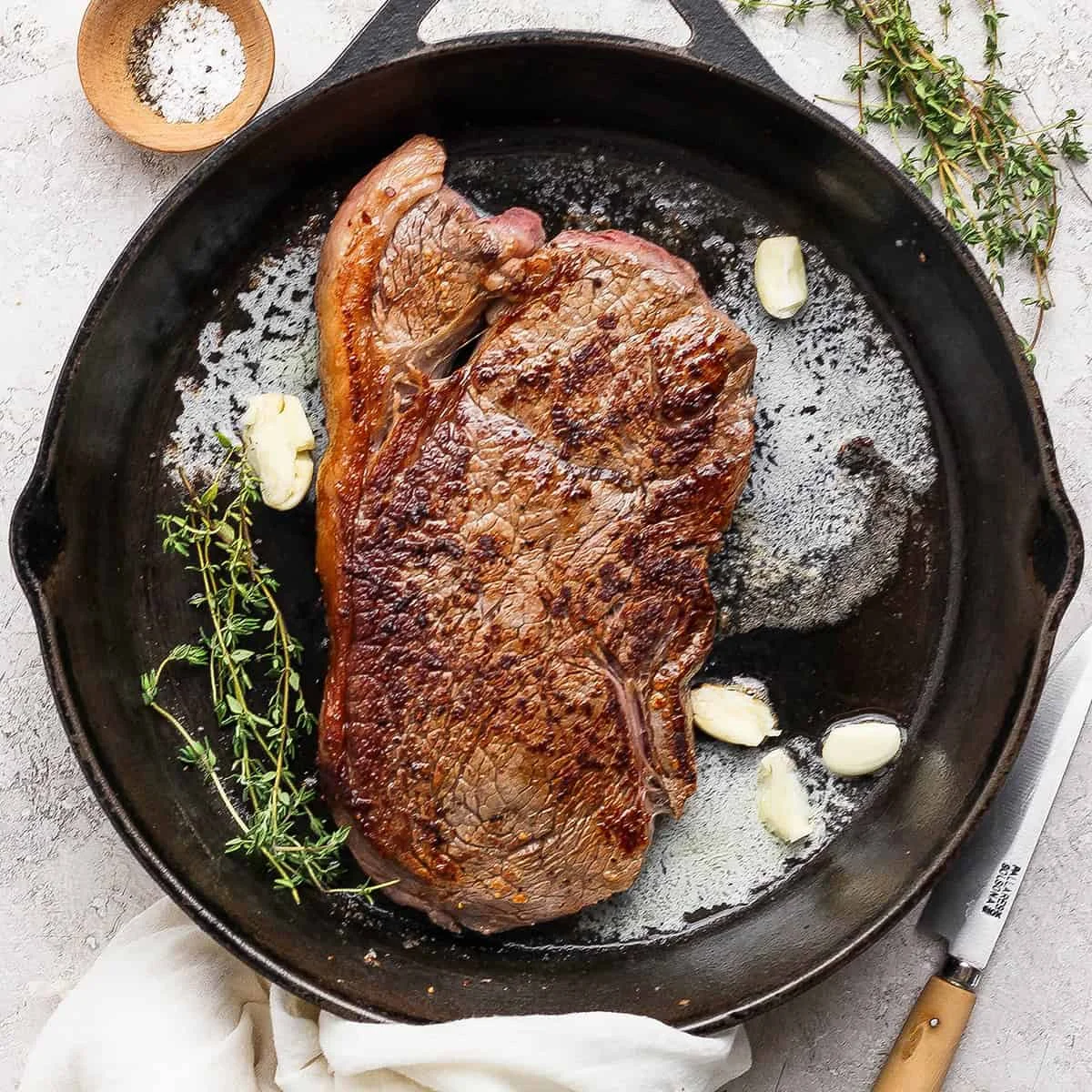
A thick top sirloin steak gets a deep stovetop sear in a cast-iron skillet, then a finish of butter and garlic. Salting it ahead and basting as it cooks helps build a savoury crust without a grill.
Ingredients
- 1 steak, about 680 g and 2.9 cm thicktop sirloin steak, preferably with a little fat cap along the side
- 2½ teaspoonsMorton kosher salt
- 1 teaspoon (5 ml)olive oil
- A generous amountfreshly ground black pepper
- 2 tablespoons (28 g), cut into 4 piecesunsalted butter
- 2 large cloves, smashedgarlic
- 1 teaspoon (5 ml)avocado oil
Instructions
- 1
Salt the steak
One hour before cooking, take the steak out of the fridge and place it on a rimmed tray. Season both faces and the whole edge, including the fat cap, with all the salt; use any salt that falls onto the tray. Leave it to rest for 1 hour.
- 2
Dry and season
Pat the steak dry with kitchen paper, then rub olive oil over both sides. Add a generous amount of freshly ground black pepper to each side.
- 3
Heat the skillet
Set a 30 cm cast-iron skillet over medium-high heat for 4–5 minutes, until very hot and possibly smoking.
- 4
Render the fat
Using long tongs, hold the steak upright and place its fat cap against the hot skillet. Cook for 2 minutes, until the fat begins to render and brown; it will also leave a thin film of fat in the pan.
- 5
Sear both sides
Lay the steak flat in the skillet and cook without moving it for 2½ minutes. For a thinner steak, cook it for 2 minutes instead. Turn it over and cook the other side, undisturbed, for 2 minutes.
- 6
Baste with butter
Turn the steak over and reduce the heat to low. Add the butter and garlic, then cook for 1 minute while carefully tilting the skillet towards you so the butter pools at the edge. Use a large, long-handled spoon to scoop up the melted butter and pour it over the steak.
- 7
Check doneness
Turn the steak over and cook for 1 minute, tilting the pan and spooning butter over it again. Check the centre with an instant-read thermometer. For medium-rare, cook to 52–54°C (125–130°F), which should take about 8 minutes of total cooking time. Turn the steak 1–2 more times, cooking for 1 minute and basting each time; check the temperature with each turn.
- 8
Rest and slice
As soon as the steak reaches 52–54°C (125–130°F), transfer it to a cutting board and rest it for about 5 minutes; the temperature will continue to rise as it rests. Medium-rare is 54–57°C (130–135°F). Slice across the grain into strips about 6 mm (¼ inch) thick and serve straight away.
What is cast-iron skillet steak?
This is an American-style steak cooked indoors in a very hot, heavy skillet rather than on a grill. Sirloin gives it a beefy flavour, while the skillet browns the surface quickly.
The method combines an early salt rest with a short sear and a garlic-butter finish. Rendering the edge fat first adds flavour to the pan for the basting stage.
Nutrition and macros by portion
The nutrition label shows one serving as written: 383 calories, 51g protein, 1g carbs, 18g fat.
| Portion | Adjustment | kcal | Protein | Carbs | Fat |
|---|---|---|---|---|---|
| Lighter | Use less butter | 268 kcal | 36g | 1g | 13g |
| This serving | As written | 383 kcal | 51g | 1g | 18g |
| Hungry | Add a potato side | 575 kcal | 77g | 2g | 27g |
The steak supplies most of the protein, while the butter and cooking oils account for much of the fat. The recipe contains very little carbohydrate, so serve it with a starchy side and vegetables for a more balanced plate.
Why salt it ahead?
Early salting gives the seasoning time to work across the surface of the steak. Season the edges as well as the broad sides, including the fat cap.
Drying the steak before it hits the pan helps the surface brown. The olive oil and pepper go on after the salt rest, just before searing.
Get the skillet properly hot
A 30 cm cast-iron skillet should heat for 4–5 minutes over medium-high heat. The recipe expects the pan to be very hot, so it may start to smoke.
Render the fat cap upright for 2 minutes before laying the steak down. This browns the edge and leaves a little rendered fat in the pan.
Basting without burning the butter
Lower the heat before adding the butter and garlic so they can flavour the steak without being exposed to the skillet's initial high heat. Tilt the pan carefully to gather the melted butter at one edge.
Use a long-handled spoon to baste from the butter pool. Keep turning and spooning as directed, and check the steak's temperature rather than relying on colour alone.
How to judge doneness
For medium-rare, take the steak off the heat at 52–54°C (125–130°F), then let it rest for about 5 minutes. Its temperature will rise during the rest.
An instant-read thermometer gives a useful check in the centre of the steak. A thinner steak may need less time for the first sear, so start checking earlier.
Resting and slicing
Rest the steak on a cutting board, ideally one with a groove to catch the juices. Cutting it immediately can send those juices onto the board rather than keeping them with the meat.
Look for the direction of the muscle fibres and slice across them into strips about 6 mm (¼ inch) thick. This makes the steak easier to chew and ready to serve.
What to serve alongside
Serve the steak with a green vegetable such as broccoli, green beans or a crisp salad. Potatoes, bread or another starch make the plate more substantial.
The skillet butter and resting juices are intensely savoury, so a simple side lets them stand out. Spoon any collected juices over the sliced steak just before serving.
Recipe notes & tips
- Use long tongs to hold the steak securely while rendering the fat cap.
- Pat the steak dry before adding the oil and pepper.
- Keep the steak still during the initial sear on each face.
- Tilt the skillet cautiously to collect the hot butter for basting.
- Check the temperature each time you turn the steak near the end of cooking.
- Slice across the grain after the steak has rested.
Variations
- Add herbs: Drop a sprig of thyme into the butter with the garlic.
- Use another cut: Choose a similarly thick steak and adjust cooking by temperature.
- Skip the fat cap: If the steak has no fat cap, begin with the flat-side sear.
- Add a sharp side: Serve with a squeeze of lemon over green vegetables.
- Make it peppery: Add extra freshly ground black pepper just before serving.
Common mistakes to avoid
- Damp surface: Pat the steak dry so it can brown rather than steam.
- Cool skillet: Give the cast-iron pan the full 4–5 minutes to heat.
- Moving it too soon: Leave the steak undisturbed during each initial sear.
- Butter over high heat: Reduce the heat to low before adding the butter and garlic.
- Guessing doneness: Use an instant-read thermometer and check the centre.
- Skipping the rest: Leave the steak for about 5 minutes before slicing.
How to store
Refrigerate leftover steak in an airtight container within 2 hours and eat within 3 days. Reheat gently in a covered pan over low heat, adding a splash of water if needed; avoid prolonged heating, which can make the steak tougher.
Frequently asked questions
Can I make this without a cast-iron skillet?
A heavy, oven-safe stainless-steel skillet can work, though the browning may differ. Choose a pan that can handle very high heat.
What if my steak has no fat cap?
Skip the step of holding it upright to render the edge. Follow the recipe from the flat-side sear; the listed avocado oil can be used for the pan.
Can I use a thinner steak?
Yes. The recipe suggests reducing the first sear on each side to 2 minutes for a thinner steak, then checking the temperature sooner.
Do I need to rest the steak for an hour?
The recipe calls for a 1-hour rest after salting, before cooking. This gives the salt time to season the steak; keep it on a rimmed tray while it rests.
How do I know when it is medium-rare?
Take it off the heat at 52–54°C (125–130°F), then rest it for about 5 minutes. The recipe gives 54–57°C (130–135°F) as the medium-rare range after resting.
Can I prepare the steak ahead?
You can salt it 1 hour before cooking as directed, but cook and baste it just before serving for the best seared surface.
Cook it from the original
This recipe comes from afarmgirlsdabbles.com. Their page has the author’s own photos, notes and tips — the best place to cook it from.
Open the recipe on afarmgirlsdabbles.com