
Stuffed Pork Tenderloin
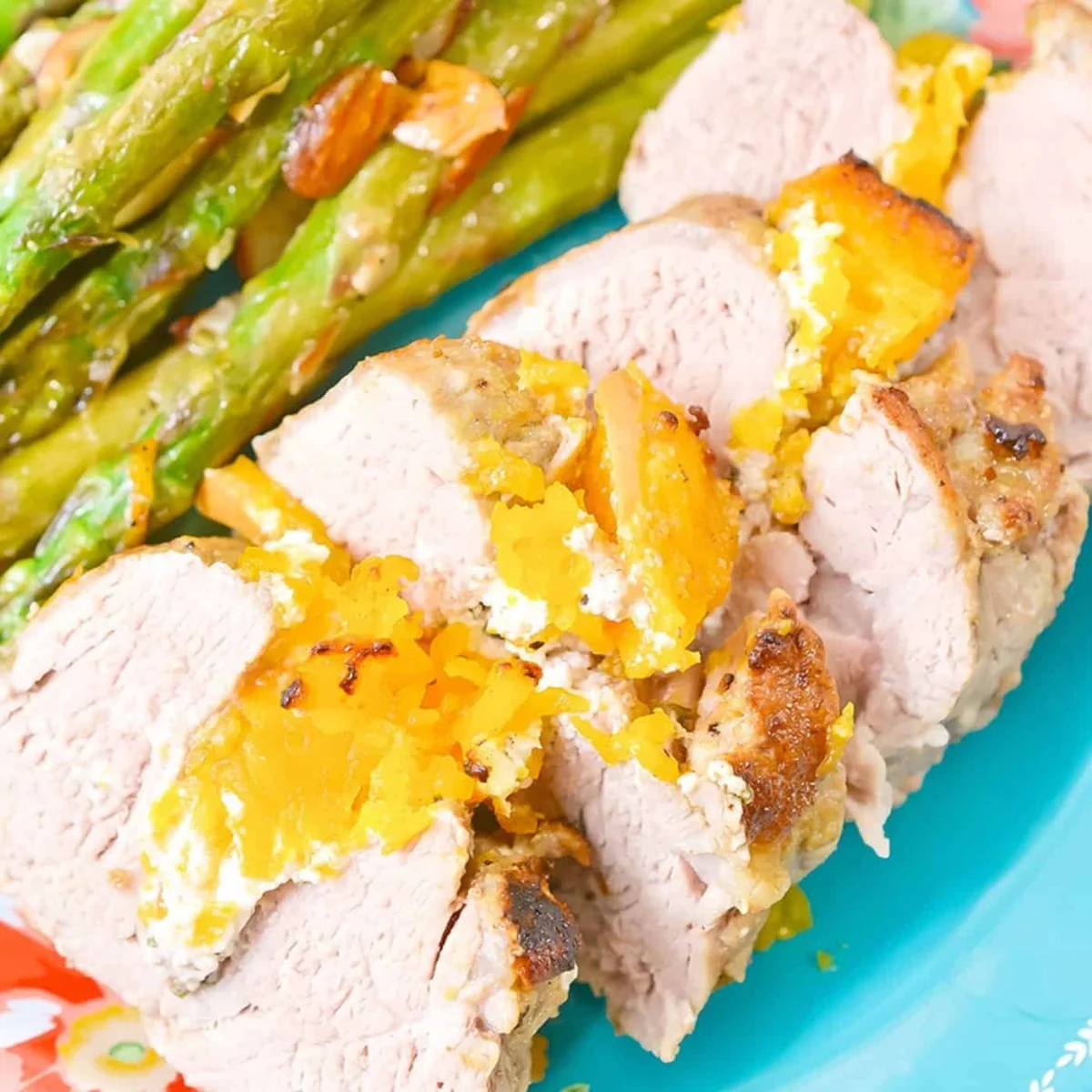
Pork tenderloins are filled with roasted pumpkin, goat’s cheese and fresh herbs, then seared and baked until juicy. It’s a hearty centrepiece that brings savoury, creamy and gently sweet flavours together with straightforward preparation.
Ingredients
- 907 g (2 lb; two tenderloins of about 454 g/1 lb each)Pork tenderloins
- about 300 g (2 cups)Roasted pumpkin, cut into cubes
- about 75 g (½ cup)Goat’s cheese, crumbled
- 5 ml (1 teaspoon)Fresh sage, chopped
- 5 ml (1 teaspoon)Fresh thyme, chopped
- 2.5 ml (½ teaspoon)Garlic powder
- 15 ml (1 tablespoon)Olive oil
- 43 g (3 tablespoons), if roasting your own pumpkinUnsalted butter
- To tasteSalt and pepper
Instructions
- 1
Preheat the oven
Heat the oven to 204°C (400°F).
- 2
Roast the pumpkin
If roasting your own pumpkin, cut it into wedges with the skin on. Season with salt and pepper, pour over melted butter, and roast at 204°C (400°F) for 30 minutes. Leave to cool, remove the skin and cut the pumpkin into cubes.
- 3
Cut the tenderloins
Cut a deep slit down the centre of each tenderloin, without cutting all the way through, to make a pocket for the filling. Place them in a high-sided baking dish.
- 4
Season the pork
Season both sides of the tenderloins with salt and pepper, then sprinkle the garlic powder over them.
- 5
Add the herbs
Sprinkle the sage and thyme into the pockets cut into the tenderloins.
- 6
Fill with cheese
Divide the crumbled goat’s cheese between the two tenderloins and tuck it into the pockets.
- 7
Add the pumpkin
Fill the remaining space in each pocket with the cubed pumpkin.
- 8
Tie the pork
Use oven-safe string or kitchen twine to tie each tenderloin closed.
- 9
Sear the tenderloins
Heat the olive oil in a large frying pan over medium-high heat. Carefully sear all sides of each tenderloin, keeping the filling in place, then return them to the baking dish.
- 10
Bake until cooked
Bake for 15–20 minutes, until the pork reaches an internal temperature of at least 63°C (145°F).
- 11
Slice and serve
Slice the stuffed tenderloins and serve with your preferred sides.
What is stuffed pork tenderloin?
Pork tenderloin is a lean, tender cut that is often roasted whole or cooked quickly in a pan. Here, each piece is opened to make a pocket for a savoury filling.
This American-style version pairs roasted pumpkin with goat’s cheese, sage and thyme. The pumpkin gives the filling a soft, mellow sweetness, while the cheese adds a tangy, creamy contrast.
Nutrition and macros by portion
The nutrition label shows one serving as written: 529 calories, 46g protein, 6g carbs, 36g fat.
| Portion | Adjustment | kcal | Protein | Carbs | Fat |
|---|---|---|---|---|---|
| Lighter | Skip the butter | 370 kcal | 32g | 4g | 25g |
| This serving | As written | 529 kcal | 46g | 6g | 36g |
| Hungry | Add roast potatoes | 794 kcal | 69g | 9g | 54g |
The pork supplies most of the protein, while the pumpkin contributes most of the carbohydrate. Goat’s cheese, olive oil and butter provide much of the fat. For a balanced plate, serve a slice with plenty of green vegetables and add a potato side if you want more substantial carbohydrates.
Choosing the filling
Pumpkin: Use roasted, cooled pumpkin cut into small cubes so it fits neatly inside the pockets. If you’re using ready-roasted pumpkin, the butter-roasting step is not needed.
Goat’s cheese: Crumbled cheese is easy to divide between the tenderloins and nestle into the filling. Keep the pieces inside the pockets as you tie and sear the pork.
Making a neat pocket
The slit should be deep enough to hold the filling, but not so deep that it cuts through the tenderloin. Work carefully with a sharp knife and stop before reaching the other side.
Don’t overfill the pockets: leave enough room to close the meat around the pumpkin and cheese. Tie the tenderloins securely with oven-safe string so the filling is less likely to spill out.
Searing before baking
Sear the tenderloins on all sides in a hot pan, handling them gently to keep the filling in place. This gives the outside colour before the pork finishes cooking in the oven.
Use a large frying pan and avoid moving the meat more than necessary while each side browns. Transfer the seared tenderloins back to the baking dish for roasting.
Checking doneness
Start checking the pork at the 15-minute mark, since the cooking time can vary with the size and shape of the tenderloins. The recipe’s target is an internal temperature of at least 63°C (145°F).
Insert a meat thermometer into the thickest part of the pork, avoiding the filling. Once cooked, slice the tenderloins across the grain to show the filling in each portion.
What to serve alongside
Serve the pork with a green vegetable, such as green beans or broccoli, for a fresh contrast to the rich filling. A simple salad also works well.
For a more substantial meal, add roast potatoes or another favourite side. Slice the tenderloins just before serving so the filling stays in place as much as possible.
Recipe notes & tips
- Pat the pork dry before searing to help it brown in the pan.
- Let roasted pumpkin cool before filling the tenderloins so the cheese does not soften too soon.
- Arrange the filling towards the centre of each pocket, away from the edges.
- Use kitchen twine that is suitable for oven use and remove it before slicing.
- Check the temperature at the thickest part of the pork, not in the filling.
- Rest the tenderloins briefly after baking so they are easier to slice neatly.
Variations
- Add chopped nuts: fold a small handful of toasted walnuts into the pumpkin for crunch.
- Use butternut squash: replace the pumpkin with roasted, cubed butternut squash.
- Try rosemary: use a little chopped rosemary in place of some of the sage.
- Add spinach: wilt chopped spinach, cool it and mix it into the filling.
- Choose another cheese: use crumbled feta for a saltier filling.
Common mistakes to avoid
- Cutting all the way through: stop before reaching the other side so the tenderloin can hold its filling.
- Overfilling the pocket: leave room to close the meat around the pumpkin and cheese.
- Skipping the tie: secure the tenderloin with oven-safe twine to help keep the filling enclosed.
- Searing too roughly: turn the meat carefully so the filling does not fall out.
- Guessing the doneness: use a thermometer and check for at least 63°C (145°F) in the thickest part.
- Slicing immediately: give the pork a brief rest after baking for cleaner slices.
How to store
Refrigerate leftovers in a covered container for up to 3 days. Reheat gently in the oven or microwave until hot throughout, taking care not to overcook the pork.
Frequently asked questions
Can I use ready-roasted pumpkin?
Yes. Use cubed roasted pumpkin for the filling and skip the step for roasting pumpkin with butter.
Can I prepare the tenderloins ahead?
You can stuff and tie them ahead, then keep them covered in the fridge until you’re ready to cook. Sear and bake them just before serving.
How do I know when the pork is done?
Check the thickest part with a meat thermometer; the recipe calls for at least 63°C (145°F). Avoid placing the thermometer in the filling.
Can I make this without kitchen twine?
Twine helps hold the tenderloins closed during searing and baking. If you don’t have any, secure the meat with toothpicks that are suitable for cooking and remove them before serving.
What can I use instead of goat’s cheese?
Crumbled feta is a suitable alternative with a saltier flavour. Keep the filling tucked well inside the pocket.
What sides go well with stuffed pork tenderloin?
Green vegetables or a crisp salad provide a fresh contrast. Roast potatoes make the meal more filling.
Cook it from the original
This recipe comes from 730sagestreet.com. Their page has the author’s own photos, notes and tips — the best place to cook it from.
Open the recipe on 730sagestreet.com