
One Amazing "Bottom Round Roast" Recipe
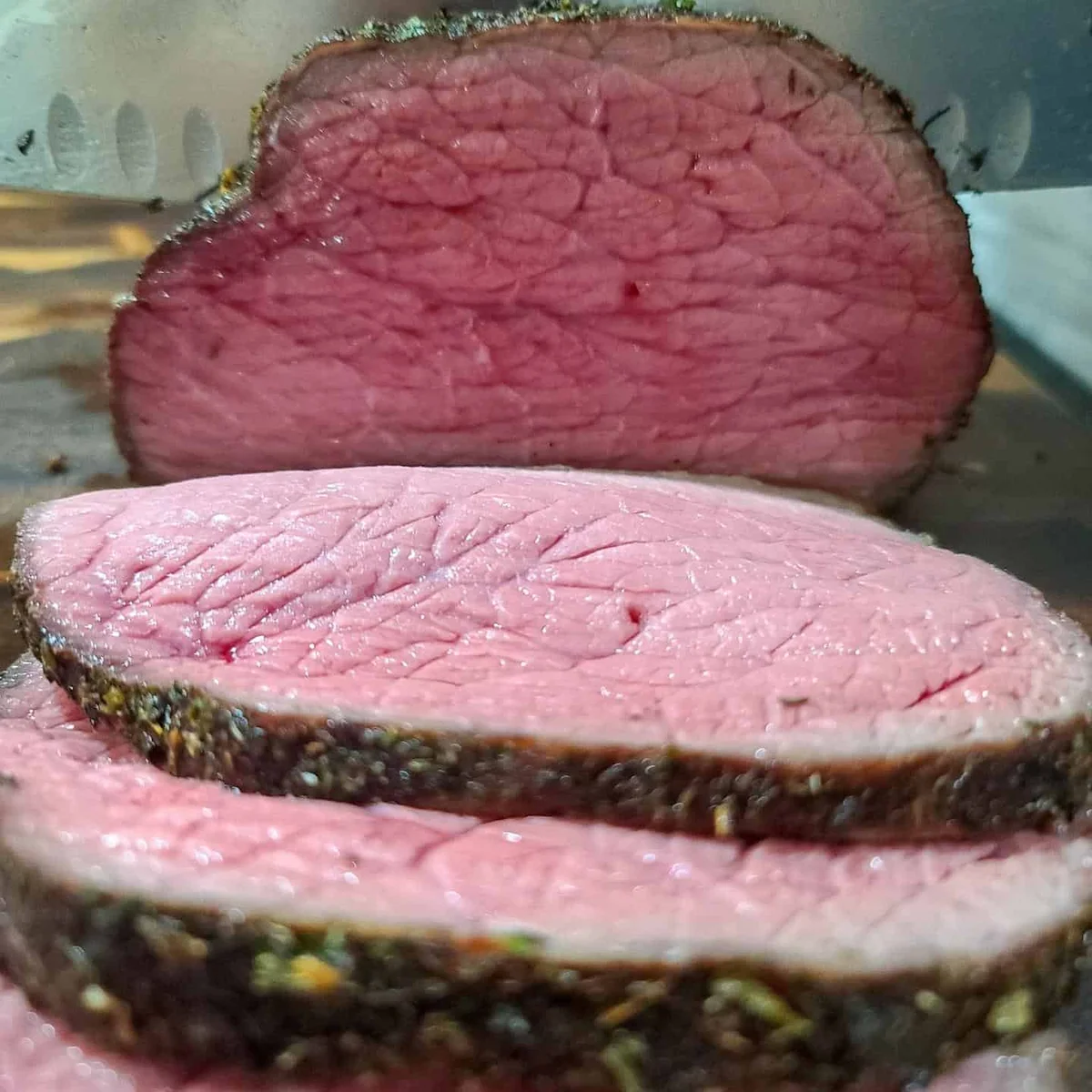
This American-style bottom round roast is slow-cooked with garlic and herbs, then finished in a very hot oven for a browned exterior. The long, gentle cook and a thermometer help you aim for tender, rosy slices.
Ingredients
- 1.36–1.81 kg (3–4 lb)bottom round roast (or outside round, rump roast or eye of round)
- 10 ml (2 tsp)minced garlic
- 10 ml (2 tsp)dried basil
- 10 ml (2 tsp)dried thyme (or dried rosemary)
- 5 ml (1 tsp)dried parsley
- 5 ml (1 tsp)kosher salt (or sea salt)
- 5 ml (1 tsp)black pepper
- 30 ml (2 tbsp)olive oil
Instructions
- 1
Preheat the oven
Heat the oven to 77°C (170°F).
- 2
Unwrap the roast
Take the fully thawed roast out of the fridge and remove its packaging.
- 3
Let it rest
Set the roast on a cutting board and leave it for 10–30 minutes.
- 4
Oil the surface
Brush olive oil, or your chosen oil, over the whole roast.
- 5
Mix the seasonings
Stir all the seasonings together in a small bowl.
- 6
Season the roast
Rub the seasoning mixture over the top, bottom and sides of the roast.
- 7
Insert the probe
Place a meat probe in the thickest part of the roast.
- 8
Set in the pan
Put the roast in the centre of a roasting pan, with the fat side facing up.
- 9
Slow-roast the beef
Cook for 2 hours per pound, until the roast reaches your preferred internal temperature. For medium-rare, the recipe gives a target of around 52–54°C (125–130°F).
- 10
Rest under foil
Take the roast out, tent it with foil and rest for at least 10 minutes, or up to 2 hours, before reverse searing.
- 11
Prepare to sear
About 20 minutes before serving, heat the oven to 260–288°C (500–550°F).
- 12
Reverse-sear the roast
Once the oven is at temperature, remove the foil and return the roast to the oven for 10–12 minutes, or until crisp and golden brown.
- 13
Slice and serve
Remove the roast from the oven, slice it and serve medium-rare. The recipe says no further resting is needed after reverse searing.
What is bottom round roast?
Bottom round is a lean cut from the rear leg of the animal, also sold as outside round in some places. It is often roasted and sliced across the grain for serving.
This American-style version uses a slow oven cook followed by a brief, very hot finish. Garlic and dried herbs season the surface while the final sear adds colour.
Nutrition and macros by portion
The nutrition label shows one serving as written: 299 calories, 56g protein, 1g carbs, 15g fat.
| Portion | Adjustment | kcal | Protein | Carbs | Fat |
|---|---|---|---|---|---|
| Lighter | Use less olive oil | 209 kcal | 39g | 1g | 11g |
| This serving | As written | 299 kcal | 56g | 1g | 15g |
| Hungry | Serve a larger slice | 449 kcal | 84g | 2g | 23g |
The beef supplies most of the protein, while the olive oil contributes most of the fat; the recipe has very little carbohydrate, mainly from the small amounts of garlic and dried herbs. Balance a serving with vegetables and a portion of potatoes, bread or another carbohydrate-rich side.
Choosing the cut
Cut options: The recipe also lists outside round, rump roast and eye of round as alternatives. Since different cuts and shapes can cook at different rates, use the internal temperature as your guide.
Seasoning the surface
Oil first: Brushing the roast with oil helps the dried seasonings cling to its surface. Coat all sides so the garlic, basil, thyme and parsley are spread evenly.
Herb choice: Use dried thyme as written, or swap in dried rosemary. Keep the salt and pepper distributed over the whole roast rather than concentrated in one spot.
Using a probe
Placement: Insert the probe into the thickest part of the meat, avoiding the pan. The centre is the slowest area to heat, so it gives a more useful reading than the exterior.
Doneness: The recipe associates 52–54°C (125–130°F) with medium-rare. Follow the temperature rather than relying only on the cooking time, which can vary with the roast's shape and starting temperature.
The reverse sear
Slow stage: The roast cooks at a low oven temperature before its final browning. The recipe specifies 2 hours per pound, so allow plenty of time and monitor the probe.
Hot finish: Rest the roast under foil before turning the oven up. Once the oven is very hot, remove the foil and sear the surface for 10–12 minutes, watching for a crisp, golden-brown exterior.
Slicing and serving
Slice thinly across the grain to make the most of this lean roast. Serve the beef with roast potatoes, vegetables or a simple salad, and spoon any pan juices over the slices if available.
Recipe notes & tips
- Thaw the roast fully before taking it out of its packaging.
- Use a probe thermometer to track the centre temperature during the long cook.
- Pat the roast dry if its surface is wet before brushing on the oil.
- Keep the roast's fat side facing up in the pan, as directed.
- Stay close during the high-temperature finish so the exterior does not become too dark.
- Slice across the grain for more manageable pieces.
Variations
- Use rosemary: Replace the dried thyme with dried rosemary as the recipe suggests.
- Swap the cut: Try outside round, rump roast or eye of round in place of bottom round.
- Change the oil: Brush on another cooking oil instead of olive oil, as the method allows.
- Add a side: Serve with roast potatoes and vegetables for a more substantial plate.
Common mistakes to avoid
- Skipping the thaw: A partly frozen roast will not cook as expected; thaw it fully before starting.
- Guessing doneness: Cooking time alone can mislead; check the thickest part with a meat probe.
- Seasoning only the top: The sides and underside need the herb mixture too; rub all surfaces.
- Searing with the foil on: Remove the foil before the hot oven stage so the roast can brown.
- Leaving the roast unattended: The final oven is very hot; check it during the 10–12-minute sear.
How to store
Refrigerate leftover beef in a covered container within 2 hours and use within 3–4 days. Reheat gently in a covered dish with a little water or cooking juices to help keep the slices from drying out.
Frequently asked questions
Can I use another cut of beef?
Yes. The recipe lists outside round, rump roast and eye of round as alternatives. Monitor the internal temperature, as the shape and cooking time may differ.
How long does the slow roast take?
The method says to allow 2 hours per pound, but also directs you to cook to the desired internal temperature. Use the probe as your main guide.
What temperature is medium-rare?
This recipe gives around 52–54°C (125–130°F) as its medium-rare target. Check the temperature in the thickest part of the roast.
Can I rest the roast for longer before searing?
The method allows a rest of at least 10 minutes and up to 2 hours under foil before reverse searing.
Does the roast need to rest after searing?
The recipe says to slice and serve straight after the final sear, without another rest.
How should I slice the roast?
Cut it into thin slices across the grain for easier-to-eat portions.
Cook it from the original
This recipe comes from 730sagestreet.com. Their page has the author’s own photos, notes and tips — the best place to cook it from.
Open the recipe on 730sagestreet.com