
Genovese basil pesto
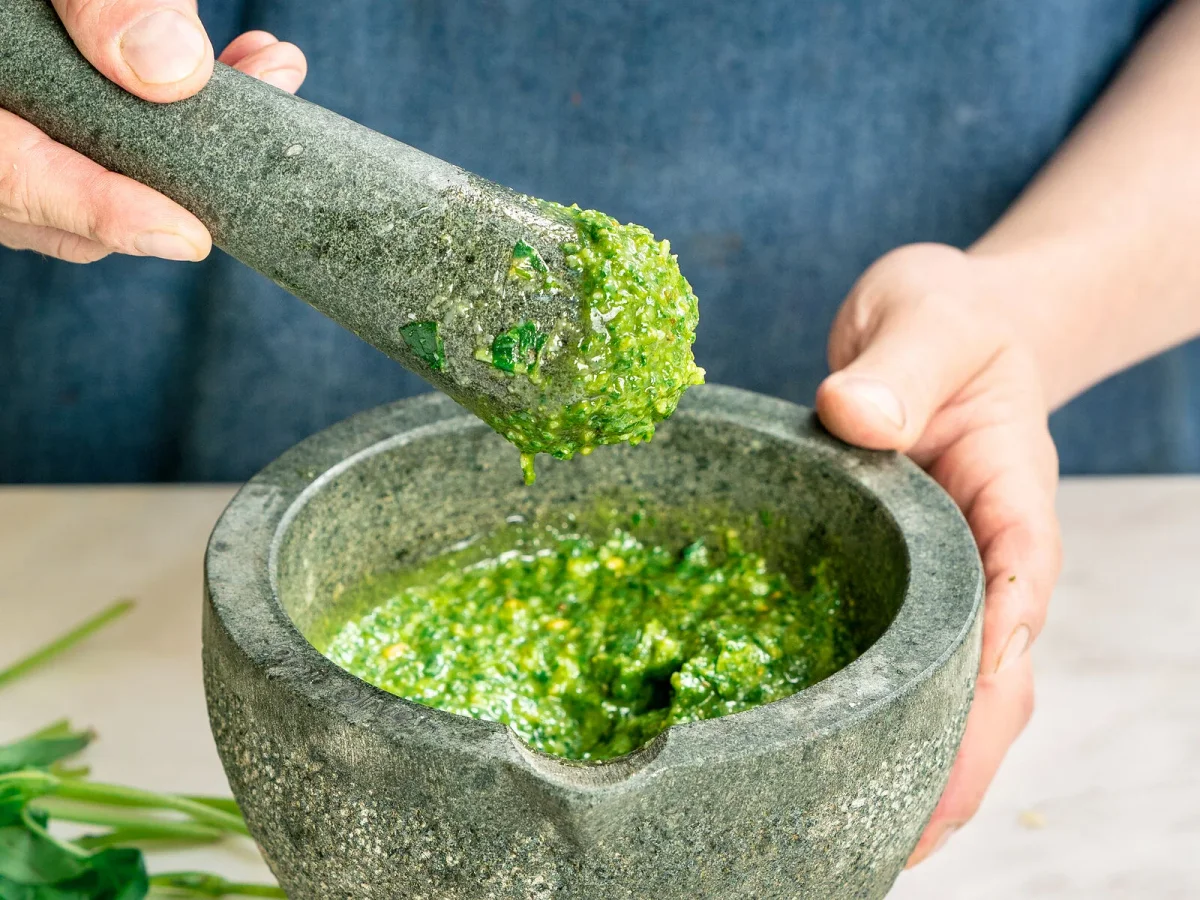
Genovese basil pesto is a bright, aromatic sauce made by crushing basil, pine nuts, garlic and Parmesan with olive oil. This mortar-and-pestle method makes a creamy pesto in about 15 minutes, ready to toss with pasta or spoon over vegetables.
Ingredients
- 1 pinchfine sea salt
- 1 clovegarlic
- 50 gpine nuts
- 100 gbasil leaves, picked from the stems
- 150 mlextra-virgin olive oil
- 50 ggrated Parmesan
Instructions
- 1
Prepare the garlic
Peel the garlic and chop it into very fine dice. For a milder garlic flavour, halve the clove and rub the cut sides around the inside of the mortar, then set the remaining garlic aside.
- 2
Crush salt and garlic
Put the salt and finely chopped garlic in the mortar and work them with the pestle until creamy, moving it in circular motions against the inside.
- 3
Grind the pine nuts
Add the pine nuts to the mortar in small batches, crushing each batch before adding more.
- 4
Add the basil
Add the picked basil leaves a little at a time, crushing each portion before adding the next.
- 5
Work in Parmesan
Add the grated Parmesan gradually and continue crushing until the mixture is creamy.
- 6
Stream in the oil
Keep crushing with one hand while slowly pouring the olive oil into the mortar in a thin stream. The pesto is ready once everything is well combined.
What is Genovese pesto?
Pesto alla Genovese comes from Genoa in Liguria, north-western Italy. Its name comes from pestare, meaning to pound or crush, which describes the traditional mortar-and-pestle method.
This version builds flavour by crushing garlic, pine nuts and basil before working in Parmesan and olive oil. Adding the ingredients in stages helps create a cohesive sauce rather than a pile of separate pieces.
Nutrition and macros by portion
The nutrition label shows one serving as written: 532 calories, 8g protein, 3g carbs, 55g fat.
| Portion | Adjustment | kcal | Protein | Carbs | Fat |
|---|---|---|---|---|---|
| Lighter | Use less olive oil | 372 kcal | 5g | 2g | 39g |
| This serving | As written | 532 kcal | 8g | 3g | 55g |
| Hungry | Larger pesto portion | 798 kcal | 11g | 5g | 83g |
Most of the energy and fat come from the olive oil and pine nuts, while the Parmesan contributes fat and much of the protein. Basil and garlic add flavour with relatively small amounts of carbohydrate. Serve a modest amount with pasta or bread and add vegetables to balance the plate.
Why use a mortar and pestle?
Basil first: Crushing the leaves gently releases their fragrant oils. Add them in small batches so they are easier to work evenly.
Steady motion: Circular movements against the mortar’s sides help break down the ingredients into a creamy mixture. Work patiently rather than trying to crush everything at once.
Choose and prepare the ingredients
Basil leaves: Pick the leaves from the stems as specified, and use them dry so the oil and crushed ingredients can combine without extra water.
Pine nuts and Parmesan: Add both gradually. Finely grated Parmesan is easier to incorporate, while the pine nuts should be crushed to suit the texture you like.
Get the texture right
A creamy consistency is the cue at the garlic-and-salt stage and again after the Parmesan is added. Keep pressing and grinding until there are no large, hard pieces left.
Pouring the oil slowly while continuing to crush helps it blend into the mixture. Stop once the pesto is evenly combined; it should still have some texture, not feel completely smooth.
Timing and make-ahead notes
The full method takes about 15 minutes, with most of that time spent crushing the ingredients by hand. Prepare everything before starting so you can add each ingredient in turn.
Pesto is best used soon after making, when the basil aroma is fresh. If you need to hold it briefly, cover it well and keep it chilled.
How to serve it
Pasta: Toss the pesto through freshly cooked pasta, loosening it with a little pasta cooking water if needed.
Beyond pasta: Spoon it over roasted vegetables, spread it in a sandwich or serve it alongside bread. A simple salad or vegetables make a fresh contrast to the rich sauce.
Recipe notes & tips
- Dry the basil leaves thoroughly after washing so water does not thin the pesto.
- Chop the garlic very finely before crushing it with the salt.
- Add the pine nuts and basil in small batches for more even crushing.
- Use a slow, thin stream of olive oil while continuing to work the pestle.
- Taste before serving and adjust the seasoning only if needed.
Variations
- Less garlic: Rub the cut half of the clove around the mortar, then leave the rest out for a gentler flavour.
- Different nuts: Replace the pine nuts with walnuts for a different, earthier taste.
- Extra basil: Increase the basil and add oil gradually until the texture is creamy.
- Cheese change: Swap some of the Parmesan for another hard, aged cheese.
- Chunkier pesto: Crush the ingredients less finely and stop while the mixture still has noticeable texture.
Common mistakes to avoid
- Adding everything at once: Work in batches so the ingredients crush evenly.
- Pouring oil too quickly: Add it in a thin stream while continuing to crush to help it combine.
- Using wet basil: Dry the leaves well, as excess water can make the pesto loose.
- Stopping too early: Continue crushing until the garlic, salt and Parmesan stages are creamy.
- Overworking the leaves: Crush in small portions and stop once the ingredients are combined, while some texture remains.
How to store
Transfer leftover pesto to an airtight container and refrigerate, using it within 3 days for the freshest flavour. Stir before serving; it is usually best served cold or at room temperature rather than reheated.
Frequently asked questions
Can I make this without a mortar and pestle?
Yes. A food processor can crush the ingredients, though the texture will differ. Pulse in stages and add the oil gradually.
How do I stop the pesto becoming too oily?
Pour in the olive oil slowly and stop once the mixture is combined. You do not have to use every last drop if the texture is already right.
Can I make the pesto less garlicky?
Yes. Rub the cut half of the clove around the mortar as described, then set the garlic aside instead of adding it.
What can I use instead of pine nuts?
Walnuts are one option. The flavour and texture will change, but you can crush them in the same way.
How should I loosen pesto for pasta?
Stir in a little pasta cooking water until it coats the pasta easily. Add it gradually so the sauce does not become too thin.
Can I freeze this pesto?
Yes. Freeze it in a sealed container in portions, then thaw it in the fridge before use. Stir well after thawing.
Cook it from the original
This recipe comes from gustini.es. Their page has the author’s own photos, notes and tips — the best place to cook it from.
Open the recipe on gustini.es