
Spanish omelette
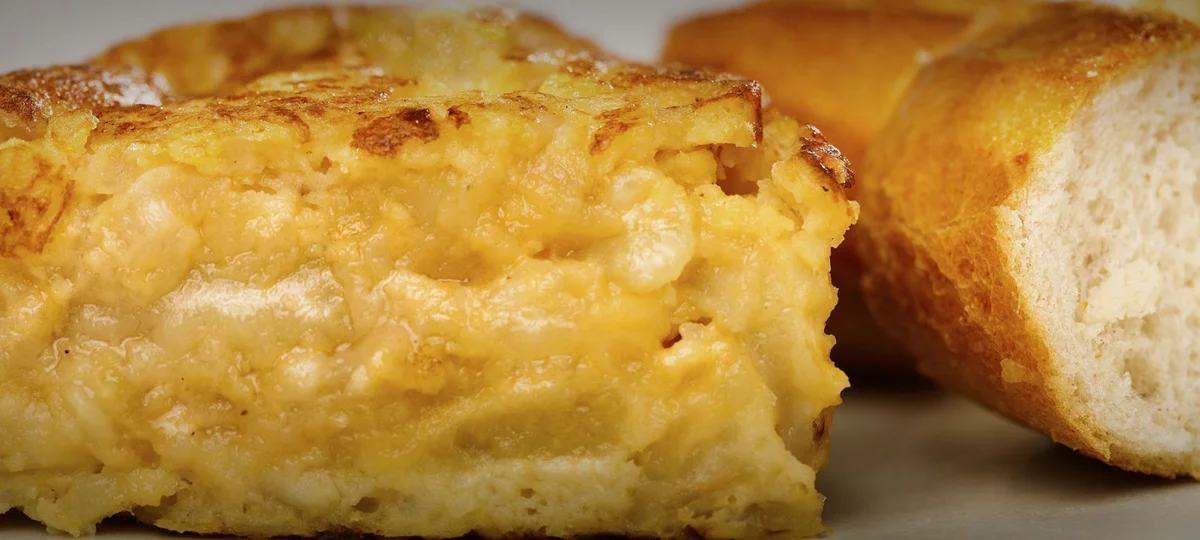
Spanish omelette, or tortilla española, brings potatoes, onion and eggs together in a slowly cooked, golden omelette. It makes a hearty meal from a short list of familiar ingredients and can be served warm or at room temperature.
Ingredients
- 4 mediumpotatoes
- 4 or 5eggs
- 1 mediumonion
- 250 ml (¼ litre)olive oil
- to tastesalt
Instructions
- 1
Prepare potatoes
Peel, wash and dry the potatoes. Slice them thinly and put them in a deep frying pan with the olive oil over a medium heat, so they cook slowly.
- 2
Add onion
Add the onion, sliced thinly.
- 3
Cook vegetables
Fry the potatoes and onion slowly until soft and beginning to turn golden.
- 4
Stir and cut
Stir with a slotted spoon, using it to break up and cut through the ingredients as you mix.
- 5
Drain the oil
After about 10 minutes, drain off the oil.
- 6
Beat the eggs
Beat the eggs in a bowl with a little salt.
- 7
Combine mixture
Add the potato and onion mixture to the eggs.
- 8
Return to pan
Put the pan back on the heat with a little of the drained oil, then add the whole mixture.
- 9
Cook first side
Cover the pan and cook over a low heat for about 5 to 10 minutes, until the underside is golden.
- 10
Turn omelette
Turn the omelette over onto a plate or lid, then slide it back into the pan with the other side facing down. Let it cook gently until set.
- 11
Finish cooking
Cook until the omelette is golden on both sides.
What is Spanish omelette?
Spanish omelette, known in Spain as tortilla española or tortilla de patatas, is a classic dish built around potatoes and eggs. It is associated with Spanish home cooking and is often served in wedges.
This version cooks the potatoes and onion slowly in olive oil before folding them into beaten egg. That gentle cooking softens the vegetables and gives the omelette its tender, cohesive centre.
Nutrition and macros by portion
The nutrition label shows one serving as written: 1280 calories, 25g protein, 155g carbs, 65g fat.
| Portion | Adjustment | kcal | Protein | Carbs | Fat |
|---|---|---|---|---|---|
| Lighter | Use less olive oil | 896 kcal | 18g | 108g | 45g |
| This serving | As written | 1280 kcal | 25g | 155g | 65g |
| Hungry | Serve a larger wedge | 1920 kcal | 38g | 232g | 97g |
The potatoes provide most of the carbohydrates, while the eggs contribute protein and some fat. Olive oil is the main source of fat, so serve a wedge with salad or other vegetables to balance the plate.
The potato and onion
Potatoes: thin slices cook more evenly and are easier to combine with the egg. The method calls for medium potatoes but does not specify a variety.
Onion: slice it finely so it softens alongside the potatoes rather than staying in large, firm pieces.
Cooking in olive oil
Gentle heat: keep the pan at a moderate temperature while the potatoes and onion cook. They should soften gradually and only begin to colour, rather than crisp quickly.
Draining: the method drains the oil after about 10 minutes. Check the vegetables for softness as you go, since the exact cooking time can vary with slice thickness and heat.
Getting the egg texture right
Egg mixture: beat the eggs with a little salt, then add the cooked potatoes and onion. Fold them together carefully so the egg coats the vegetables.
Doneness: cook the first side over a low heat until golden underneath, then turn and let the other side set slowly. The recipe aims for a set omelette with a golden exterior.
Turning the omelette
Use a plate or lid that is wider than the pan and hold it firmly over the top before turning. Keep the pan close to the plate, then slide the omelette back in gently to reduce the chance of it breaking.
The omelette is easiest to turn once its underside has set enough to hold together. If the centre still looks very loose, give it a little more time over low heat.
Serving and timing
The method gives about 10 minutes for the initial potato cooking, followed by about 5 to 10 minutes for the first side; the second side cooks until set. Total time is not specified, and the actual duration depends on the pan and the thickness of the slices.
Serve it in wedges, either warm or cooled. A crisp green salad or simply dressed tomatoes make a fresh contrast to the rich, soft omelette.
Recipe notes & tips
- Cut the potatoes into similarly thin slices so they soften at a similar rate.
- Keep the heat moderate while cooking the potatoes and onion to avoid browning them too quickly.
- Drain the cooked vegetables well before mixing them with the eggs.
- Use a plate or lid larger than the pan when turning the omelette.
- Let the omelette set on its second side before trying to move it.
Variations
- No onion: leave it out for a simpler potato-and-egg version.
- Extra onion: add more finely sliced onion for a stronger sweet onion flavour.
- Herbs: fold chopped parsley into the beaten eggs for a fresh note.
- Pepper: add freshly ground black pepper with the salt.
- Serve chilled: cool the cooked omelette and cut it into small wedges for a room-temperature serving.
Common mistakes to avoid
- Thick potato slices: they may stay firm inside; slice them thinly and evenly.
- Heat too high: the outside can brown before the vegetables soften; cook them gently.
- Excess oil in the mixture: the omelette can feel greasy; drain the potatoes and onion before adding them to the eggs.
- Turning too early: the omelette may split; wait until the first side is golden and set enough to hold together.
- Rushing the second side: the centre may remain unset; cook it slowly until it has set.
How to store
Cool leftovers, cover and refrigerate for up to 3 days. Reheat gently in a frying pan or microwave until warmed through, or serve cold.
Frequently asked questions
How many eggs should I use?
The recipe calls for 4 or 5 eggs. Use 4 for a firmer, more potato-forward omelette or 5 for more egg to bind the filling.
How do I know when the potatoes are ready?
They should be soft and starting to colour. Check a slice with a fork; it should yield easily.
How can I turn the omelette without breaking it?
Use a plate or lid wider than the pan, hold it firmly in place and turn in one confident motion. Slide the omelette back into the pan gently.
Can I serve Spanish omelette cold?
Yes. Let it cool before cutting it into wedges; it can be served at room temperature or chilled.
What should I serve with it?
A green salad or tomatoes make a simple accompaniment. Bread also works if you want a more substantial meal.
Cook it from the original
This recipe comes from spain.info. Their page has the author’s own photos, notes and tips — the best place to cook it from.
Open the recipe on spain.info