
Spanish garlic chicken
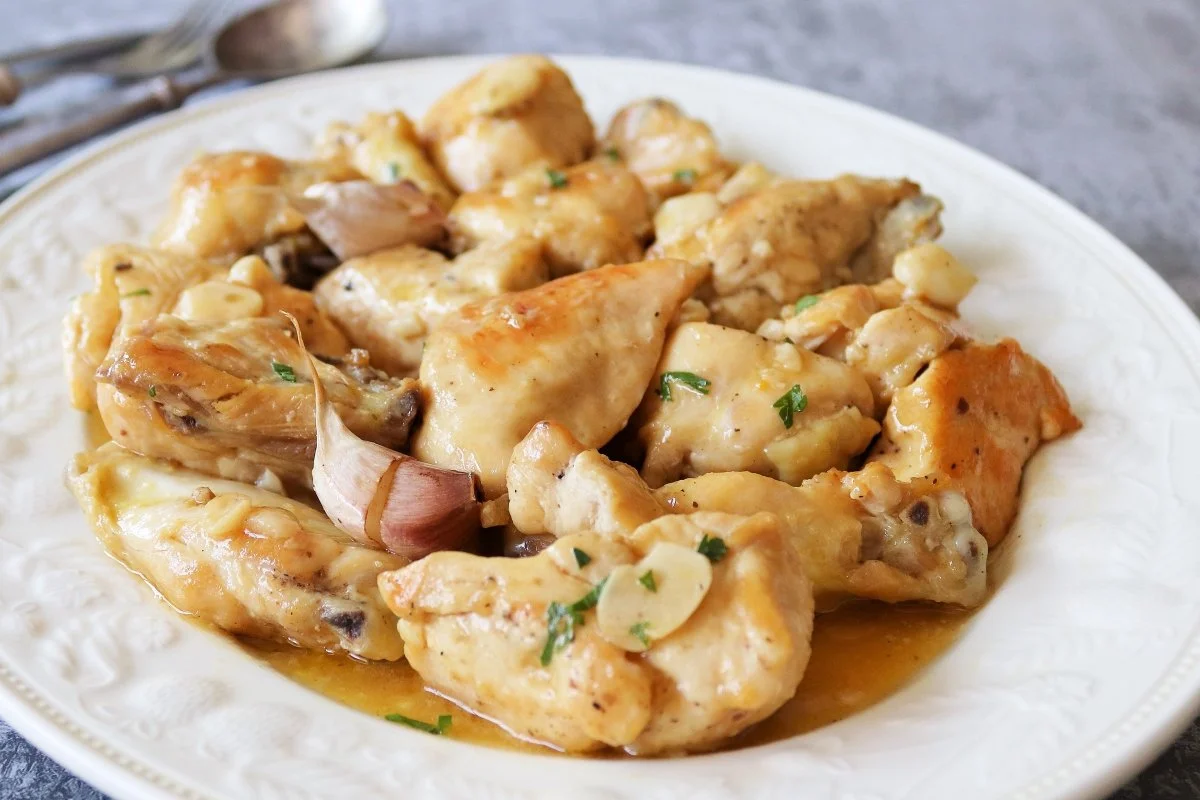
Spanish garlic chicken is browned chicken simmered with garlic, white wine and stock until the sauce is juicy and full of mellow garlic flavour. It makes a comforting one-pan meal, with parsley to finish.
Ingredients
- 1.5 kgwhole chicken, cleaned and jointed
- to tastesalt
- to tasteground black pepper
- 3 tablespoonsolive oil
- 1 headgarlic
- 200 mlwhite wine
- 1 tablespoonplain flour
- 400 ml (or 200 ml for a drier sauce)chicken stock
- 400 ml (or 200 ml for a drier sauce)chicken stock
- to tastechopped parsley, to garnish
Instructions
- 1
Season the chicken
Remove the chicken skin, then season the chicken with salt and ground black pepper.
- 2
Fry whole garlic
Fry 3 whole garlic cloves until golden.
- 3
Brown the chicken
Take out the garlic and fry the chicken in the same oil.
- 4
Slice the garlic
Peel the remaining garlic cloves and slice them.
- 5
Add sliced garlic
Add the sliced garlic to the chicken and cook everything together.
- 6
Reduce the wine
Pour in the white wine and let it reduce.
- 7
Add the flour
Add the plain flour.
- 8
Simmer in stock
Pour in the chicken stock, cover the pan and cook the garlic chicken for about 20 minutes.
- 9
Garnish and serve
Serve the chicken freshly cooked, optionally garnished with chopped parsley.
What is Spanish garlic chicken?
Spanish garlic chicken, or pollo al ajillo, is a traditional Spanish dish built around chicken cooked with plenty of garlic. This version browns the chicken before simmering it with white wine and stock, creating a simple, savoury sauce.
Whole cloves are fried first, then sliced garlic is added to the pan. That combination gives the dish layers of garlic flavour, from golden and mellow to more pronounced.
Nutrition and macros by portion
The nutrition label shows one serving as written: 568 calories, 0g protein, 0g carbs, 0g fat.
| Portion | Adjustment | kcal | Protein | Carbs | Fat |
|---|---|---|---|---|---|
| Lighter | Less oil, half the stock | 398 kcal | 0g | 0g | 0g |
| This serving | As written | 568 kcal | 0g | 0g | 0g |
| Hungry | Larger chicken portion | 852 kcal | 0g | 0g | 0g |
Chicken provides most of the protein, while the oil contributes much of the fat; the flour and any side dish supply carbohydrates. Serve with vegetables and a moderate portion of bread, potatoes or rice to make a balanced plate.
The garlic and chicken
Whole cloves: fry 3 cloves until golden, then remove them before browning the chicken. The remaining cloves are peeled and sliced for the simmering stage.
Chicken: removing the skin keeps the cooking focused on browning the meat in the oil. Fry the pieces in the same pan used for the garlic so they pick up its flavour.
Building the sauce
Wine: add it after the sliced garlic has cooked with the chicken, and let it reduce before adding flour. This gives the wine time to concentrate rather than leaving the sauce tasting raw.
Flour and stock: stir in the flour, then pour in the chicken stock and cover the pan. The recipe lists the stock twice at 400 ml each; check the quantity you intend to use, as the instructions do not specify a total.
Check the texture and doneness
Sauce: the recipe allows for half the listed stock if you prefer a drier result. Keep the pan covered while the chicken simmers so the sauce stays moist.
Chicken: cook it for about 20 minutes as directed, and check that the thickest pieces are cooked through before serving. The precise time can vary with the size of the pieces.
Timing and serving
The stated total time is 60 minutes, including browning, reducing the wine and simmering. Prepare the garlic before starting the sauce so it is ready when needed.
Finish with chopped parsley just before serving. The savoury sauce is good with bread, potatoes or rice, which can soak it up and make the meal more substantial.
Recipe notes & tips
- Dry the chicken pieces before frying to help them brown.
- Use a pan large enough to brown the chicken without crowding it.
- Keep an eye on the whole garlic cloves and remove them as soon as they turn golden.
- Let the wine reduce before adding the flour and stock.
- Use the lower stock quantity if you prefer less sauce.
Variations
- More herbs: add extra chopped parsley at the table.
- Drier sauce: use half the listed stock quantity, as suggested in the recipe.
- More garlic: slice the cloves finely for garlic flavour throughout the sauce.
- Bread accompaniment: serve with crusty bread to mop up the sauce.
Common mistakes to avoid
- Crowding the pan: the chicken may steam rather than brown; fry it in batches if needed.
- Burning the garlic: remove the whole cloves once golden so they do not turn bitter.
- Skipping the reduction: give the wine time to reduce before moving on to the flour.
- Adding stock too soon: add it after the flour, following the recipe's order.
- Guessing the doneness: check the thickest chicken pieces are cooked through before serving.
How to store
Cool leftovers promptly, store them in a covered container in the fridge and eat within 2 days. Reheat thoroughly in a covered pan, adding a little water or stock if the sauce has thickened.
Frequently asked questions
Can I use chicken pieces instead of a whole chicken?
Yes. Use chicken pieces, keeping them similar in size so they cook at a similar rate.
How much chicken stock should I use?
The ingredient list repeats 400 ml of stock, while also suggesting half the amount for a drier dish. The method does not clarify whether the two entries are intentional, so check the amount before cooking.
Can I make the sauce less liquid?
Yes. The recipe suggests using half the listed stock if you prefer a drier result.
Do I have to remove the chicken skin?
The method specifies removing it before seasoning. For this version, follow that instruction before frying the chicken.
How do I know when the chicken is ready?
After the suggested 20-minute covered simmer, check the thickest pieces are cooked through. Larger pieces may need more time.
What should I serve with garlic chicken?
Bread, potatoes or rice all work well with the sauce. Add vegetables alongside for a fuller plate.
Cook it from the original
This recipe comes from bonviveur.es. Their page has the author’s own photos, notes and tips — the best place to cook it from.
Open the recipe on bonviveur.es