
Kung Pao Beef Recipe
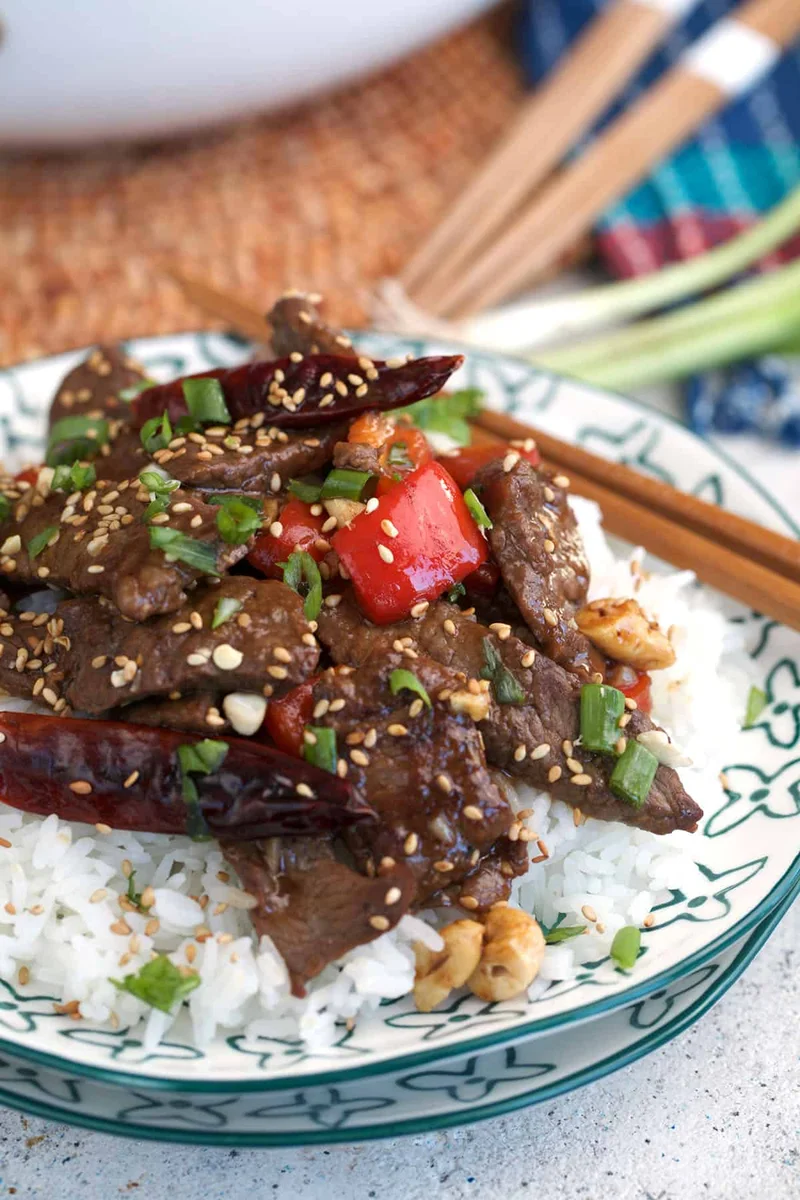
Kung Pao beef is a quick stir-fry of seared beef, crunchy pepper and nuts in a glossy, sweet-savoury sauce with a customisable chilli kick. It brings takeout-style flavour to a weeknight meal and is ready in about 30 minutes.
Ingredients
- 454 gflank steak or sirloin, thinly sliced against the grain
- 15 mlsoy sauce
- 15 mlShaoxing wine (or mirin or dry sherry; optional)
- 5 mlcornflour
- 5 mlolive oil
- 45 mlsoy sauce
- 30 mlrice vinegar
- about 19 gbrown sugar
- 15 mlhoisin sauce
- 5 mltoasted sesame oil
- 5 mlcornflour
- 60 mllow-sodium beef stock
- 30 ml, dividedolive oil
- 6dried red chillies, adjust to taste
- 10 mlSichuan peppercorns, lightly crushed (optional)
- 4 clovesgarlic, minced
- 15 mlfresh ginger, minced
- 4spring onions, cut into 2.5 cm pieces, whites and greens separated
- 1red bell pepper, diced into larger pieces
- about 65 groasted cashews or peanuts
- To tastesteamed rice or noodles; sesame seeds and extra spring onions, optional
Instructions
- 1
Marinate the beef
Toss the beef in a bowl with 15 ml soy sauce, the Shaoxing wine, 5 ml cornflour and 5 ml oil. Leave it to sit while you prepare the other ingredients.
- 2
Mix the sauce
Whisk together the remaining 45 ml soy sauce, rice vinegar, brown sugar, hoisin sauce, sesame oil, 5 ml cornflour and beef stock until smooth and the cornflour has dissolved.
- 3
Sear the beef
Heat a large frying pan or wok over high heat and add 15 ml oil. Arrange the beef in a single layer and sear for 1–2 minutes, then turn or stir and cook for 1 minute more, until mostly cooked. Transfer to a plate.
- 4
Fry the aromatics
Add the remaining 15 ml oil to the pan. Stir-fry the dried chillies and Sichuan peppercorns for 20–30 seconds, until fragrant, taking care not to burn them. Add the garlic, ginger and spring onion whites, and stir-fry for 20–30 seconds.
- 5
Cook the pepper
Add the diced red pepper and stir-fry until crisp-tender.
- 6
Thicken and combine
Whisk the sauce again because the cornflour settles, then pour it into the pan. Stir for about 30–60 seconds, until glossy and thickened. Return the beef and toss to coat; stir in the nuts and spring onion greens for the final 30 seconds.
- 7
Serve the stir-fry
Spoon the beef over steamed rice. Add sesame seeds or extra spring onions on top if you like.
What is Kung Pao beef?
Kung Pao beef is an American take on Kung Pao-style stir-fries, pairing savoury sauce with chillies, aromatics and nuts. This version uses quickly seared beef and a glossy sauce for a fast, bold-flavoured dinner.
The combination works because the beef cooks in stages: it browns briefly first, then returns to the pan just long enough to take on the sauce.
Nutrition and macros by portion
The nutrition label shows one serving as written: 369 calories, 31g protein, 25g carbs, 16g fat.
| Portion | Adjustment | kcal | Protein | Carbs | Fat |
|---|---|---|---|---|---|
| Lighter | Use less oil and nuts | 258 kcal | 22g | 18g | 11g |
| This serving | As written | 369 kcal | 31g | 25g | 16g |
| Hungry | Add more rice or beef | 554 kcal | 47g | 38g | 24g |
The beef supplies most of the protein, while the sugar and serving of rice or noodles contribute carbohydrates. Oil, sesame oil and the nuts account for much of the fat. Serve with a generous amount of the pepper and keep the rice or noodles to a moderate portion for a balanced plate.
Choose and slice the beef
The cut: Flank steak or sirloin both work well when sliced thinly across the grain. This shortens the muscle fibres and helps each piece stay tender after a quick, hot cook.
The marinade: Soy sauce seasons the meat, while a little cornflour and oil help coat it. Shaoxing wine adds flavour, but mirin or dry sherry can stand in, or you can leave it out.
Build the sauce
The balance: Soy sauce and hoisin bring savoury depth, rice vinegar adds sharpness, and brown sugar rounds it out. Sesame oil gives the mixture a toasted finish.
The thickener: Whisk the cornflour into the liquid ingredients until smooth before adding the sauce to the pan. Give it another whisk just before pouring, as the cornflour can settle.
Control the heat
The chillies: Dried red chillies provide the main heat, so use fewer for a milder dish or keep the full amount for more fire. Sichuan peppercorns are optional and bring their own distinctive, peppery character.
The aromatics: Fry the chillies and peppercorns briefly, then add garlic, ginger and the spring onion whites. Keep them moving; the short cooking time releases their aroma without giving them time to burn.
Get the texture right
The beef: Spread it out in a single layer so it sears rather than steams. It should be mostly cooked before you remove it; it will finish when it goes back into the pan.
The pepper and sauce: Cook the pepper until crisp-tender, then stir the sauce until it turns glossy and thick. Add the nuts and spring onion greens at the end so they retain some crunch and freshness.
Plan the timing
The preparation: Slice the beef and chop the vegetables before heating the pan. The stir-frying moves quickly, so having the sauce whisked and ingredients ready makes it easier to avoid overcooking.
The finish: The sauce needs only about 30–60 seconds to thicken. Keep the beef out of the pan until then, and warm it through with the nuts and spring onion greens for the final 30 seconds.
Choose what to serve it with
Rice: Steamed rice is a simple base for the savoury, glossy sauce. Spoon the beef and vegetables over it so the rice catches the sauce.
Noodles: Noodles are another option if you prefer them to rice. Sesame seeds or extra spring onions can be added on top, as suggested in the recipe.
Recipe notes & tips
- Slice the beef thinly across the grain for more tender pieces.
- Prepare and arrange all the ingredients before you heat the wok or frying pan.
- Use a large pan and leave space around the beef so it can sear.
- Keep the dried chillies moving and take care not to scorch them.
- Whisk the sauce again immediately before adding it to the pan.
- Add the nuts and spring onion greens at the very end to keep their texture.
Variations
- Adjust the chilli: Use fewer dried chillies for a milder stir-fry.
- Swap the nuts: Use roasted cashews instead of peanuts, or the other way round.
- Change the wine: Use mirin or dry sherry in place of Shaoxing wine.
- Skip the peppercorns: Leave out the Sichuan peppercorns if you do not have them.
- Choose noodles: Serve the beef over noodles instead of steamed rice.
Common mistakes to avoid
- Slicing with the grain: Cut across the grain so the beef is easier to chew.
- Crowding the pan: The beef may steam instead of sear; cook it in a single layer.
- Burning the chillies: Stir them for only 20–30 seconds and watch closely.
- Skipping the second whisk: Cornflour settles, so whisk the sauce again before pouring.
- Overcooking the beef: Remove it while mostly cooked and return it only to finish in the sauce.
- Cooking the nuts too long: Stir them in for just the final 30 seconds to preserve their crunch.
How to store
Refrigerate leftovers in a covered container and use within 3 days. Reheat gently in a frying pan until piping hot, adding a small splash of water if the sauce has thickened; store rice separately where possible.
Frequently asked questions
Can I use a different cut of beef?
Yes. Flank steak or sirloin are suggested, but another tender cut that can be sliced thinly against the grain can also work.
Can I make it without Shaoxing wine?
Yes. The recipe marks it as optional; mirin or dry sherry are suggested alternatives.
How can I make the dish less spicy?
Use fewer dried red chillies, adjusting the amount to suit your taste. You can also leave out the optional Sichuan peppercorns.
Can I make the sauce ahead?
You can whisk the sauce ingredients together in advance. Whisk it again just before adding it to the pan because the cornflour settles.
How do I know when the sauce is ready?
After about 30–60 seconds of stirring, it should look glossy and thickened enough to coat the beef.
Can I serve Kung Pao beef with noodles?
Yes. The recipe suggests serving it over steamed rice or noodles.
Cook it from the original
This recipe comes from thesuburbansoapbox.com. Their page has the author’s own photos, notes and tips — the best place to cook it from.
Open the recipe on thesuburbansoapbox.com