
Dulce de Leche Chocolate Pecan Pie
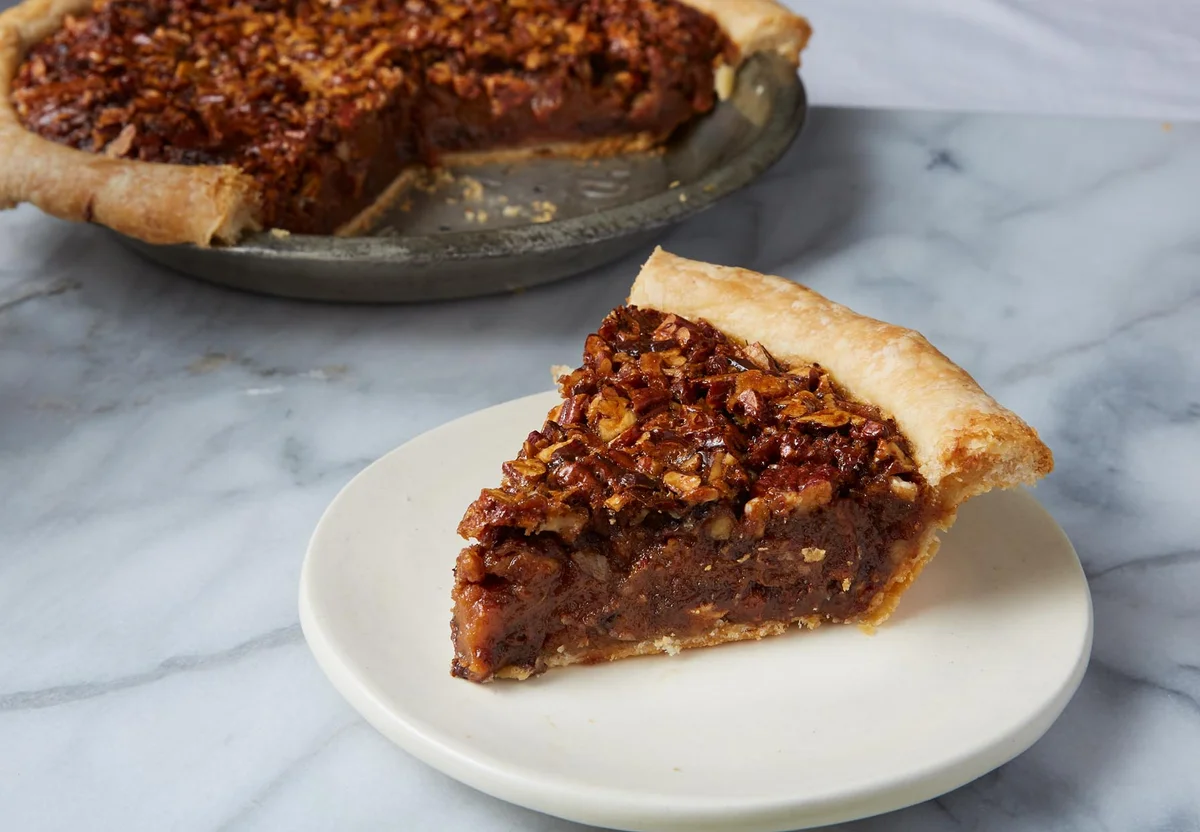
This American-style pecan pie brings together a buttery pastry crust, a rich dulce de leche and chocolate filling, and plenty of chopped pecans. It makes a generous dessert for sharing, with a sweet, chewy centre and lightly browned edges.
Ingredients
- 156 g (1¼ cups), plus extra for working the doughplain flour
- Pinchkosher or sea salt
- 1 teaspoongranulated sugar
- 113 g (1 stick or ½ cup), cold and dicedunsalted butter
- 60 ml (¼ cup), coldwater
- 3eggs
- 240 ml (1 cup)dulce de leche or cajeta
- 100 g (½ cup)dark brown sugar
- 120 ml (½ cup)light corn syrup
- 4 tablespoons, meltedunsalted butter
- ½ teaspoonkosher or sea salt
- 227 g (2 cups or 8 ounces), coarsely choppedpecan halves
- 57 g (2 ounces or ⅓ cup), choppedbittersweet chocolate
Instructions
- 1
Make the pastry
Put the flour, pinch of salt, sugar and diced cold butter in a food processor. Pulse a few times until the mixture resembles coarse meal, then add the cold water and pulse a few more times, until it is moister. Turn the dough out and gather it into a ball. Lightly flour the work surface and knead the dough 3 to 4 times, just until it comes together. Flatten it into a disc, wrap it in cling film and refrigerate until firm, about 1 hour.
- 2
Mix the filling
Whisk the eggs in a bowl until foamy. Whisk in the dulce de leche, brown sugar, corn syrup, melted butter and salt until blended. Stir in the chopped pecans and chocolate.
- 3
Prepare the oven
Place a rack in the middle of the oven and heat it to 190°C (375°F). Take the dough from the refrigerator. Lightly flour the work surface, your hands and a rolling pin.
- 4
Shape the crust
Roll the dough into a round about 28–30 cm (11–12 inches) across. Set it in a pie dish, pressing it against the base and sides, then crimp the top edge.
- 5
Fill and bake
Pour the filling into the pastry case and cover the pie loosely with aluminium foil. Bake for 55 minutes, or until set with lightly browned edges. Remove from the oven and let it cool before serving.
What is dulce de leche pecan pie?
Pecan pie is an American dessert built around a sweet, set filling and a pastry shell. This version adds dulce de leche or cajeta, both caramel-like milk sweets, along with bittersweet chocolate.
The combination gives the pie a deep caramel flavour against the pecans’ toasted, nutty character. Chilling the homemade pastry before rolling helps it hold together as you shape the case.
Nutrition and macros by portion
The nutrition label shows one serving as written: 570 calories, 7g protein, 63g carbs, 34g fat.
| Portion | Adjustment | kcal | Protein | Carbs | Fat |
|---|---|---|---|---|---|
| Lighter | Smaller slice, fruit alongside | 399 kcal | 5g | 44g | 24g |
| This serving | As written | 570 kcal | 7g | 63g | 34g |
| Hungry | Larger slice | 855 kcal | 11g | 95g | 51g |
The pastry, sugar, corn syrup and dulce de leche provide most of the carbohydrates, while butter and pecans contribute much of the fat. Eggs and pecans supply some protein. Balance a slice with fresh fruit or serve it after a meal centred on vegetables and a protein-rich main.
The pastry choices
Cold butter: keeping it diced and cold helps the pastry mixture form a coarse, crumbly texture before the water is added.
Brief mixing: pulse the dough only until it starts to come together, then knead it just 3 to 4 times. The hour of chilling firms it before rolling.
Getting the filling right
Foamy eggs: whisk them first, then blend in the dulce de leche, sugars, syrup, melted butter and salt for an even filling.
Pecans and chocolate: fold these in after whisking the liquid ingredients. Coarsely chopped pecans give the pie a substantial nutty texture, while the chocolate adds small bittersweet notes.
Shaping the pie case
Even rolling: aim for a 28–30 cm round so there is enough pastry to line the base and sides of the pie dish. Use a light dusting of flour on the work surface, hands and rolling pin.
Crimped edge: press the pastry into the dish before crimping the top. This gives the filling a defined boundary as it bakes.
How to tell when it is done
Set centre: bake at 190°C for 55 minutes, and look for a filling that has set rather than still appearing liquid.
Lightly browned edges: the recipe uses these as an additional visual cue. The foil cover is loose, so it shields the pie while leaving room for it to bake.
Serving and timing
Cooling: let the pie cool before cutting so the filling can settle. This also makes it easier to serve neat slices.
For the table: serve it on its own or alongside a less sweet accompaniment, such as plain yoghurt or unsweetened whipped cream. The pastry needs about 1 hour of chilling, in addition to the stated baking time.
Recipe notes & tips
- Keep the butter and water cold when making the pastry.
- Use short pulses in the food processor so the pastry does not become overworked.
- Chill the dough for about 1 hour, until firm enough to roll.
- Flour the rolling pin and work surface lightly to reduce sticking.
- Cover the pie loosely with foil as directed while it bakes.
- Let the pie cool before slicing so the filling can settle.
Variations
- Use cajeta: substitute cajeta for dulce de leche for a slightly different caramel note.
- Change the chocolate: use another bittersweet chocolate, keeping the same quantity.
- Coarser pecans: leave some pieces larger for more pronounced nutty texture.
- Fine pecans: chop them more finely for a more even distribution through the filling.
Common mistakes to avoid
- Warm pastry: it can be difficult to roll; chill it until firm before shaping.
- Too much kneading: it can make the pastry tough; stop after 3 to 4 turns.
- Overfilling the dish: pour the mixture into the pastry case carefully and avoid spilling it over the edge.
- Skipping the foil: the recipe calls for a loose foil cover during baking, so use it as directed.
- Cutting while hot: the filling may not hold its shape; let the pie cool before serving.
How to store
Once cool, cover the pie and refrigerate it, then eat within 3 to 4 days. Serve chilled or bring a slice to room temperature; reheat individual slices gently if preferred.
Frequently asked questions
Can I make the pastry ahead?
Yes. Wrap the pastry and refrigerate it until firm; the recipe calls for about 1 hour of chilling before rolling.
Can I use cajeta instead of dulce de leche?
Yes. The recipe gives dulce de leche or cajeta as alternatives, in the same quantity.
How do I know the pie is baked?
Bake it for 55 minutes at 190°C and check that the filling is set and the edges are lightly browned.
Why does the recipe cover the pie with foil?
It specifies a loose foil cover during baking. Keep the foil loose rather than pressing it onto the filling.
Should I serve it warm?
Let it cool before serving so the filling can settle. You can serve it at room temperature or chilled.
Cook it from the original
This recipe comes from patijinich.com. Their page has the author’s own photos, notes and tips — the best place to cook it from.
Open the recipe on patijinich.com