
Queso Frito [Video+Recipe] Fried Cheese
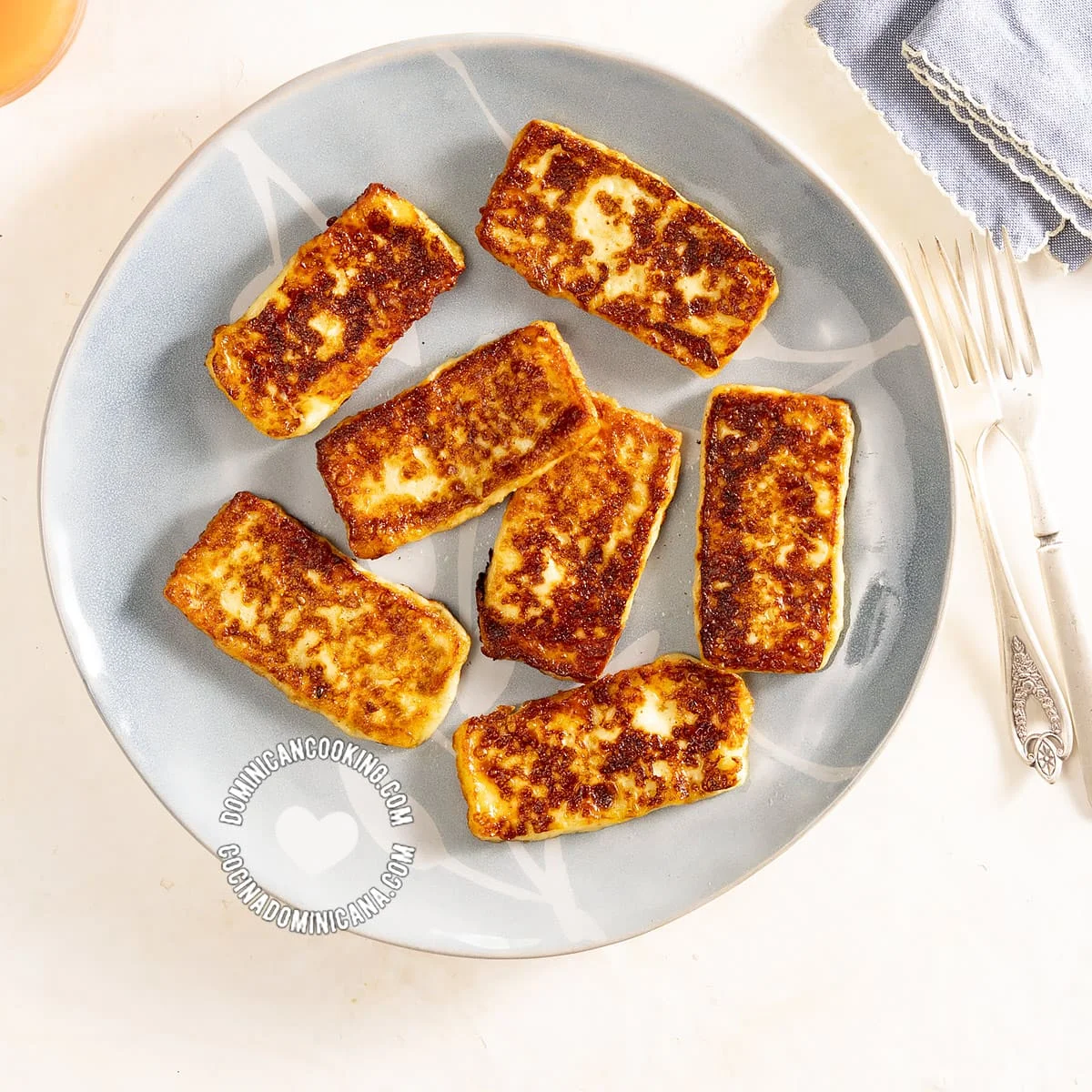
Dominican queso frito is cheese fried until golden on the outside and soft inside. It is a quick, savoury breakfast favourite, ready in about 15 minutes.
Ingredients
- 454 g (1 lb; approximately 0.23 kg)queso de freír
- 80 ml (⅓ cup)oil, for frying
Instructions
- 1
Prepare the cheese
Cut the cheese into 12 slices, approximately 5 × 7.5 cm (2 × 3 inches) and 6 mm (¼ inch) thick. Pat the slices dry with a paper towel to help reduce splattering.
- 2
Fry the slices
Heat the oil in a medium pan over medium-high heat to 175°C (350°F). Fry one slice first to check that it holds together and fries well. Cook the cheese on one side until golden, then turn and fry the other side. Remove each slice when it reaches your preferred colour and texture, and rest it on a paper towel while you fry the remaining cheese. Fry in batches rather than crowding the pan so the oil stays hot.
- 3
Serve while warm
Serve the fried cheese while it is still warm.
What is queso frito?
Queso frito means fried cheese, and in the Dominican Republic it is a familiar part of a traditional breakfast. This version keeps things simple: slices of queso de freír are fried until their surfaces turn golden.
The cheese is made for cooking, so it can brown in the pan while keeping its shape. The contrast between the browned outside and the softer centre is what makes each slice satisfying.
Nutrition and macros by portion
The nutrition label shows one serving as written: 454 calories, 25g protein, 1g carbs, 39g fat.
| Portion | Adjustment | kcal | Protein | Carbs | Fat |
|---|---|---|---|---|---|
| Lighter | Use less frying oil | 318 kcal | 18g | 1g | 27g |
| This serving | As written | 454 kcal | 25g | 1g | 39g |
| Hungry | Add another slice | 681 kcal | 38g | 2g | 59g |
Most of the protein comes from the queso de freír, while the cheese and frying oil contribute most of the fat; the recipe provides very little carbohydrate. Balance a serving with fruit or another fresh breakfast food.
Choosing the cheese
Queso de freír: Use a firm frying cheese intended to hold its shape under heat. Other cheeses may melt or spread rather than forming neat slices.
Drying and slicing
Even slices: Cut the cheese to roughly the same thickness so the pieces cook at a similar rate. The recipe makes 12 slices, about 6 mm thick.
Dry surfaces: Pat each slice with a paper towel before frying. This helps limit oil splatter when the cheese goes into the pan.
Getting a good fry
Test slice: Fry one piece first to see how the cheese behaves in your pan. If it does not brown or hold together as expected, check that the oil is hot and consult the cheese packaging for cooking guidance.
Hot oil: Heat the oil to 175°C before adding the cheese. Frying in batches helps the oil stay hot instead of cooling under too many slices.
Judging when it is done
Golden colour: Fry the first side until it is golden, then turn the slice and brown the second side. Take each piece out when its colour and texture suit your preference.
Soft centre: The cheese is best served warm, while the middle is still soft. Let fried slices drain briefly on paper towel as you finish the remaining batches.
Serving queso frito
At breakfast: Serve the slices soon after frying, as the recipe suggests, so they are still warm. They can be part of a Dominican-style breakfast spread alongside other breakfast dishes.
For balance: Pair the rich, salty cheese with fruit or another fresh breakfast component, and adjust the rest of the plate to suit your appetite.
Recipe notes & tips
- Cut the cheese into evenly sized slices so they brown at a similar pace.
- Pat the cheese dry before it goes into the hot oil.
- Fry one test slice before cooking the rest.
- Keep the oil at about 175°C for frying.
- Work in batches so the oil stays hot.
- Drain the cooked slices briefly on paper towel.
Variations
- Breakfast plate: Serve the cheese with other dishes from a Dominican-style breakfast.
- Fresh contrast: Add fresh fruit alongside the warm, savoury slices.
- Smaller pieces: Cut the cheese into shorter slices while keeping their thickness similar.
- Adjust the browning: Fry each side to your preferred shade of golden.
Common mistakes to avoid
- Wet cheese: Pat the slices dry first to reduce splattering.
- Skipping the test: Fry one slice first to check how your cheese behaves.
- Cool oil: Heat the oil to 175°C before adding the cheese.
- Crowded pan: Fry in batches so the oil remains hot.
- Uneven slices: Cut pieces to a similar thickness for more even frying.
- Serving too late: Bring the cheese to the table while it is still warm.
How to store
Queso frito is best served straight after frying. If needed, refrigerate leftovers in a covered container and reheat briefly in a pan; the texture may be less crisp than when freshly made.
Frequently asked questions
What cheese should I use for queso frito?
Use queso de freír, a firm cheese intended to be fried. A cheese that melts readily may not hold its shape in the pan.
Why fry one slice first?
A test slice shows whether your particular cheese browns and holds together as expected. It also gives you a chance to check the oil before frying the whole batch.
How hot should the oil be?
The recipe specifies 175°C (350°F). Keeping the oil hot helps the cheese fry promptly.
How do I reduce oil splatter?
Pat the cheese dry with a paper towel before frying. Lower the slices carefully into the oil.
Can I fry all the cheese at once?
It is better to fry in batches. Adding too many slices at the same time can cool the oil and leave the cheese in the pan longer.
Can I make queso frito ahead?
It is best eaten warm just after frying. You can fry it ahead and reheat it briefly, but it may not be as crisp.
Cook it from the original
This recipe comes from dominicancooking.com. Their page has the author’s own photos, notes and tips — the best place to cook it from.
Open the recipe on dominicancooking.com