
Mango Sago with Coconut Milk
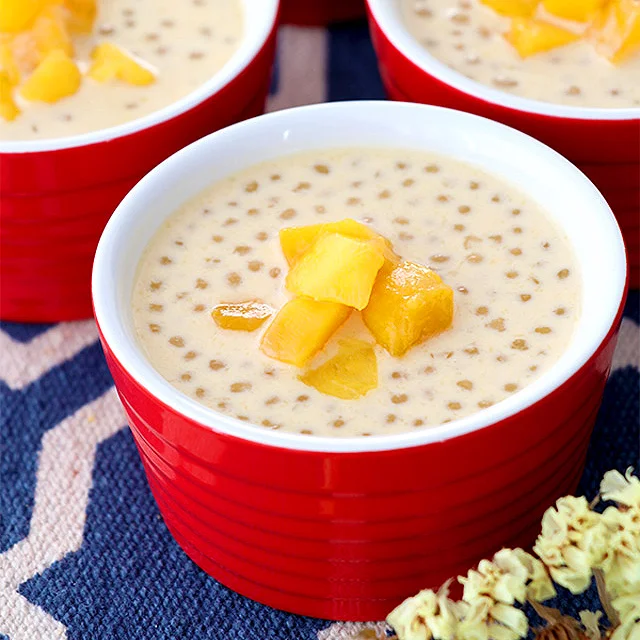
Mango sago is a chilled dessert of sweet mango purée, coconut cream and chewy sago pearls. It is simple to prepare and makes a refreshing finish to a meal, with fresh mango on top for extra colour and texture.
Ingredients
- 120 ml (½ cup)small sago pearls or tapioca pearls
- 1 litrewater, for boiling
- 67 g (⅓ cup)sugar
- 240 ml (1 cup)coconut cream or coconut milk
- 3 largeripe mangoes, peeled and cut into cubes
Instructions
- 1
Cook the sago
Bring 1 litre of water to the boil in a pot. Add the sago pearls and cook for 15 minutes, or until translucent, checking the packet instructions. Stir occasionally to stop them sticking together.
- 2
Rinse the pearls
Turn off the heat and drain the sago through a fine sieve. Rinse thoroughly until the pearls are no longer hot to the touch, then transfer them to a bowl and cover with a little water.
- 3
Blend the mango
Set aside about a cup of mango cubes for the topping. Put the remaining mango in a blender with the sugar and pulse on high until smooth.
- 4
Mix the dessert
Drain the sago and transfer it to a larger bowl. Add the mango purée and coconut cream, then stir with a spoon or spatula until well combined.
- 5
Chill and serve
Divide the mixture between 6–8 serving bowls and top with the reserved mango cubes. Chill for at least an hour before serving.
What is mango sago?
Mango sago is a chilled Asian dessert combining ripe mango, small chewy pearls and coconut milk or cream. Sago-based puddings are enjoyed in different parts of Asia, and this version keeps the flavours straightforward: fruit, coconut and a little sugar.
Blending most of the mango makes a smooth, fruity base, while the reserved cubes add fresh bites on top.
Nutrition and macros by portion
The nutrition label shows one serving as written: 162 calories, 1g protein, 17g carbs, 10g fat.
| Portion | Adjustment | kcal | Protein | Carbs | Fat |
|---|---|---|---|---|---|
| Lighter | Use coconut milk | 113 kcal | 1g | 12g | 7g |
| This serving | As written | 162 kcal | 1g | 17g | 10g |
| Hungry | Serve a larger bowl | 243 kcal | 2g | 26g | 15g |
The mango and sugar provide most of the carbohydrates, while coconut cream or coconut milk is the main source of fat. Sago contributes starch, with little protein overall. For a more balanced plate, serve a modest bowl after a meal that includes a protein-rich main course.
Choose ripe mangoes
Ripe fruit: use mangoes that feel yielding and smell fragrant, so the purée tastes full and sweet. The recipe reserves about a cup of cubes for topping, so choose fruit that holds its shape when cut.
Sugar: the amount sweetens the purée, but the sweetness of mangoes varies. Taste the blended fruit before mixing it with the sago, if you want to judge its flavour.
Cook the pearls carefully
Packet guidance: pearl sizes and cooking times can differ, so use the packet instructions alongside the recipe’s 15-minute guide. Stir occasionally while they cook to help prevent clumping.
Translucent centres: the pearls should look translucent when cooked. Rinse them thoroughly after draining, as directed, to cool them before combining with the other ingredients.
Keep the texture balanced
Smooth base: the mango should be blended until smooth before it is stirred into the pearls. Mix gently but thoroughly so the coconut and fruit are distributed without crushing the pearls.
Fresh topping: keeping some mango cubes aside gives the finished bowls a contrast to the soft pearls and creamy purée.
Allow time to chill
Chilling: the method calls for at least an hour in the fridge before serving. This gives the dessert time to cool fully after mixing.
Serving: divide the mixture between 6–8 bowls, depending on the portion size you want. Add the reserved mango cubes just before serving for a fresh-looking topping.
What to serve alongside
After a meal: serve small bowls as a cool, fruity dessert, especially after a richly flavoured meal. The mango and coconut are already prominent, so a simple accompaniment works best.
For a fuller spread: offer fresh fruit or tea alongside it rather than adding another rich dessert.
Recipe notes & tips
- Check the packet for the cooking time that suits your sago pearl size.
- Stir the pearls now and then as they cook to help keep them separate.
- Rinse the cooked pearls until they are no longer hot to the touch.
- Reserve the mango topping before blending the rest of the fruit.
- Chill the assembled dessert for at least an hour before serving.
Variations
- Use tapioca pearls: swap them for the sago pearls and follow their packet cooking instructions.
- Choose coconut milk: use it instead of coconut cream for a less rich finish.
- Adjust the sweetness: reduce the sugar if your mangoes are particularly sweet.
- Add more fruit: serve extra fresh mango cubes on top.
- Blend the texture: pulse the mango briefly if you prefer a less completely smooth purée.
Common mistakes to avoid
- Skipping the packet directions: pearl sizes vary, so check the instructions and use translucence as a doneness cue.
- Leaving the pot unstirred: pearls may stick together, so stir them occasionally while cooking.
- Rinsing too briefly: cool the pearls thoroughly under water until they are no longer hot to the touch.
- Blending all the mango: keep about a cup of cubes aside so there is fruit for the topping.
- Serving it straight away: chill the bowls for at least an hour before serving.
How to store
Cover and refrigerate leftovers, and eat them within 2 days for the best texture. Serve chilled; reheating is not recommended because the dessert is intended to be eaten cold.
Frequently asked questions
Can I use tapioca pearls instead of sago?
Yes. The ingredients list gives tapioca pearls as an alternative. Check their packet instructions, as cooking times can vary.
How do I know when the pearls are cooked?
They should be translucent. Also follow the cooking guidance on the packet, since pearl size affects timing.
Can I use coconut milk instead of coconut cream?
Yes, the recipe allows either. Coconut milk will give the dessert a less rich texture than coconut cream.
Can I make mango sago ahead?
You can prepare it and chill it before serving; the recipe asks for at least an hour of chilling. Keep it covered in the fridge.
How many portions does this make?
The recipe serves 8, and its method suggests dividing the mixture between 6–8 bowls. The bowl size will depend on how many portions you choose.
Cook it from the original
This recipe comes from foxyfolksy.com. Their page has the author’s own photos, notes and tips — the best place to cook it from.
Open the recipe on foxyfolksy.com