
Puto Pao
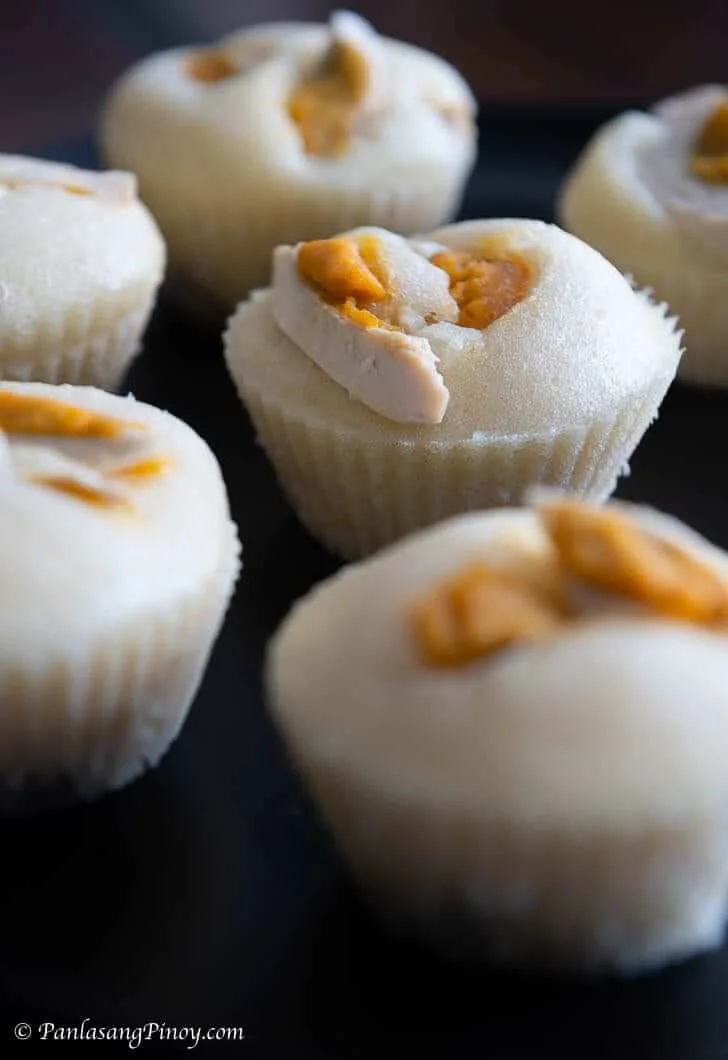
Puto pao pairs soft steamed Filipino cakes with a savoury pork asado centre and a slice of salted duck egg. The contrast between the gently sweet batter and richly seasoned filling makes them a substantial snack or a handy addition to a shared meal.
Ingredients
- 454 g (1 lb)pork, sliced into small pieces
- 5 ml (1 teaspoon)Knorr Liquid Seasoning
- 1onion, minced
- 45 ml (3 tablespoons)soy sauce
- 2star anise
- 55 g (1/4 cup)brown sugar
- 45 ml (3 tablespoons)cooking oil
- 5 g (2 teaspoons)cornflour
- To tasteground black pepper
- 240 ml (1 cup)water
- 250 g (2 cups)plain flour
- 220 g (2 cups)cake flour
- 32 g (2 1/2 tablespoons)baking powder
- 300 g (1 1/2 cups)sugar
- 113 g (1/2 cup)butter, melted
- 1egg
- 240 ml (1 cup)evaporated milk
- 480 ml (2 cups)water
- Amount unspecifiedsalted duck egg, sliced
Instructions
- 1
Cook the onion
To make the asado filling, heat the oil in a cooking pot. Sauté the minced onion until translucent.
- 2
Brown the pork
Add the pork and cook until it turns light brown.
- 3
Add the liquids
Pour in the soy sauce and 1 cup of water, then bring the mixture to the boil.
- 4
Simmer with anise
Add the star anise and cook over low heat for 30 to 35 minutes.
- 5
Season the filling
Add the brown sugar and stir. Mix in the Knorr Liquid Seasoning and ground black pepper.
- 6
Thicken the sauce
Mix the cornflour with 3 tablespoons of water until smooth. Pour it into the pot and cook until the sauce thickens, then set the filling aside.
- 7
Mix the dry ingredients
To make the puto batter, combine the plain flour, cake flour, sugar and baking powder in a large bowl. Mix well.
- 8
Make the batter
Add the egg, evaporated milk, 2 cups of water and melted butter. Mix everything thoroughly.
- 9
Fill the moulds
Pour about 1 tablespoon of batter into each mould.
- 10
Add the filling
Put about 1 to 1/2 teaspoons of asado filling into each mould. Add more batter until each mould is around three-quarters full.
- 11
Steam the cakes
Arrange the moulds in a steamer and steam for 2 to 3 minutes.
- 12
Add salted egg
Top each cake with a slice of salted duck egg. Continue steaming for 13 to 15 minutes.
- 13
Cool the cakes
Remove the moulds from the steamer and leave the cakes to cool.
- 14
Unmould and serve
Gently loosen each puto pao and remove it from its mould. Arrange on a serving plate and serve.
What is puto pao?
Puto pao is a Filipino steamed cake that takes inspiration from puto, a soft rice cake, and siopao, a bun often filled with savoury meat. This version uses a flour-based batter around a pork asado centre, finished with salted duck egg.
The appeal is in the contrast: a tender, lightly sweet cake surrounds pork cooked with soy, sugar and star anise. Steaming keeps the cakes soft without giving them a browned crust.
Nutrition and macros by portion
The nutrition label shows one serving as written: 6085 calories, 164g protein, 781g carbs, 261g fat.
| Portion | Adjustment | kcal | Protein | Carbs | Fat |
|---|---|---|---|---|---|
| Lighter | Smaller cakes, more vegetables | 4260 kcal | 115g | 547g | 183g |
| This serving | As written | 6085 kcal | 164g | 781g | 261g |
| Hungry | Add another cake | 9128 kcal | 246g | 1172g | 392g |
The batter's flour and sugar provide most of the carbohydrates, while butter and cooking oil contribute much of the fat. Pork supplies the protein, with soy sauce and the salted egg adding further savoury ingredients. Serve a puto pao with vegetables or salad to add a fresh contrast to the rich, filling cake.
The asado filling
Pork: Cutting it into small pieces helps it cook in the stated simmering time and makes the filling easier to portion into the moulds.
Seasoning: Soy sauce, brown sugar, Liquid Seasoning and star anise give the pork its savoury-sweet flavour. Simmer gently so the meat has time to cook before the sauce is thickened.
Getting the batter right
Flour blend: Plain flour and cake flour form the base of this batter. Mix them with the sugar and baking powder before adding the wet ingredients so the dry mixture is evenly combined.
Mixing: Stir the egg, evaporated milk, water and melted butter through the flour mixture until thoroughly combined. The method does not give a target consistency, so follow its instruction to mix well rather than adding extra liquid.
Filling the moulds
First layer: Put about 1 tablespoon of batter in each mould before adding the pork. This gives the filling a base of batter.
Headroom: Add more batter until the mould is around three-quarters full. That leaves space for the cakes as they cook in the steamer.
Steaming and doneness
Timing: The method calls for an initial 2 to 3 minutes of steaming, followed by salted duck egg and a further 13 to 15 minutes. Keep the steamer covered between checks to maintain the cooking steam.
Check: The recipe gives no separate visual or testing cue for doneness, so use the stated steaming time and make sure the centres are cooked before removing the cakes. Let them cool before easing them from their moulds.
Serving ideas
Serve the cakes warm as a snack or part of a Filipino-inspired spread. Their pork filling and sweet batter make them satisfying on their own.
For a more balanced plate, add vegetables or a fresh, lightly dressed salad alongside them. The recipe does not specify a sauce or side dish.
Recipe notes & tips
- Cut the pork into small, even pieces so it is easier to distribute among the moulds.
- Keep the asado filling aside after thickening it, as directed, while you prepare the batter.
- Mix the cornflour with the stated 3 tablespoons of water until smooth before adding it to the pot.
- Fill each mould to around three-quarters full rather than to the rim.
- Use the stated steaming times as a guide and keep the steamer covered while the cakes cook.
- Allow the cakes to cool before loosening them so they are easier to remove from the moulds.
Variations
- Adjust the filling: Use a little less asado in each mould for a more cake-forward bite.
- Change the topping: Add the salted duck egg slice as directed, or leave it off if you prefer the cakes without it.
- Vary the mould size: Use smaller moulds and divide the batter and filling between them, checking the cakes as they steam.
- Serve with greens: Pair the cakes with a fresh salad or cooked vegetables for a contrasting side.
- Make the filling ahead: Prepare the asado filling in advance and set it aside until you are ready to assemble the cakes.
Common mistakes to avoid
- Large pork pieces: They are harder to portion into the cakes; slice the pork into small pieces as directed.
- Lumpy slurry: Cornflour that is not mixed with water first can be difficult to incorporate; stir the mixture smooth before adding it.
- Overfilled moulds: The cakes need room as they steam; stop when each mould is about three-quarters full.
- Skipping the filling layer: Add the first tablespoon of batter before the asado so the pork sits inside the cake.
- Removing cakes too soon: They may be difficult to loosen while hot; let them cool before unmoulding.
- Confusing the two water amounts: The batter uses 2 cups of water, while the filling method specifies 3 tablespoons for the cornflour slurry.
How to store
Cool the cakes, then store them in an airtight container in the fridge and eat within 3 days. Reheat until hot throughout in a steamer; avoid overheating, which can dry the cakes.
Frequently asked questions
Can I make the asado filling in advance?
Yes. Cook and thicken the filling, then set it aside as the method directs. Refrigerate it if preparing it ahead, and use it when assembling the cakes.
How much filling goes in each mould?
The method says about 1 to 1/2 teaspoons per mould, which is ambiguous. Start with a small amount so the filling fits within the batter layers.
Why does the recipe use two types of flour?
It combines plain flour and cake flour for the puto batter. Use both in the amounts listed.
When do I add the salted duck egg?
Add a slice to each cake after the first 2 to 3 minutes of steaming, then continue steaming for 13 to 15 minutes.
How do I know when the cakes are done?
The method gives a further steaming time of 13 to 15 minutes after adding the topping but no specific doneness test. Let them cool before removing them from their moulds.
Can I use a different steamer mould?
Yes, provided the moulds fit in your steamer. Keep the batter at around three-quarters full and arrange the moulds so steam can circulate.
Cook it from the original
This recipe comes from panlasangpinoy.com. Their page has the author’s own photos, notes and tips — the best place to cook it from.
Open the recipe on panlasangpinoy.com