
Chicken Kabsa
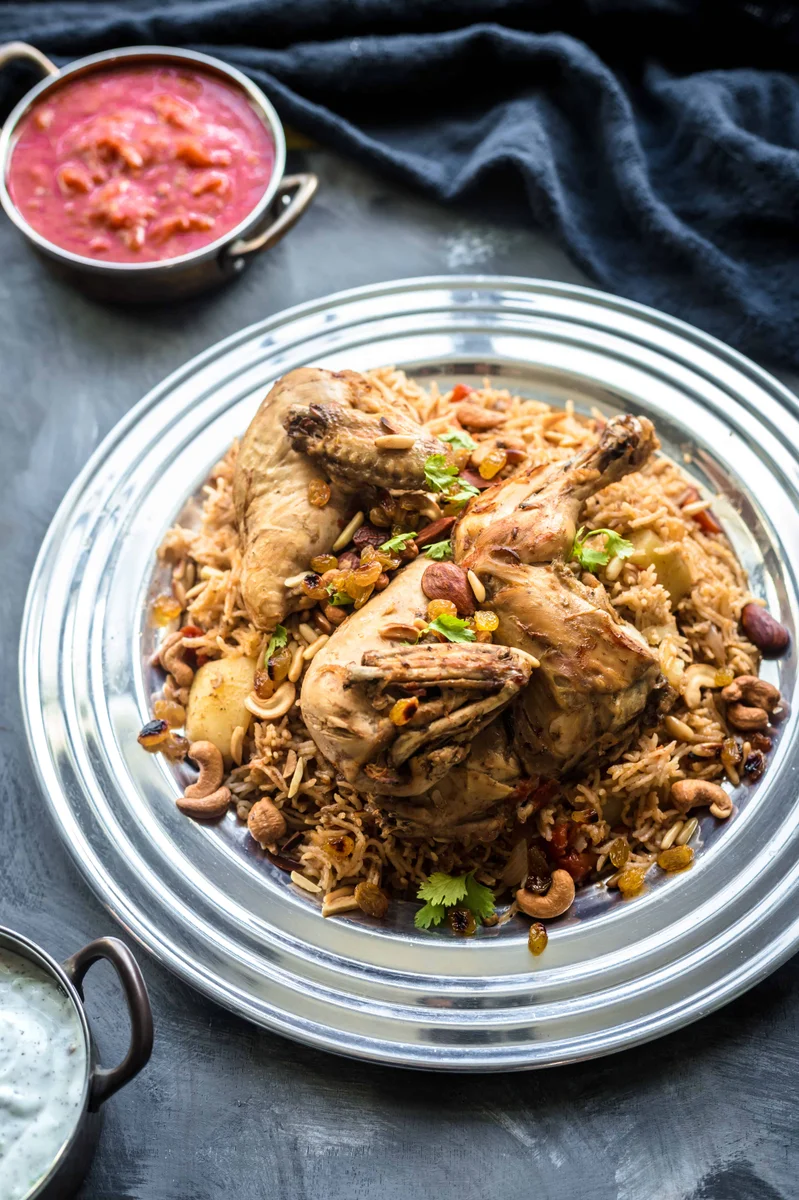
Chicken kabsa pairs warmly spiced rice with chicken roasted until golden, finished with toasted nuts and raisins. It makes a generous centrepiece for a family meal, with the tomato-rich cooking liquid flavouring the rice.
Ingredients
- 80 ml (⅓ cup)oil
- 1–2potatoes, cut into cubes (optional)
- 300 g (2 cups)onion, diced
- 1 tbspfreshly grated ginger
- 1chicken, quartered
- 1 tbspsalt
- ¾ tspblack pepper
- 1 tsporange zest
- ¾ tspground cardamom
- ½ tspground cumin
- ½ tspground coriander
- ½ tspground cinnamon
- 3 whole or ¼ tspcloves, or ground cloves
- 1 piecedried lemon (loumi)
- 2 tbsptomato paste
- 2 cans or 300 g (2 cups)diced tomatoes, canned or fresh
- 1–2bay leaves
- A littlevegetable oil, to coat the chicken
- 300 g (1½ cups)basmati rice, soaked in water for 45 minutes
- 220 g (2 cups)shredded carrots
- 70 g (½ cup)peeled whole almonds
- 35 g (¼ cup)pine nuts
- 35 g (¼ cup)cashew nuts
- 50 g (⅓ cup)light brown raisins
Instructions
- 1
Heat the oven
Preheat the oven to 200°C (400°F) so it is ready to brown the chicken after it has simmered.
- 2
Cook the aromatics
Heat the oil in a large saucepan over medium-high heat. If using potatoes, add them and cook for 3–5 minutes. Add the onion and grated ginger, then cook until the onion is light golden brown.
- 3
Season the chicken
Add the chicken pieces and cook until lightly browned. Add the salt, pepper, orange zest, cardamom, cumin, coriander, cinnamon, cloves or ground cloves, dried lemon, tomato paste and diced tomatoes. Bring the mixture to a boil.
- 4
Simmer and roast
Add 1 litre of water, or enough to submerge the chicken. Reduce the heat to medium, cover and cook for about 25 minutes, until the chicken is cooked through. Transfer the chicken to a baking tray, coat it very lightly with oil and roast for 20–25 minutes, until browned. For deeper colour, use the oven’s grill setting for the last few minutes. Leave the tomato stock on the hob for the rice.
- 5
Cook the rice
Drain the soaked rice and add it to the tomato stock with the shredded carrots. Bring to a boil, then cover and cook over a medium-low heat for 25 minutes, or until the rice has absorbed the liquid. A tea towel placed tightly under the lid can help absorb extra moisture.
- 6
Toast the nuts
Heat a small amount of oil in a medium frying pan. Add the almonds and cashews and stir for a few minutes, until they begin to turn golden. Add the pine nuts, if using, as they cook faster. Stir until the nuts are golden, then immediately transfer them to a paper-towel-lined plate.
- 7
Brown the raisins
Add the raisins to the pan and stir for a few minutes, until they brown and puff slightly. Transfer them to a paper-towel-lined plate.
- 8
Assemble and serve
Spread the rice on a serving plate and arrange the chicken on top. Scatter the toasted nuts and raisins over everything. Garnish with coriander just before serving, if desired, and serve with daqous, yoghurt or a green salad.
What is chicken kabsa?
Kabsa is a Gulf rice dish in which rice takes on the flavour of spices and the liquid used to cook the meat. This version simmers the chicken with tomatoes and dried lemon, then roasts it separately for a browned finish.
Carrots cook with the basmati rice, while toasted nuts and raisins bring contrasting sweetness and crunch to the platter.
Nutrition and macros by portion
The nutrition label shows one serving as written: 700 calories, 0g protein, 0g carbs, 0g fat.
| Portion | Adjustment | kcal | Protein | Carbs | Fat |
|---|---|---|---|---|---|
| Lighter | Less oil, fewer nuts | 490 kcal | 0g | 0g | 0g |
| This serving | As written | 700 kcal | 0g | 0g | 0g |
| Hungry | Larger rice portion | 1050 kcal | 0g | 0g | 0g |
The rice and carrots provide most of the carbohydrates, while the chicken contributes protein. Oil, nuts and chicken skin are the main sources of fat; serve the kabsa with a green salad to add a fresh contrast to the rich rice and garnish.
Build the flavour in the pot
Onion and ginger: Cook them until the onion is lightly golden before adding the chicken; this gives the tomato stock a savoury base.
Spices and tomato: The warm spices, orange zest, dried lemon and tomato paste season the chicken and the liquid that will become the rice’s cooking broth.
Make the chicken tender and golden
Simmer first: Keep the chicken covered in the gently bubbling liquid for about 25 minutes, until cooked through. The recipe then transfers it to the oven so the outside can brown without overcooking it in the rice pot.
Roast to colour: Coat the chicken lightly with oil and roast at 200°C for 20–25 minutes. Use the grill setting only for the last few minutes if you want more browning, and watch it closely.
Get fluffy, flavourful rice
Soak and drain: The recipe calls for soaking the basmati rice for 45 minutes. Drain it before adding it to the tomato stock so excess soaking water does not affect the cooking liquid.
Cover and cook: Once the rice and carrots come to a boil, lower the heat to medium-low and keep the lid on for 25 minutes. The rice is ready when it has absorbed the liquid.
Toast the garnish carefully
Nuts first: Almonds and cashews need a little more time than pine nuts, so add the pine nuts later. Stir frequently and lift the nuts out as soon as they turn golden.
Raisins next: Cook them in the same pan until they brown and puff slightly. Transfer them promptly too, since the hot pan can quickly take them past that point.
Serve it as a platter
Pile the rice on a wide serving plate, place the chicken over it and finish with the nuts and raisins. A green salad, yoghurt or spicy tomato daqous makes a fresh or cooling accompaniment.
Recipe notes & tips
- Soak the basmati rice for the full 45 minutes, then drain it well before cooking.
- Keep the chicken pieces covered with the 1 litre of water while they simmer.
- Use a tight-fitting lid while the rice cooks so steam stays in the pot.
- Stir the nuts often and transfer them from the pan as soon as they are golden.
- If using pine nuts, add them after the almonds and cashews because they brown faster.
Variations
- Potato option: Add the cubed potatoes before the onions and cook them for 3–5 minutes.
- Fresh tomatoes: Use 300 g (2 cups) of diced fresh tomatoes instead of canned tomatoes.
- Ground cloves: Use ¼ tsp ground cloves in place of the three whole cloves.
- Extra garnish: Add coriander just before serving, as suggested in the method.
- Serving sides: Offer daqous, yoghurt or a green salad alongside the platter.
Common mistakes to avoid
- Skipping the rice soak: The method specifies a 45-minute soak; drain the rice before adding it to the stock.
- Adding pine nuts too early: They cook faster than almonds and cashews, so stir them in later.
- Leaving nuts in the hot pan: They can burn after turning golden; transfer them straight to a paper-towel-lined plate.
- Cooking rice uncovered: Steam escapes and the liquid may not absorb as intended; keep the lid on during the 25-minute cook.
- Over-browning the chicken: Use the grill setting only for the last few minutes and keep an eye on the colour.
How to store
Refrigerate leftover chicken, rice and garnish in covered containers and use within 3 days. Reheat the chicken and rice until piping hot, adding a splash of water to the rice if it has dried out; keep the nuts and raisins separate if possible so they stay crisp.
Frequently asked questions
Can I use fresh tomatoes instead of canned?
Yes. The ingredient list gives 2 cups of fresh diced tomatoes as an alternative to two cans.
Do I need to use the potatoes?
No. They are optional; if using them, cook the cubes in the oil for 3–5 minutes before adding the onion and ginger.
How do I know the chicken is cooked?
The recipe says to simmer it for about 25 minutes, until cooked through, before transferring it to the oven to brown.
Can I skip the pine nuts?
Yes. They are optional in the method; toast the almonds and cashews, then remove them from the pan while golden.
What can I serve with chicken kabsa?
The recipe suggests daqous, yoghurt or a green salad.
Cook it from the original
This recipe comes from everylittlecrumb.com. Their page has the author’s own photos, notes and tips — the best place to cook it from.
Open the recipe on everylittlecrumb.com