
Vegetarian Pho Soup
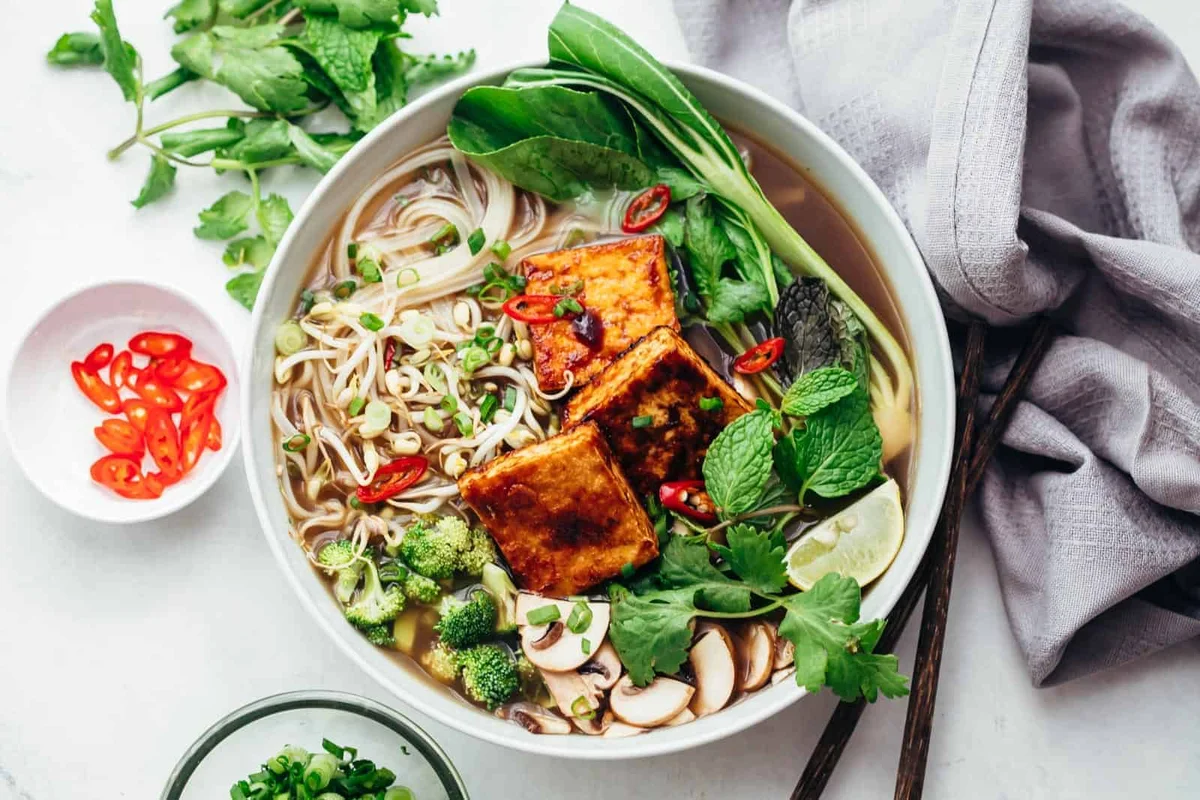
This vegetarian pho pairs a fragrant, spiced vegetable broth with rice noodles, tofu and fresh, crunchy toppings. It is a warming meat-free take on pho, with lime and optional chilli sauce to add brightness and heat at the table.
Ingredients
- 5 ml (1 teaspoon)oil
- 1 largeonion, peeled and halved
- 5 cm (2 inches)ginger, peeled and halved lengthways
- 7.5 cm (3 inches)cinnamon stick
- 1star anise
- 2cloves
- 5 ml (1 teaspoon)coriander seeds
- 950 ml (4 cups)unsalted vegetable stock
- 10 ml (2 teaspoons)soy sauce
- 4carrots, peeled and coarsely chopped
- 100 gdried flat rice noodles
- For boilingwater
- 50 gtofu
- 5 ml (1 teaspoon)hoisin sauce
- 5 ml (1 teaspoon)sriracha
- 4–5button mushrooms, quartered
- 240 ml (1 cup; ⅓ cup each, or any two as desired)bok choy, Chinese cabbage or broccoli
- 2scallions, thinly sliced
- 1Thai red chilli, thinly sliced
- 1lime, cut into wedges
- 120 ml (½ cup)bean sprouts
- A large handfulcoriander, Thai basil or mint
- To servehoisin sauce
- To serve, optionalsriracha
Instructions
- 1
Char aromatics
Heat the oil in a pan. Char the onion halves and ginger for 2–3 minutes on each side, until slightly blackened. Alternatively, place them under a grill for 5 minutes.
- 2
Simmer broth
In a large pot, dry-roast the cinnamon, star anise, cloves and coriander seeds over a medium-low heat until fragrant. Add the vegetable stock, soy sauce, carrots, charred onion and ginger. Bring to a rolling boil, then reduce the heat, cover and simmer for about 30 minutes. Strain the broth and keep it hot until serving.
- 3
Soak noodles
While the broth simmers, put the noodles in a large bowl and cover them with hot water. Leave for 20–25 minutes, or until tender but still chewy. If they are not soft enough, blanch them in boiling water for a few seconds.
- 4
Prepare toppings
Prepare the toppings as you prefer. Tear or slice the cabbage and bok choy, and steam the broccoli florets.
- 5
Cook tofu
Press the tofu between a couple of layers of paper towels for 10 minutes to remove excess water. Slice it, then cook it in a frying pan with the hoisin and sriracha for 2–3 minutes.
- 6
Assemble bowls
Divide the noodles between two bowls and arrange the toppings over them. Ladle the hot broth on top, then serve with the garnishes and sauces on the side.
What is vegetarian pho?
Pho is a Vietnamese noodle soup, traditionally served with a deeply flavoured broth, rice noodles and garnishes. This meat-free version builds savoury depth with toasted spices, charred onion and ginger, and vegetable stock.
The balance of hot broth, chewy noodles, fresh herbs and lime makes each bowl lively as well as comforting. Toppings and sauces served on the side let everyone adjust the heat and seasoning.
Nutrition and macros by portion
The nutrition label shows one serving as written: 438 calories, 13g protein, 94g carbs, 3g fat.
| Portion | Adjustment | kcal | Protein | Carbs | Fat |
|---|---|---|---|---|---|
| Lighter | More greens, fewer noodles | 307 kcal | 9g | 66g | 2g |
| This serving | As written | 438 kcal | 13g | 94g | 3g |
| Hungry | Larger noodle portion | 657 kcal | 20g | 141g | 5g |
The rice noodles and carrots provide most of the carbohydrate, while tofu contributes some protein and the small amount of oil supplies fat. The provided nutrition per serving is 438 kcal, with 13 g protein, 94 g carbohydrate and 3 g fat; add extra vegetables alongside the bowl if you want a more substantial vegetable portion.
Build flavour in the broth
Charred aromatics: Browning the cut sides of the onion and ginger gives the broth a gently smoky, savoury base. Look for dark patches rather than trying to cook them through.
Whole spices: Dry-roast the cinnamon, star anise, cloves and coriander seeds until fragrant, keeping the heat moderate so they do not scorch. Simmering them with the carrots and stock gives the broth time to take on their flavour.
Get the noodles right
Soaking: Rice noodles soften in hot water without much active cooking. Check them near the end of the 20–25 minute soak; they should bend easily but still have a little chew.
Finishing: If they remain too firm, blanch them briefly in boiling water as the method suggests. Avoid leaving them in hot water once they are tender, or they can become too soft.
Prepare the toppings
Vegetables: Slice or tear the cabbage and bok choy into easy-to-eat pieces, and steam broccoli florets if using them. The recipe allows you to choose any two of these vegetables.
Fresh finish: Keep the bean sprouts, sliced scallions, chilli, lime and herbs ready for serving. Their fresh textures and flavours contrast with the hot broth.
Keep the tofu savoury
Pressing: A 10-minute press helps remove excess water before cooking. Slice the tofu after pressing so it is ready to take on the hoisin and sriracha.
Saucing: Cook the tofu with the sauces for 2–3 minutes, as directed. Keep the pan moving enough to coat the pieces without letting the sauces catch.
Assemble just before serving
Bowl order: Divide the noodles first, then arrange the toppings over them and ladle the hot broth on top. This makes it easier to portion the components evenly between two bowls.
At the table: Offer lime wedges, herbs, hoisin and optional sriracha separately. Diners can add a squeeze of lime or more heat to suit their taste.
Recipe notes & tips
- Cut the onion and ginger so their flat sides make good contact with the pan when charring.
- Keep the whole spices moving over a moderate heat and take them off as soon as they smell fragrant.
- Check the noodles before the end of their soaking time, as thickness can affect how quickly they soften.
- Prepare the garnishes while the broth simmers so the bowls can be assembled promptly.
- Serve the broth hot and the sauces separately so the fresh toppings stay distinct.
Variations
- Choose greens: Use any two of bok choy, Chinese cabbage and broccoli as suggested in the recipe.
- Switch herbs: Finish with coriander, Thai basil or mint, depending on what you have.
- Adjust the heat: Leave out the sliced chilli or offer extra sriracha at the table.
- Add mushrooms: Quarter the button mushrooms and arrange them with the other toppings.
- Change the tofu sauce: Use hoisin alone for a milder topping, or include the sriracha for extra heat.
Common mistakes to avoid
- Scorching the spices: Roast over medium-low heat and stop when they smell fragrant.
- Over-soaking noodles: Check them after 20 minutes and drain once tender but still chewy.
- Skipping the tofu press: Press it between paper towels for 10 minutes to remove excess water.
- Leaving out the char: Brown the onion and ginger until slightly blackened for a more developed broth.
- Adding every sauce at once: Serve hoisin and optional sriracha on the side so each bowl can be adjusted.
How to store
Store leftover broth separately from noodles and toppings in airtight containers in the fridge, and use within 3 days. Reheat the broth until steaming, then add fresh or separately stored noodles and toppings; the noodles may soften during storage.
Frequently asked questions
Can I make the broth ahead?
Yes. Prepare and strain the broth ahead, then refrigerate it separately from the noodles and toppings. Reheat it until hot before assembling the bowls.
How do I know when the rice noodles are ready?
They should be tender but still chewy after soaking for 20–25 minutes. If they are still too firm, blanch them in boiling water for a few seconds.
Do I have to use broccoli?
No. The recipe suggests bok choy, Chinese cabbage or broccoli, with ⅓ cup of each if using all three, or any two as desired.
Can I leave out the chilli?
Yes. The sliced Thai chilli and serving sriracha can be left out or offered separately so the bowls can be made milder.
What can I use instead of Thai basil?
The recipe offers coriander or mint as alternatives. Use whichever of those fresh herbs you prefer.
Why press the tofu?
Pressing it between paper towels for 10 minutes drains excess water before you slice and cook it with the hoisin and sriracha.
Cook it from the original
This recipe comes from myfoodstory.com. Their page has the author’s own photos, notes and tips — the best place to cook it from.
Open the recipe on myfoodstory.com