
Cinnamon Twist Roll
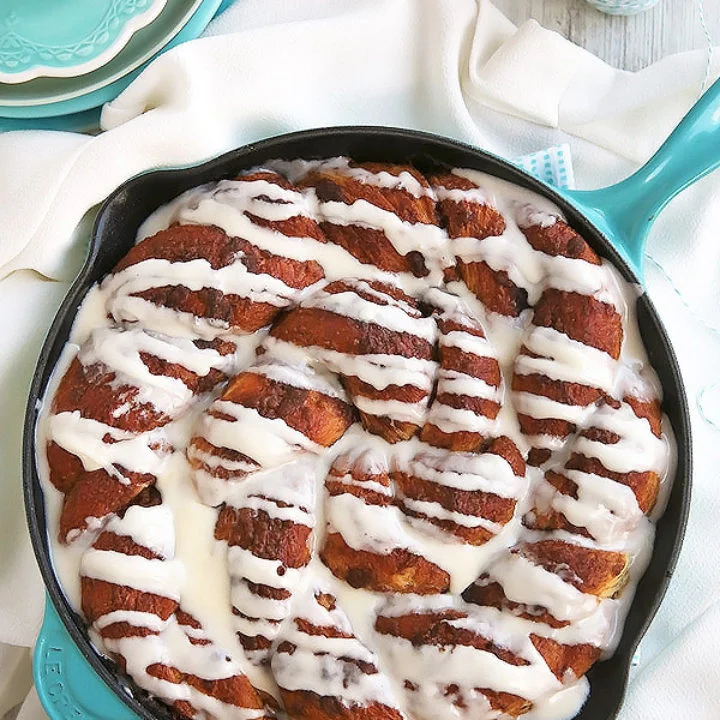
A giant cinnamon-sugar twist roll baked in a skillet, with a soft, gooey centre and lightly crisp edges. It makes a generous centrepiece for brunch or a warm, shareable treat, finished with a tangy cream cheese glaze.
Ingredients
- 28 g (1 oz)cream cheese, at room temperature
- 113.4 g (4 oz)icing sugar
- 44–60 ml (3–4 tablespoons)double cream
- 85 g (3 oz)butter, melted
- ½ teaspoonvanilla
- 149 g (5¼ oz)soft light brown sugar
- 1 tablespoonground cinnamon
- 362 g (12¾ oz), plus more as neededplain flour
- 50 g (1¾ oz)caster sugar
- 2¼ teaspoonsinstant yeast
- ½ teaspoonsalt
- 57 g (2 oz)unsalted butter
- 80 ml (⅓ cup)whole milk
- 60 ml (¼ cup)cold water
- 1 teaspoonvanilla extract
- 2 largeeggs
Instructions
- 1
Combine dry ingredients
In the bowl of a stand mixer fitted with a dough hook, or in a large bowl if kneading by hand, mix the flour, caster sugar, yeast and salt.
- 2
Warm milk mixture
Put the butter and milk in a spouted measuring jug or microwave-safe bowl. Microwave until the butter has melted, about 1 minute, then stir in the cold water. The mixture should feel comfortably warm, not hot; if checking with a thermometer, aim for 41–46°C.
- 3
Add wet ingredients
Whisk the water, vanilla and eggs into the milk mixture. Pour it over the flour mixture and mix on low until a cohesive dough begins to form.
- 4
Knead the dough
Knead until smooth and elastic, with the dough clearing the sides of the bowl while still sticking to its base. It should feel tacky rather than sticky; if it is very sticky, add flour 1 tablespoon at a time. Once the texture is right, knead for a further 3–5 minutes.
- 5
First rise
Transfer the dough to a lightly oiled bowl and turn it once to coat. Cover with cling film and leave in a warm place until doubled in size, about 1 hour.
- 6
Prepare the skillet
Grease a 30 cm ovenproof skillet or a cake tin of the same size with cooking spray or butter.
- 7
Make the filling
In a small bowl, mix the melted butter with the vanilla. In another small bowl, combine the brown sugar and cinnamon.
- 8
Shape the ropes
Turn the dough out onto a work surface, avoiding extra flour if possible; lightly oil the surface if the dough sticks. Divide it into two equal pieces and roll each into a rope about 92–121 cm long. If you prefer, shape them on a long piece of baking parchment to make them easier to move.
- 9
Coat with cinnamon
Brush the ropes generously on all sides with the butter and vanilla mixture, saving any that remains. Sprinkle over the cinnamon sugar and press and turn the ropes lightly to coat them all around. Keep any loose sugar mixture to use later.
- 10
Twist the dough
Lay the ropes parallel, with their ends aligned. Cross one over the other at the centre to form an X, then twist the ropes together from the crossing point towards one end. Pinch the ends together and repeat on the other side to make a two-strand twist.
- 11
Coil in skillet
Starting at the centre of the skillet or tin, carefully coil the twisted dough outwards. Drizzle over any leftover butter and scatter on any remaining cinnamon sugar. At this stage, you can wrap the prepared dough and refrigerate it overnight to bake the following day.
- 12
Second rise
Cover the skillet loosely with cling film and leave the dough in a warm place until doubled in size, 45 minutes to 1 hour.
- 13
Heat the oven
During the final 15 minutes of the rise, preheat the oven to 180°C.
- 14
Bake until golden
Remove the cling film and bake for about 25 minutes, or longer if using a cake tin, until deep golden on top and no longer doughy inside. Check the centre with a toothpick or by pulling away a small piece; a thermometer should read 88°C. Avoid overbaking, and cover loosely with foil if the top is browning too quickly.
- 15
Mix the glaze
While the roll bakes, whisk the cream cheese in a medium bowl until smooth. Whisk in the icing sugar; the mixture will be lumpy. Add 3 tablespoons of double cream and whisk until smooth and loosened. Add the remaining tablespoon if you want a thinner glaze, then cover until needed.
- 16
Glaze and serve
Take the baked roll out of the oven and drizzle it with the glaze straight away. Leave it to cool for a few minutes, then serve warm by unwinding the twist and cutting it into individual portions. Store any leftovers in an airtight container and warm them in the microwave.
What is a cinnamon twist roll?
This is a shareable take on the cinnamon roll: enriched yeast dough is coated in cinnamon sugar, twisted into a braid and coiled into one large spiral. Cinnamon rolls are a familiar sweet-bread style in many places, and this skillet-sized version turns the individual buns into a centrepiece.
The twist exposes plenty of sugared dough while keeping the coiled middle soft. A cream cheese glaze adds a smooth, gently tangy finish.
Nutrition and macros by portion
The nutrition label shows one serving as written: 333 calories, 7g protein, 59g carbs, 10g fat.
| Portion | Adjustment | kcal | Protein | Carbs | Fat |
|---|---|---|---|---|---|
| Lighter | Use less glaze | 233 kcal | 5g | 41g | 7g |
| This serving | As written | 333 kcal | 7g | 59g | 10g |
| Hungry | Serve a larger slice | 500 kcal | 10g | 89g | 15g |
The flour and sugars supply most of the carbohydrates, while butter and cream contribute much of the fat; eggs, milk and cream cheese add some protein. Pair a piece with fruit and plain yoghurt to add freshness and make a more balanced plate.
Building a soft dough
Warm milk: melting the butter in the milk helps combine the dough ingredients. Stir in the cold water before adding the eggs, so the mixture is warm rather than hot.
Flour: add extra only if the dough is very sticky, and do it gradually. A slightly tacky dough is easier to keep soft than one made dry with too much flour.
Getting the twist right
Ropes: roll both pieces to a similar length and thickness so they twist and bake evenly. A lightly oiled work surface can help if the dough clings; baking parchment is useful for moving long ropes.
Coating: brush the ropes all over before pressing on the cinnamon sugar. Some of the mixture will fall away, so save it to scatter over the coiled dough.
Rise and bake cues
First rise: give the dough time to double in a warm place, about 1 hour. The exact time can vary, so use the increase in size as your main cue.
Second rise: the shaped roll should double again over 45 minutes to 1 hour. Bake at 180°C for about 25 minutes, checking the centre for doneness and shielding the top with foil if it darkens too soon.
Keeping the centre tender
The dough should be soft and elastic after kneading, not stiff. Adding flour a tablespoon at a time helps you avoid making the finished bread dry.
Take care not to overbake. The top should be deep golden, while the centre should no longer look doughy; the stated internal temperature is 88°C.
Serving the skillet roll
The glaze goes on as soon as the roll comes out of the oven, so it softens slightly over the warm surface. Let the bread cool for a few minutes before serving.
Serve it warm, unwinding the coil and cutting or pulling off portions. For a more balanced brunch plate, pair a modest piece with fruit and plain yoghurt.
Recipe notes & tips
- Use a 30 cm ovenproof skillet or cake tin so the coil has room to expand.
- Keep the dough slightly tacky; add extra flour only if it is very sticky.
- Oil the work surface lightly if the dough will not release cleanly.
- Keep any unused cinnamon sugar and butter to add over the coil before its second rise.
- Check the centre before removing the roll from the oven, since a browned top alone does not confirm it is baked through.
- If making the dough ahead, refrigerate it after shaping and bake it the next day.
Variations
- Extra cinnamon: increase the cinnamon slightly for a more pronounced spice flavour.
- Citrus glaze: add a little finely grated lemon zest to the cream cheese glaze.
- Nutty finish: scatter chopped pecans over the glaze before serving.
- Spiced sugar: add a pinch of ground cardamom to the brown sugar mixture.
- Less glaze: use only 3 tablespoons of cream for a thicker topping and drizzle on a smaller amount.
Common mistakes to avoid
- Adding too much flour: the dough can turn dry and the baked roll tough, so add flour gradually and stop when it is tacky rather than sticky.
- Using hot liquid: excessive heat can affect the yeast, so make sure the milk mixture is comfortably warm before mixing.
- Uneven ropes: very different thicknesses can twist and bake unevenly, so roll the two pieces to a similar size.
- Skipping the second rise: baking before the shaped dough doubles can leave the roll dense, so allow 45 minutes to 1 hour.
- Overbaking: the bread can dry out, so check the centre and cover the top with foil if it darkens early.
- Pouring on glaze too late: it may sit on top rather than soften over the bread, so glaze the roll immediately after baking.
How to store
Keep leftovers in an airtight container at room temperature and eat within 2 days. Reheat individual portions briefly in the microwave until warm. The shaped, unbaked dough can be wrapped and refrigerated overnight before baking the next day.
Frequently asked questions
Can I make the dough the night before?
Yes. After shaping and coiling it in the skillet, wrap the dough and refrigerate it overnight. Bake it the following day.
Can I use a cake tin instead of a skillet?
Yes, use a 30 cm cake tin. It may need longer than the roughly 25-minute bake time, so check the centre before taking it out.
How do I know when the roll is baked through?
The top should be deep golden and the centre should not look doughy. Check with a toothpick or a small piece of dough; the internal temperature should be 88°C.
What if the dough is sticking to the worktop?
Lightly oil the work surface rather than dusting it heavily with flour. A long piece of baking parchment can also make the ropes easier to handle.
Can I make the glaze thinner?
Yes. Start with 3 tablespoons of double cream, then whisk in the fourth tablespoon if you want a more pourable consistency.
How should I warm up leftovers?
Keep them in an airtight container and warm individual portions briefly in the microwave.
Cook it from the original
This recipe comes from cleobuttera.com. Their page has the author’s own photos, notes and tips — the best place to cook it from.
Open the recipe on cleobuttera.com