
Mujadara Hamra
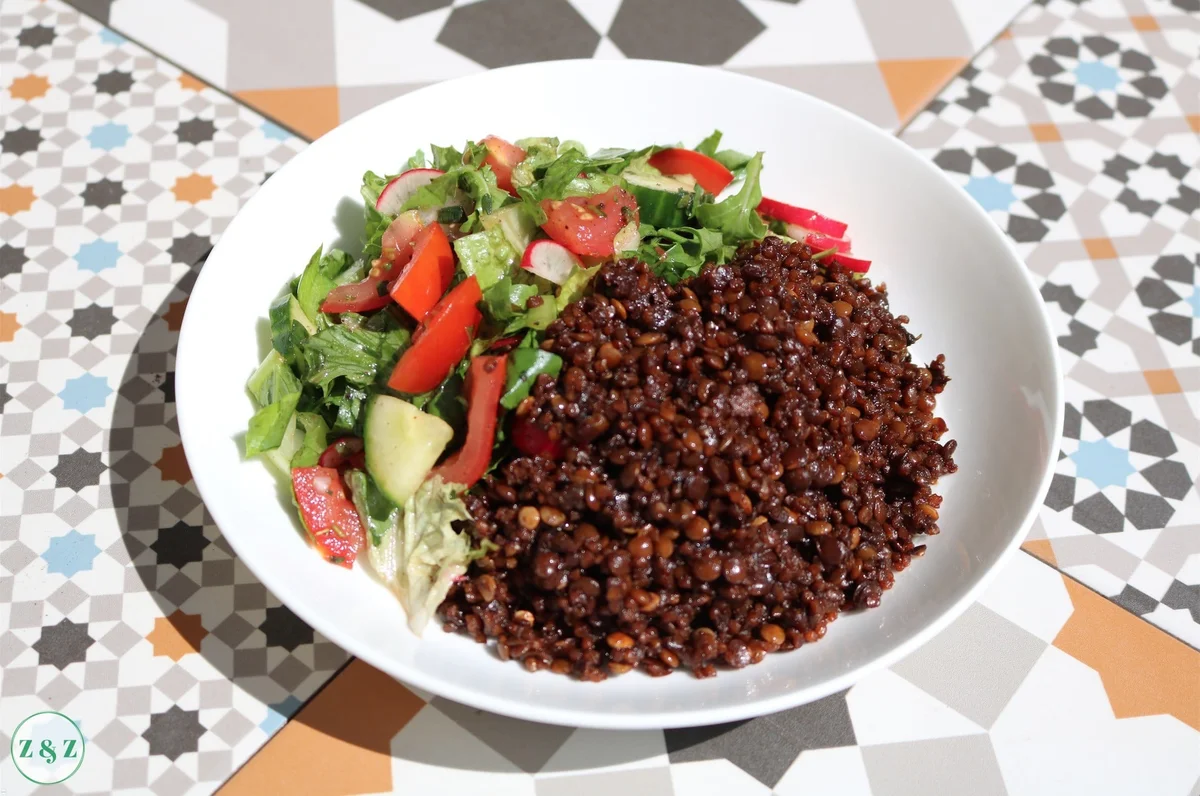
Mujadara hamra is a Lebanese lentil and bulgur dish with deeply browned onions at its heart. It makes a hearty, savoury meal from pantry staples and is served here with salad or plain yoghurt.
Ingredients
- 4large onions
- 120 ml (½ cup)regular olive oil
- 190 g (1 cup)brown lentils
- 150 g (1 cup)coarse bulgur wheat
- 2 tsp (approx.)salt
- as neededboiling water
- 830 ml (3½ cups)cold water
- a dashextra-virgin olive oil
Instructions
- 1
Chop the onions
Chop the onions and put them in a pan with the olive oil. Sprinkle with a little salt.
- 2
Brown the onions
Sauté over medium heat for at least 20 minutes, until the onions are dark brown but not burnt. Browning them more deeply gives the dish a more savoury flavour.
- 3
Add boiling water
Stand back and slowly pour in enough boiling water to just cover the onions; expect it to splutter. Press the onions down with the back of a wooden spoon.
- 4
Simmer the onions
Add the salt and bring the mixture to the boil. Cover and simmer over low heat for 10 minutes.
- 5
Cook the lentils
Add the lentils and cold water, then bring to the boil. Reduce the heat to low and cook for around 30 minutes, until the lentils are cooked.
- 6
Add the bulgur
Stir in the bulgur wheat and simmer for another 15 minutes.
- 7
Season and finish
Once the bulgur has absorbed most of the liquid, taste and adjust the salt as needed. Turn off the heat and add a dash of olive oil.
- 8
Serve the dish
Serve with a side salad or a helping of plain yoghurt.
What is mujadara hamra?
Mujadara is a family of Levantine dishes built around lentils and grains; hamra means red in Arabic and refers to the dish’s deep colour. This Lebanese version gets that colour and much of its savoury character from onions cooked until dark brown.
The lentils make the base hearty, while coarse bulgur absorbs the cooking liquid and gives the finished dish its texture. The slow browning is the key to making these simple ingredients taste full and rounded.
Nutrition and macros by portion
The nutrition label shows one serving as written: 405 calories, 13g protein, 55g carbs, 17g fat.
| Portion | Adjustment | kcal | Protein | Carbs | Fat |
|---|---|---|---|---|---|
| Lighter | Use less finishing oil | 284 kcal | 9g | 39g | 12g |
| This serving | As written | 405 kcal | 13g | 55g | 17g |
| Hungry | Serve a larger portion | 608 kcal | 20g | 83g | 26g |
The lentils and bulgur provide most of the carbohydrates, with the lentils also contributing protein; the olive oil supplies most of the fat. Pair a serving with salad or another vegetable for a fresh contrast and a more varied plate.
Choose the right ingredients
Onions: use large onions and give them enough time in the pan to soften and darken. The recipe calls for regular olive oil for cooking, then a dash of extra-virgin olive oil at the end.
Lentils and bulgur: brown lentils hold their shape as they cook, and coarse bulgur needs time to absorb liquid. Keep the two additions in the stated order so the lentils can cook before the grain goes in.
Brown the onions carefully
Slow cooking: sauté the onions over medium heat for at least 20 minutes, stirring as needed so they colour evenly. Aim for dark brown, not burnt; burnt patches can make the flavour bitter.
Boiling water: add it slowly and stand back, as it will splutter when it hits the hot pan. Pressing the onions down helps keep them covered by the liquid.
Follow the cooking stages
Onions first: after adding the salt, cover and simmer the onion mixture for 10 minutes. This gives the onions time to soften further before the lentils go in.
Lentils next: add the lentils with the 830 ml cold water and cook on low for around 30 minutes after bringing it to the boil. Then simmer the bulgur for another 15 minutes, until it has absorbed most of the liquid.
Check texture and seasoning
Lentils: they should be cooked through before you add the bulgur. Check near the end of their cooking time, as the recipe gives an approximate time rather than a precise doneness test.
Bulgur: look for grains that have taken up most of the liquid while the mixture remains moist. Taste at the end and adjust the salt before adding the finishing olive oil.
Serve it simply
Salad: a fresh side salad offers a crisp contrast to the soft lentils and bulgur. Plain yoghurt is another suggested accompaniment, adding a cool, creamy note.
Portions: divide the dish between six servings and serve it while warm. Add the side salad or yoghurt at the table rather than stirring it into the pot.
Recipe notes & tips
- Use a wide pan so the onions have room to brown rather than steam.
- Keep the heat at medium and allow at least 20 minutes for the onions to darken.
- Pour the boiling water in slowly and stand back to avoid splatter.
- Keep the lentils at a low simmer after bringing the water to the boil.
- Taste and adjust the salt once the bulgur has absorbed most of the liquid.
Variations
- Add cumin: stir a little into the onion mixture for a warm, earthy note.
- Use vegetable stock: replace the cold water with stock for a deeper savoury base.
- Finish with lemon: add a squeeze at the table for a bright contrast.
- Add herbs: scatter chopped parsley over the servings just before eating.
- Serve with yoghurt: offer plain yoghurt alongside for a cool, creamy accompaniment.
Common mistakes to avoid
- Rushing the onions: they need at least 20 minutes to turn dark brown; cook them steadily over medium heat.
- Burning the onions: burnt patches can taste bitter; stir as needed and keep the heat moderate.
- Pouring water in quickly: it can splutter sharply; stand back and add it slowly.
- Adding bulgur too soon: the lentils need their cooking time first; add the bulgur after around 30 minutes.
- Stopping before the bulgur absorbs liquid: simmer for the full additional 15 minutes, then check the texture.
How to store
Cool leftovers and store them in an airtight container in the fridge for up to 3 days. Reheat gently in a pan or microwave, adding a splash of water if the mixture has thickened.
Frequently asked questions
Are the lentils supposed to be red?
No. This version uses brown lentils; the name hamra refers to the dish’s red-brown colour, developed by browning the onions.
How dark should the onions be?
Cook them until deeply browned, but not burnt. The recipe allows at least 20 minutes over medium heat.
Can I use fine bulgur?
The recipe specifies coarse bulgur, which is suited to the stated 15-minute simmer. Fine bulgur may cook more quickly and change the texture.
How do I know when the lentils are cooked?
Check that they are cooked through after around 30 minutes of low simmering. The exact timing can vary, so taste one before adding the bulgur.
What should I serve with mujadara hamra?
Serve it with a side salad or plain yoghurt, as suggested in the recipe.
Can I make it ahead?
Yes. Refrigerate it once cool and reheat gently before serving, adding a little water if needed to loosen it.
Cook it from the original
This recipe comes from zaatarandzaytoun.com. Their page has the author’s own photos, notes and tips — the best place to cook it from.
Open the recipe on zaatarandzaytoun.com