
Maddur Vada Recipe
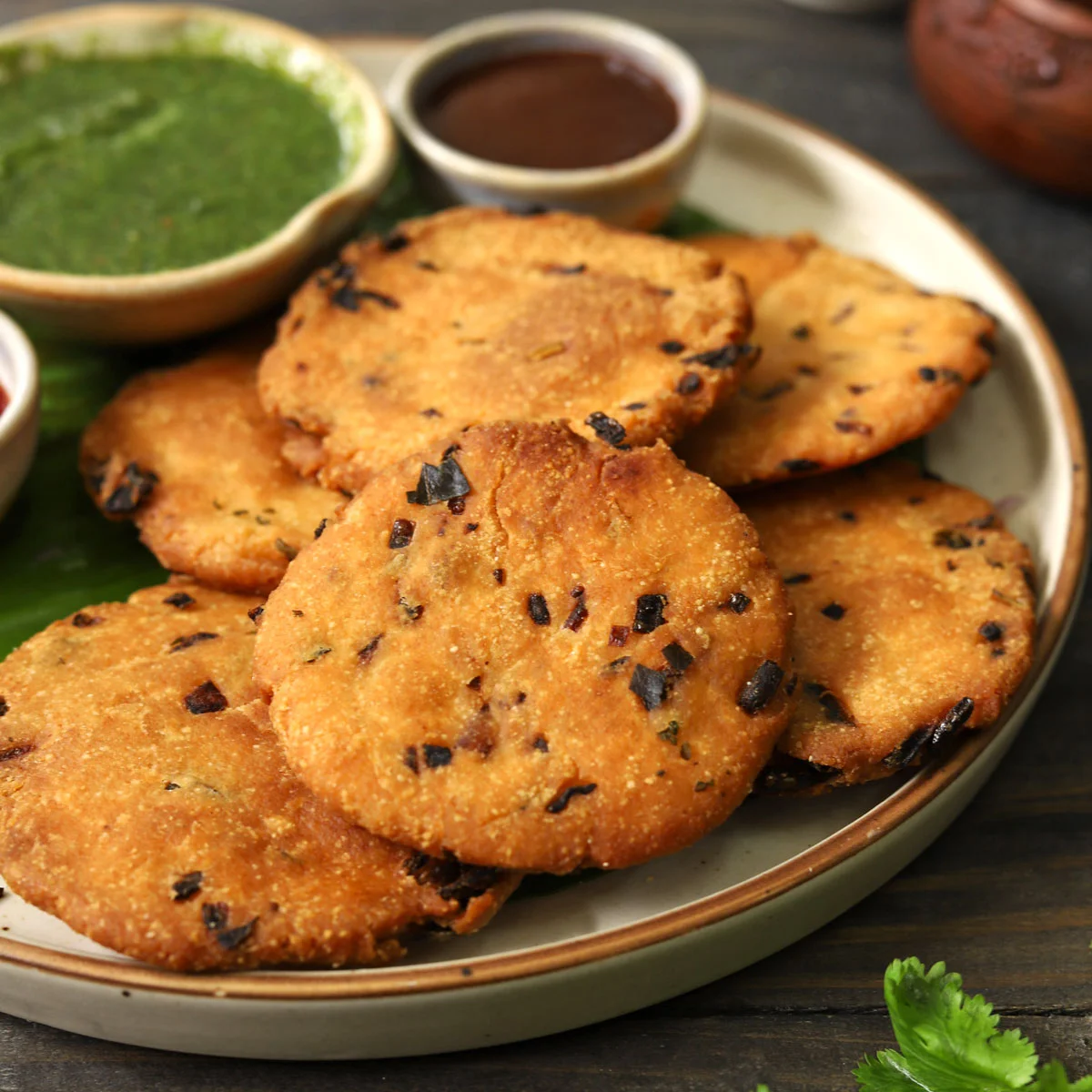
Maddur vada is a crisp, savoury South Indian snack made with a blend of flour, semolina, onion and spices. This version uses hot oil rubbed into the dry ingredients to help give the vadas their crumbly, crunchy texture.
Ingredients
- 125 g (1 cup)plain flour (maida)
- 170 g (1 cup)semolina (rava or suji)
- 160 g (1 cup)rice flour
- 160 g (1 cup)finely chopped onion
- 15 ml (1 tablespoon)grated ginger
- 15 ml (1 tablespoon)finely chopped green chilli
- 15 ml (1 tablespoon)finely chopped curry leaves
- 30 ml (2 tablespoons)finely chopped fresh coriander
- 90 ml (6 tablespoons)hot refined oil
- to tastesalt
- 5 ml (1 teaspoon)red chilli powder
- 120 ml (½ cup), or as neededroom-temperature water
- as neededoil for deep-frying
Instructions
- 1
Mix the dry ingredients
In a bowl, combine the plain flour, semolina, rice flour, salt and red chilli powder.
- 2
Add the aromatics
Add the chopped onion, curry leaves, green chilli, coriander and grated ginger, then mix well.
- 3
Rub in the oil
Drizzle the hot refined oil over the flour mixture. Rub it in with your fingers until the mixture resembles breadcrumbs.
- 4
Make the dough
Add water 60 ml (¼ cup) at a time, binding the mixture into a firm, soft, smooth dough. Use only as much water as needed; the dough should be like mathri or poori dough. Knead for 1–2 minutes.
- 5
Shape the vadas
Divide the dough into equal, gooseberry-sized balls. Flatten each ball gently between your palms and fingers, keeping the vadas about as thick as mathri.
- 6
Fry until crisp
Meanwhile, heat oil in a deep frying pan over medium heat. Once all the vadas are shaped, fry them in small batches until crisp and golden on both sides. Drain on absorbent paper.
- 7
Serve while hot
Serve the Maddur vadas crisp and hot with coconut chutney.
What is Maddur vada?
Maddur vada is a savoury fried snack associated with Maddur in Karnataka, South India. It is often enjoyed hot, with chutney, as a snack or alongside a cup of tea.
This version combines plain flour, semolina and rice flour with onion and aromatic ingredients. Rubbing hot oil into the dry mixture before adding water helps create its characteristic coarse, crisp texture.
Nutrition and macros by portion
The nutrition label shows one serving as written: 372 calories, 8g protein, 61g carbs, 10g fat.
| Portion | Adjustment | kcal | Protein | Carbs | Fat |
|---|---|---|---|---|---|
| Lighter | Smaller vadas, less oil | 260 kcal | 6g | 43g | 7g |
| This serving | As written | 372 kcal | 8g | 61g | 10g |
| Hungry | Larger portion | 558 kcal | 12g | 92g | 15g |
The flour, semolina and rice flour provide most of the carbohydrates, while the frying oil and oil mixed into the dough contribute much of the fat. The dough also includes a modest amount of protein from the flours. Pair a serving with a protein-rich accompaniment and vegetables to make the plate more balanced.
Why use three flours?
Plain flour: it helps bind the ingredients into a dough that can be shaped by hand.
Semolina and rice flour: these add a grainier feel to the mixture and help the finished vadas fry up crisp. Mix them evenly with the plain flour before adding the wet ingredients.
The hot-oil step
Hot oil: drizzle it over the flour mixture and rub it in with your fingertips until the mixture looks like breadcrumbs. Take care as you handle the hot oil.
Even mixing: work the oil through the mixture rather than leaving it in one spot. This helps the dough come together consistently when you add water.
Getting the dough right
Water gradually: add it in 60 ml (¼ cup) increments, mixing as you go. The recipe gives 120 ml (½ cup) as a guide, but the amount needed can vary.
Firm and smooth: stop adding water when the dough holds together and feels soft but firm, like mathri or poori dough. Knead for 1–2 minutes as directed.
Shaping and frying
Even portions: make the dough balls roughly gooseberry-sized and flatten them to a similar thickness. Consistent shaping helps the batch cook more evenly.
Small batches: fry the vadas over medium heat until both sides are crisp and golden. Drain them on absorbent paper before serving.
Serving ideas
Coconut chutney is the suggested accompaniment, adding a soft contrast to the crisp vadas. Serve them soon after frying for the best texture.
They also work well as part of a snack spread with other savoury bites. Keep the vadas warm while you fry the remaining batches.
Recipe notes & tips
- Chop the onion and herbs finely so they distribute throughout the dough.
- Add the water gradually rather than pouring it all in at once.
- Flatten the dough balls to a similar thickness for more even frying.
- Fry in small batches, as directed, and allow the oil to return to temperature between batches.
- Drain the vadas on absorbent paper before serving.
Variations
- Adjust the chilli: use less green chilli or chilli powder for a milder batch.
- More curry leaves: add extra finely chopped leaves for a stronger herbal flavour.
- Extra coriander: increase the fresh coriander for a brighter, more aromatic dough.
- Change the shape: flatten each portion into a small disc while keeping the thickness consistent.
- Serve with chutney: offer coconut chutney alongside the vadas as suggested.
Common mistakes to avoid
- Adding all the water at once: the dough can become too wet; add it 60 ml (¼ cup) at a time.
- Making the dough too soft: it may be difficult to shape; stop when it is firm, soft and smooth.
- Leaving the vadas uneven: different thicknesses cook at different rates; flatten them to a similar size.
- Frying too many at once: the vadas may not fry evenly; work in small batches.
- Removing them too soon: pale vadas may not be crisp; fry until golden on both sides.
How to store
Cool the vadas completely and store them in an airtight container in the fridge for up to 3 days. Reheat in an oven or air fryer until hot and crisp; they may be softer after storage than when freshly fried.
Frequently asked questions
Can I make the dough ahead?
The method does not specify resting or chilling the dough. For the intended texture, shape and fry it after mixing.
How much water should I use?
The recipe lists 120 ml (½ cup) as a guide, added in 60 ml (¼ cup) increments, or as needed. Stop when you have a firm, soft, smooth dough.
How thick should each vada be?
Flatten the dough balls to about the thickness of mathri, as specified in the method. Try to keep them consistent across the batch.
How do I know when the vadas are cooked?
Fry them until they are crisp and golden on both sides, then drain on absorbent paper.
What should I serve with Maddur vada?
The recipe suggests coconut chutney. Serve the vadas hot and crisp.
Cook it from the original
This recipe comes from funfoodfrolic.com. Their page has the author’s own photos, notes and tips — the best place to cook it from.
Open the recipe on funfoodfrolic.com