
Soya Manchurian Recipe
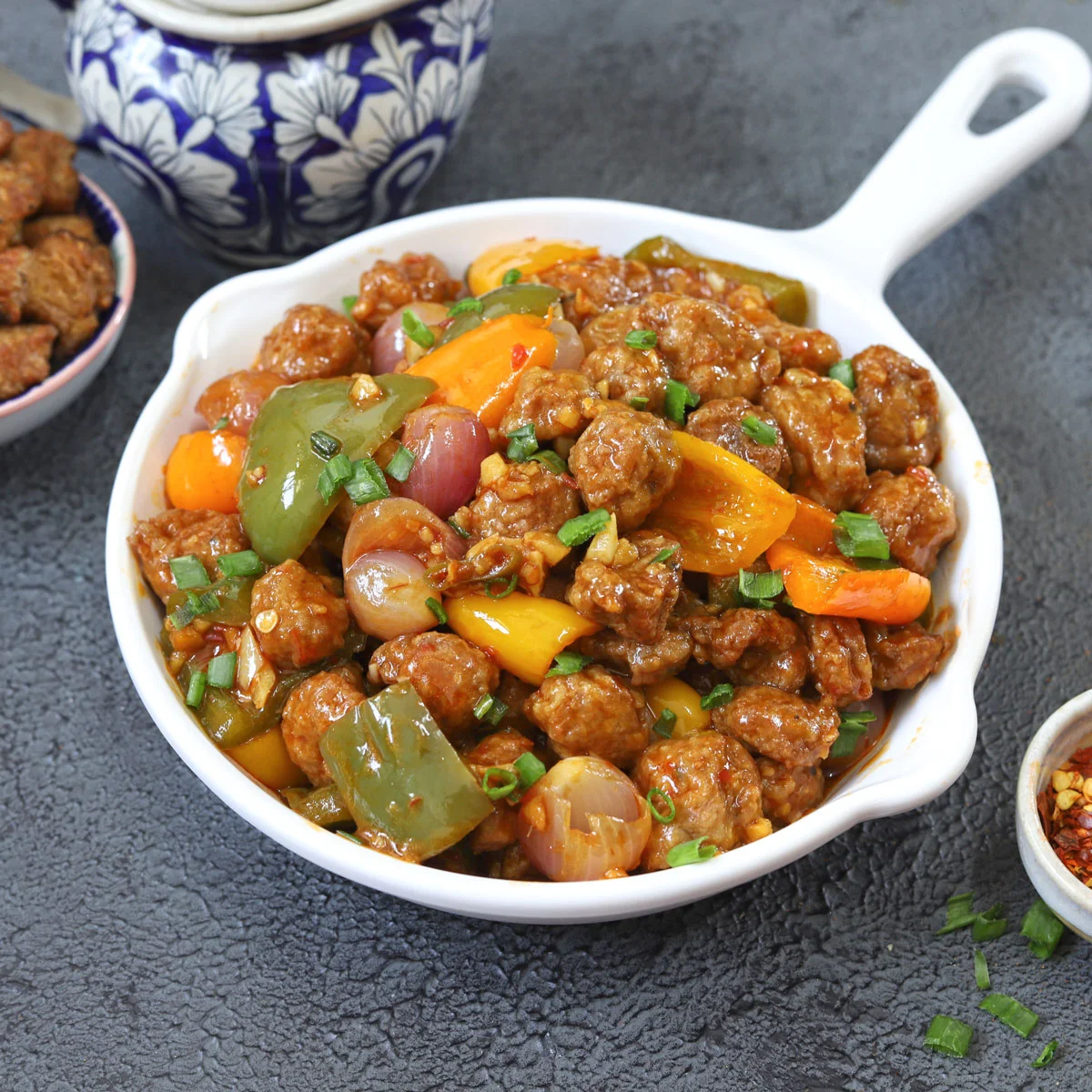
Soya Manchurian pairs crisp, flour-coated soya chunks with a sweet, spicy and tangy vegetable gravy. It is an Indian Chinese-inspired dish that makes a lively centrepiece with noodles or rice.
Ingredients
- 480 ml (2 cups)soya chunks (meal maker)
- 960 ml (4 cups)water
- 30 g (¼ cup)plain flour (maida)
- 30 ml (2 tablespoons)cornflour (starch)
- 5 ml (1 teaspoon)ginger-garlic paste
- to tastesalt and black pepper
- 360 ml (1½ cups)refined oil
- 60 ml (4 tablespoons)refined oil
- 30 ml (2 tablespoons)garlic, minced
- 15 ml (1 tablespoon)ginger, finely chopped
- 15 ml (1 tablespoon)green chilli, finely chopped
- 120 ml (½ cup)shallots (sambar onions)
- 120 ml (½ cup)capsicum, diced
- 240 ml (1 cup)bell pepper, diced
- 15 ml (1 tablespoon)white vinegar
- 15 ml (1 tablespoon)light soy sauce
- 30 ml (2 tablespoons)red chilli sauce
- 30 ml (2 tablespoons)tomato sauce or ketchup
- to tastesalt
- 240 ml (1 cup)water
- 15 ml (1 tablespoon)spring onion, chopped
Instructions
- 1
Boil the soya
Bring the 960 ml water to the boil in a saucepan with salt. Add the soya chunks and boil until soft, then transfer them to a colander and drain.
- 2
Squeeze and cool
Squeeze all the water from the cooked chunks and leave them to cool. If any are very large, cut them in half.
- 3
Coat the chunks
In a mixing bowl, combine the plain flour, cornflour, salt, pepper and ginger-garlic paste. Add the soya chunks and mix until they are evenly coated.
- 4
Fry until crisp
Heat the 360 ml oil in a frying pan and shallow-fry the coated chunks until crisp. Drain them on a plate.
- 5
Fry the aromatics
Heat the 60 ml oil in a wok. Add the garlic, ginger and green chilli and stir-fry over high heat for 1 minute, taking care not to burn them.
- 6
Cook the vegetables
Add the shallots and sauté until translucent. Add the capsicum, bell pepper, vinegar, soy sauce, chilli sauce and tomato sauce, then stir-fry for 1–2 minutes without overcooking the vegetables.
- 7
Simmer the gravy
Add 240 ml water and salt. Simmer for 1–2 minutes, then taste and add more seasoning if needed.
- 8
Add the chunks
Once the gravy has thickened, add the fried soya chunks and mix well. Simmer for 2 minutes.
- 9
Garnish the dish
Garnish the Soya Manchurian with chopped spring onion.
- 10
Serve with noodles
Serve the Soya Manchurian with chilli garlic noodles.
What is Soya Manchurian?
Manchurian dishes are part of Indian Chinese cooking, a style that brings Chinese-inspired sauces and techniques together with ingredients and flavours popular in India. Soya Manchurian uses rehydrated soya chunks in place of meat.
Here, the chunks are coated and fried until crisp, then stirred into a savoury, sweet-and-spicy gravy. The vegetables are cooked briefly so they keep some bite.
Nutrition and macros by portion
The nutrition label shows one serving as written: 1119 calories, 26g protein, 36g carbs, 98g fat.
| Portion | Adjustment | kcal | Protein | Carbs | Fat |
|---|---|---|---|---|---|
| Lighter | Use less frying oil | 783 kcal | 18g | 25g | 69g |
| This serving | As written | 1119 kcal | 26g | 36g | 98g |
| Hungry | Serve with extra noodles | 1679 kcal | 39g | 54g | 147g |
The soya chunks provide most of the protein and some of the carbohydrates, while the flour coating and sauces contribute additional carbohydrates. The frying oil carries most of the fat; serve a moderate portion with vegetables or noodles to make a more balanced plate.
Getting the soya chunks ready
Boiling softens the dried chunks so they can take on the coating and sauce. Squeeze them thoroughly after draining; excess water can make the coating patchy and interfere with crisping.
Coating: Mix the flour, cornflour and seasonings with the chunks until each piece is covered. The ginger-garlic paste adds flavour directly to the coating.
Frying for a crisp finish
Shallow-fry the chunks until their coating feels crisp and has taken on colour. Give them room in the pan so they fry rather than steam; cook in batches if needed.
Drain them on a plate after frying, then add them to the gravy near the end. This helps preserve their crisp exterior for serving.
Building the gravy
A hot wok cooks the garlic, ginger and green chilli quickly, so keep them moving and watch closely to prevent burning. Add the shallots next and cook until translucent.
Sauce balance: Vinegar brings tang, while soy, chilli and tomato sauces supply savoury, spicy and sweet notes. Stir-fry the capsicum and bell pepper for just 1–2 minutes so they do not become too soft.
How to judge the texture
The gravy should thicken during its brief simmer before the fried chunks go in. If it still looks thin, allow it to simmer until it thickens, as directed in the method.
Once the chunks are added, mix gently and simmer for 2 minutes. Serve promptly: the longer they sit in the sauce, the less crisp their coating will be.
Timing and serving
The listed total time is 50 minutes, including boiling and cooling the chunks, frying and preparing the gravy. Have the sauces and chopped vegetables ready before starting the high-heat wok stage.
The recipe suggests chilli garlic noodles. Plain noodles or rice also make a straightforward accompaniment, with the sauce coating each bite.
Recipe notes & tips
- Squeeze the boiled soya chunks well before coating them.
- Mix the coating thoroughly so there are no bare patches on the chunks.
- Keep the garlic and chilli moving in the hot wok to avoid burning.
- Prepare the sauces before you start stir-frying.
- Add the fried chunks only after the gravy has thickened.
- Serve straight away for the best contrast between crisp chunks and gravy.
Variations
- Adjust the heat: Use less green chilli or chilli sauce for a milder gravy.
- Add spring onion: Scatter extra chopped spring onion over the dish just before serving.
- Choose the accompaniment: Serve with rice instead of chilli garlic noodles.
- Use one pepper: Replace the separate capsicum and bell pepper with the same total amount of one variety.
- Make it saucier: Add a little water while simmering if you prefer a thinner gravy.
Common mistakes to avoid
- Wet soya chunks: Squeeze them thoroughly after draining so the coating can adhere.
- Patchy coating: Toss the chunks until the flour mixture covers them evenly.
- Burnt aromatics: Stir the garlic, ginger and chilli constantly over high heat and limit this stage to 1 minute.
- Soft vegetables: Keep their stir-fry to 1–2 minutes so they are not overcooked.
- Soggy coating: Add the fried chunks at the end and serve soon after the 2-minute simmer.
How to store
Refrigerate leftovers in a covered container and use within 3 days. Reheat in a pan until piping hot; the coating will soften as it sits in the gravy.
Frequently asked questions
Can I make Soya Manchurian less spicy?
Use less green chilli and red chilli sauce. Taste the gravy after simmering and adjust the seasoning before adding the chunks.
How do I know when the soya chunks are soft enough?
Boil them until they feel soft, then drain and squeeze out the water. If the chunks are very large, cut them in half as the method directs.
Can I prepare any part ahead?
You can boil, squeeze and cool the chunks in advance. For the crispest result, fry them and finish the gravy close to serving time.
What can I serve with it?
The recipe recommends chilli garlic noodles. Rice or plain noodles are also suitable accompaniments.
Why has the coating gone soft?
The coating softens as it absorbs the gravy, especially if the dish sits before serving. Add the chunks at the end and serve promptly.
Cook it from the original
This recipe comes from funfoodfrolic.com. Their page has the author’s own photos, notes and tips — the best place to cook it from.
Open the recipe on funfoodfrolic.com