
Instant Pot Vegetable Manchurian
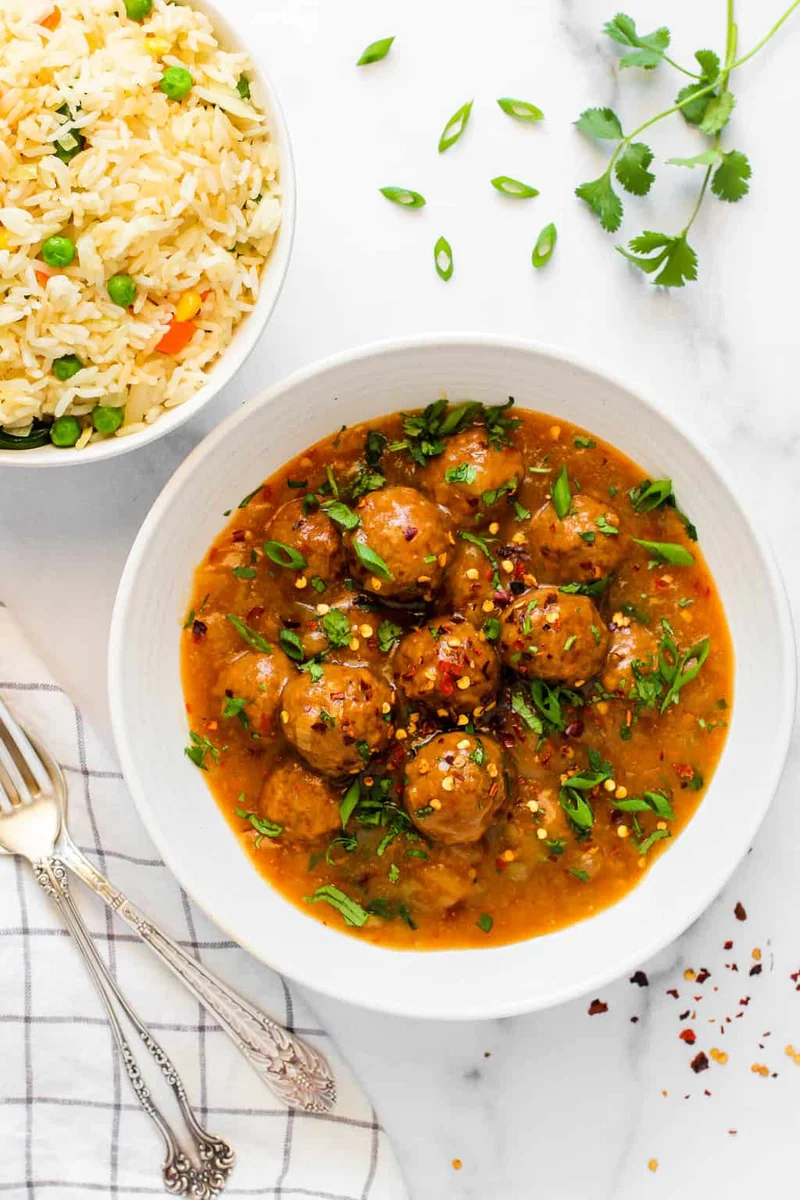
Instant Pot Vegetable Manchurian pairs frozen vegetable balls with a tangy, spicy ginger-garlic sauce. It cooks quickly under pressure and makes a flavourful topping for rice or noodles.
Ingredients
- 15 ml (1 tablespoon)oil
- 75 g (½ cup)yellow onion, diced
- 10 g (2 teaspoons)ginger, grated
- 6 g (2 teaspoons)garlic, minced
- 1 teaspoonred chilli flakes (optional)
- 16frozen vegetable balls
- 480 ml (2 cups)low-sodium vegetable stock
- 2 teaspoonssoy sauce
- 2 teaspoonsvinegar (chilli vinegar was used)
- 2 teaspoonssugar
- 16 g (2 tablespoons)cornflour or arrowroot powder
- 60 ml (¼ cup)water
- To tastered pepper flakes
- 8 g (2 tablespoons)fresh coriander, chopped
- 12 g (2 tablespoons)spring onions, chopped
Instructions
- 1
Sauté the aromatics
Set the Instant Pot to Sauté (More) and heat the oil. Add the onion, ginger and garlic and sauté for 1 minute. Stir in the optional chilli flakes, frozen vegetable balls and stock.
- 2
Pressure cook
Close the lid with the pressure valve set to Sealing. Pressure cook for 4 minutes, then use Quick Release. Open the lid and switch the Instant Pot to Sauté.
- 3
Thicken and serve
Add the soy sauce, chilli vinegar and sugar. Stir the cornflour with the water, then mix this into the sauce. Cook, stirring, until the sauce reaches a gentle boil; add more red pepper flakes if you want extra heat. Finish with coriander and spring onions, and serve hot over steamed rice, fried rice or noodles.
What is vegetable Manchurian?
Vegetable Manchurian is an Indo-Chinese style dish: vegetable-based balls are served in a savoury, tangy sauce seasoned with ingredients such as soy, ginger and garlic. This version uses frozen vegetable balls and an Instant Pot, making it a quick option for a saucy rice or noodle topping.
The broth helps the balls heat through under pressure, while a cornflour slurry thickens the liquid afterwards. Vinegar and sugar bring the sauce into balance.
Nutrition and macros by portion
The nutrition label shows one serving as written: 177 calories, 14g protein, 13g carbs, 8g fat.
| Portion | Adjustment | kcal | Protein | Carbs | Fat |
|---|---|---|---|---|---|
| Lighter | Serve with extra vegetables | 124 kcal | 10g | 9g | 6g |
| This serving | As written | 177 kcal | 14g | 13g | 8g |
| Hungry | Add more rice or noodles | 266 kcal | 21g | 20g | 12g |
The vegetable balls and sugar provide most of the carbohydrates, while the oil contributes fat; the balls and soy sauce contribute protein. Serve a measured portion over rice or noodles, with vegetables alongside, to make the plate more balanced and filling.
The aromatics and sauce base
Aromatics: a brief sauté of onion, ginger and garlic starts the sauce with a fragrant base. Keep the sauté to the stated minute so the garlic does not scorch.
Seasonings: soy sauce supplies savoury depth, vinegar adds sharpness and sugar rounds out the tang. Chilli flakes are adjustable, so begin with the optional amount and add more at the end if desired.
Cooking frozen vegetable balls
Straight from frozen: the recipe adds the balls without thawing, along with the stock. Give everything a quick stir before closing the lid so the balls are coated and the ingredients are distributed.
Pressure release: use Quick Release after the 4-minute pressure cook, as directed. Open the lid carefully once the pressure has released.
Getting the sauce texture right
Slurry: mix the cornflour thoroughly with the water before adding it, which helps it blend into the cooking liquid. Stir it into the sauce rather than tipping in dry cornflour.
Doneness: let the sauce reach a gentle boil while stirring so the thickener can work. Stop once it has thickened to a gravy that coats the vegetable balls.
Serving it hot
Rice: spoon the saucy balls over steamed rice for a straightforward meal, or use fried rice for a richer, more substantial pairing.
Noodles: serve over noodles and finish with the chopped coriander and spring onions. Add the final chilli flakes at the table if diners prefer different heat levels.
Timing and preparation
The listed total time is 10 minutes, with 4 minutes of pressure cooking. Have the measured seasonings and the cornflour slurry ready before opening the pot, so you can finish thickening the sauce promptly.
The remaining stages are a short sauté, a quick release and cooking the sauce to a gentle boil. The exact time for the sauce to thicken can vary with the appliance and liquid temperature.
Recipe notes & tips
- Measure the cornflour and water before pressure cooking so the slurry is ready when you open the pot.
- Use low-sodium stock as listed, since soy sauce also adds saltiness.
- Stir the slurry again just before adding it if the cornflour has settled.
- Taste the sauce after thickening before adding extra chilli flakes.
- Chop the coriander and spring onions while the Instant Pot comes to pressure.
Variations
- More heat: add extra red pepper flakes after pressure cooking, a little at a time.
- Milder sauce: leave out the optional chilli flakes and omit the final flakes.
- Arrowroot option: use arrowroot powder in place of the cornflour as listed.
- Chilli vinegar: use chilli vinegar for its added peppery tang, as in the source recipe.
- Noodle bowl: serve the finished vegetable balls and sauce over hot noodles instead of rice.
Common mistakes to avoid
- Adding dry cornflour: it can form lumps; mix it with the water first.
- Skipping the Quick Release: follow the stated release method after the 4-minute cook.
- Scorching the aromatics: sauté onion, ginger and garlic for just 1 minute.
- Adding all the chilli at once: start with the optional amount and adjust after tasting.
- Stopping before the sauce boils: stir until it reaches a gentle boil so the slurry can thicken it.
How to store
Refrigerate leftovers in a covered container and use within 3 days. Reheat gently in a saucepan or microwave until piping hot, adding a splash of water or stock if the sauce has thickened too much.
Frequently asked questions
Can I use vegetable balls straight from the freezer?
Yes. The recipe adds the 16 frozen vegetable balls directly to the pot with the stock.
Can I use arrowroot instead of cornflour?
Yes, the ingredient list gives arrowroot powder as an alternative. Mix it with the water before stirring it into the sauce.
How do I make the sauce spicier?
Add more red pepper flakes after pressure cooking, tasting as you go. The initial teaspoon of red chilli flakes is optional.
What should I serve with vegetable Manchurian?
Serve it hot over steamed rice, fried rice or noodles, as suggested in the recipe.
How can I tell when the sauce is thick enough?
Stir it until it reaches a gentle boil and coats the vegetable balls. If it is still thin, continue cooking and stirring briefly.
Cook it from the original
This recipe comes from ministryofcurry.com. Their page has the author’s own photos, notes and tips — the best place to cook it from.
Open the recipe on ministryofcurry.com