
Saliva Chicken (Sichuan Chicken in Chili Oil 口水鸡)
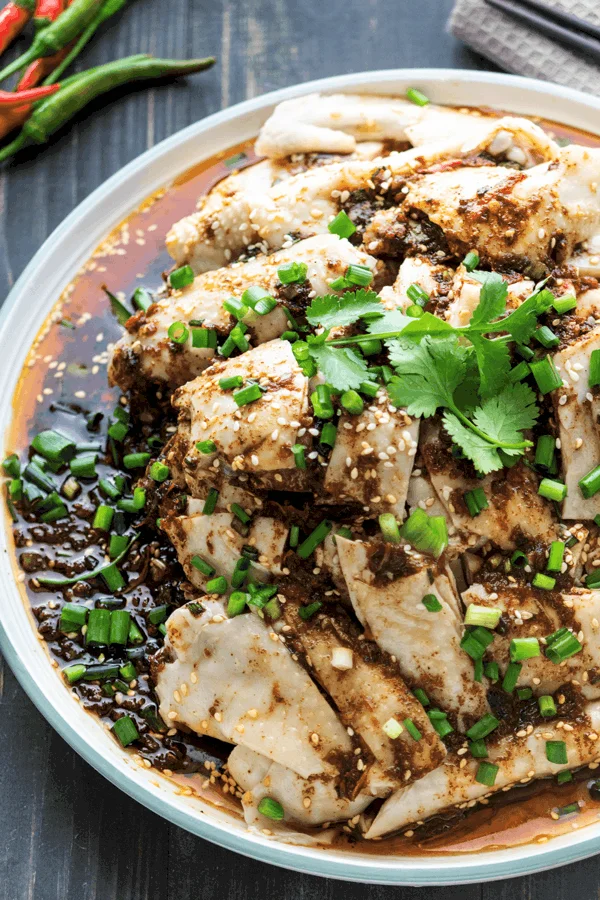
Saliva chicken is a Sichuan-style dish of tender chicken dressed with a fragrant, spicy chilli oil sauce. It takes time to prepare, but the chicken can be served warm or chilled, making it a striking centrepiece for sharing.
Ingredients
- 1free-range chicken
- 75 g (1.6 lb)ginger
- 2 stalks (or 1 large)leek
- 1½ tbsp, or to tastesalt
- 3 tbspShaoxing rice wine
- ½ tbspgreen peppercorns
- 6 L (26 US cups)water, for boiling the chicken
- 4 L (17 US cups)water, for the ice bath
- 710 ml (3 US cups)ice cubes, for the ice bath
- 20 gginger
- 25 ggarlic
- 1 sprig, finely choppedspring onion
- 3chillies
- 1¼ tsp, or to tastesalt
- 2½ tsp, or to tastesugar
- 2½ tbsplight soy sauce
- 1¼ tspblack vinegar
- 237 ml (1 US cup)cooking oil
- 1 tbspwhite sesame seeds
- 1 tsp, or to tastesalt
- 59 ml (¼ US cup), or to preferencechilli powder
- 2 cloves, thinly slicedgarlic
- 2bay leaves
- 1 stalk, cut into 10 cm segmentsspring onion
- 3star anise
- 1Chinese cinnamon
- 2 tbsp, or to preferenceSichuan peppercorns
- To tastespring onions
- To tastecoriander
- To tastewhite sesame seeds
- To taste, cut into thin stripscucumber
Instructions
- 1
Prepare the aromatics
Flatten the ginger by smashing it. Wash the leeks and cut them into 15 cm segments, or into 1 cm segments if using one large leek.
- 2
Season the water
Bring the 6 L of water to the boil in a large wok or pot. Add the smashed ginger, leek, salt, green peppercorns and Shaoxing rice wine.
- 3
Dip the chicken
Lower the chicken into the pot by its neck or head until its body is submerged, then lift it out and let the water drain from inside. Repeat three times to help the chicken cook evenly from the inside out.
- 4
Poach the chicken
Add the green peppercorns to the pot, then submerge the chicken. Cover the pot, turn off the heat and leave the chicken in the hot water for 1 hour 30 minutes, or until cooked. Pierce the flesh deeply with a chopstick; if blood comes out, leave it in the hot broth for longer.
- 5
Chill the chicken
After 1 hour 30 minutes, prepare a large bowl of ice-cold water. Take the chicken out of the pot and transfer it to the ice bath to cool. Reserve 4 tbsp of the remaining stock.
- 6
Toast the sesame
Over a low heat, lightly toast the sesame seeds for 5 minutes, or until golden.
- 7
Mix the chilli base
In a bowl, combine the chilli powder, white sesame seeds and salt.
- 8
Heat the oil
Add the spring onion, garlic, bay leaves, star anise, cinnamon and Sichuan peppercorns to the oil. Heat for 5 minutes, or until the aromatics have browned and the oil is smoking.
- 9
Strain the oil
Pour the hot oil through a sieve into the chilli powder mixture, removing the spring onion, garlic, bay leaves, star anise, cinnamon and Sichuan peppercorns.
- 10
Rest the chilli oil
Stir the mixture well and leave it to rest while you prepare the sauce.
- 11
Make the paste
Use a mortar and pestle to pound the ginger, garlic and chillies until they form a paste.
- 12
Mix the sauce
Stir the paste together with the chopped spring onion, salt, sugar, light soy sauce, black vinegar and reserved stock.
- 13
Finish the sauce
Pour in the chilli oil and stir. Set the sauce aside for the chicken.
- 14
Remove the neck
Cut off the neck and head just above the breast. Make a cut with a cleaver, then use your hand to tap the knife through if needed.
- 15
Separate the head
If you want to keep the head for presentation, cut it away from the neck.
- 16
Remove the wings
Lift one wing and cut where it meets the body, continuing in the same direction to the joint. Cut through the joint, which is softer than bone, tapping the knife with your hand if needed. Repeat with the other wing.
- 17
Separate the legs
Find the joint between one leg and the breast with the cleaver, then cut through the flesh to the joint and separate the leg and thigh. Repeat on the other side.
- 18
Divide the legs
Cut each leg from its thigh at the joint.
- 19
Remove the backbone
Hold the body upright by the tail and cut from the base of the tail down to remove the backbone, cutting through any bones in the way.
- 20
Split the breast
Cut the remaining breast piece in half lengthways.
- 21
Chop the chicken
Chop the pieces into smaller portions, roughly 2 cm thick.
- 22
Arrange the pieces
Slide the cleaver under the cut pieces and hold them in place with your hand as you lift them onto a plate. Gently slide the pieces off the cleaver so they sit together as they were cut.
- 23
Dress and serve
Arrange the chicken over a bed of cucumber strips and pour the chilli sauce over it to cover the surface. Serve straight away or refrigerate and serve cold.
What is saliva chicken?
Saliva chicken, or kou shui ji, is a Sichuan dish of chicken served with a bold, aromatic chilli oil sauce. Its name refers to how tempting the dish is, rather than to an ingredient.
This version gently cooks a whole chicken, chills it, then serves the chopped pieces with a sauce made from ginger, garlic, soy, vinegar and chilli oil. The contrast of silky chicken, crisp cucumber and warming spice is the appeal.
Nutrition and macros by portion
The nutrition label shows one serving as written: 2074 calories, 156g protein, 72g carbs, 123g fat.
| Portion | Adjustment | kcal | Protein | Carbs | Fat |
|---|---|---|---|---|---|
| Lighter | Less chilli oil | 1452 kcal | 109g | 50g | 86g |
| This serving | As written | 2074 kcal | 156g | 72g | 123g |
| Hungry | Add a side of rice | 3111 kcal | 234g | 108g | 185g |
The chicken supplies most of the protein, while the chilli oil contributes much of the fat and energy. Sugar, soy sauce and the aromatics add smaller amounts of carbohydrate; serve with cucumber and a modest portion of rice for a more balanced plate.
Poaching the chicken
Gentle heat: dipping and lifting the chicken helps hot water enter the cavity before it is left to cook. The method then relies on the covered pot retaining enough heat after the hob is turned off.
Check the centre: the recipe gives 1 hour 30 minutes as a guide and suggests testing with a chopstick. Make sure the chicken is thoroughly cooked before chilling or serving; if in doubt, check the thickest part with a food thermometer.
The aromatics in the pot
Ginger and leek: these flavour the poaching water without overpowering the chicken. Shaoxing rice wine and green peppercorns add further fragrance to the broth.
Reserved stock: keep 4 tbsp of the cooking liquid for the sauce. It loosens the aromatic paste and brings some of the poaching flavours into the dressing.
Building the chilli oil
Whole spices: spring onion, garlic, bay leaves, star anise, cinnamon and Sichuan peppercorns perfume the cooking oil. Strain them out after heating so the oil is smooth and the chilli mixture stays easy to spoon.
Hot oil: pouring it through a sieve onto the chilli powder and sesame seeds helps release their aroma. Let the mixture rest while you make the sauce, as the recipe directs.
Balancing the sauce
Aromatic paste: pound the ginger, garlic and chillies until they form a paste, so their flavour spreads through the dressing. Adjust the salt and sugar to taste alongside the soy sauce and black vinegar.
Chilli level: the chilli powder and Sichuan peppercorns bring different kinds of heat and fragrance. Use the recipe's suggested amounts as a starting point if you prefer a milder sauce.
Cutting and serving
At the joints: separating the wings and legs at their joints makes the whole bird easier to portion. Use care with the cleaver, and keep your free hand clear of its cutting path.
Cucumber base: thin cucumber strips give the chicken a fresh, crisp layer beneath the sauce. Chopped spring onion, coriander and sesame seeds can be scattered over the finished plate.
Warm or chilled
The chicken is cooled in an ice bath before cutting, then can be served immediately or refrigerated for a cold presentation. Chilling also makes it convenient to prepare the chicken ahead of serving.
For a meal, serve it with plain rice and simple vegetables so the chilli oil remains the main seasoning on the plate.
Recipe notes & tips
- Prepare the ice bath before the chicken finishes poaching so it is ready to use.
- Reserve the 4 tbsp of stock before discarding the poaching liquid.
- Keep the oil over low heat while toasting the sesame seeds so they colour gradually.
- Strain the spiced oil carefully into the chilli mixture, keeping your hands clear of the hot oil.
- Cut the cucumber into thin, even strips so it forms a tidy bed for the chicken.
- Use a stable chopping board and take care when cutting through joints with a cleaver.
Variations
- Milder sauce: reduce the chilli powder and chillies to suit your heat preference.
- Extra cucumber: add a generous layer of cucumber strips beneath the chicken.
- More herbs: scatter extra coriander and spring onion over the platter before serving.
- Softer peppercorn heat: use fewer Sichuan peppercorns in the infused oil.
- Rice accompaniment: serve with plain rice to make the chicken part of a fuller meal.
Common mistakes to avoid
- Skipping the ice bath: the recipe uses it to cool the chicken after poaching; have the cold water and ice ready in advance.
- Rushing the poach: leave the chicken in the covered hot water for the full 1 hour 30 minutes, or longer if it is not cooked through.
- Overheating the oil: keep watch as the aromatics brown, and strain the oil once they have browned and it is smoking.
- Forgetting the stock: reserve 4 tbsp of poaching liquid before you empty the pot, as it is part of the sauce.
- Cutting without locating joints: feel for the softer joint and work carefully rather than forcing the cleaver through bone.
- Adding the sauce too early: dress the chicken just before serving to keep the cucumber and chicken presentation neat.
How to store
Refrigerate leftover chicken and sauce in separate airtight containers and eat within 2 days. Serve cold, or reheat the chicken until piping hot; keep the chilli oil separate until serving.
Frequently asked questions
Can I serve saliva chicken cold?
Yes. The recipe cools the chicken in an ice bath and says it can be refrigerated for a cold serving.
How can I tell if the chicken is cooked?
The recipe suggests piercing the flesh deeply with a chopstick; blood means it needs more time in the hot broth. For a more reliable check, use a food thermometer at the thickest part and confirm it has reached a safe temperature.
Can I make the sauce less spicy?
Yes. Reduce the chilli powder and fresh chillies, and use fewer Sichuan peppercorns if you want less heat and tingle.
What can I use instead of Shaoxing rice wine?
The recipe does not give a substitute. If you leave it out, the chicken will still poach, but the broth will have a different flavour.
Do I have to chop the chicken with a cleaver?
The method uses a cleaver to portion the cooked chicken. If you are not confident using one, carefully separate the meat at the joints with a sturdy knife instead.
What should I serve with saliva chicken?
The recipe serves it over cucumber strips. Plain rice is also a straightforward accompaniment that works well with the strongly flavoured sauce.
Cook it from the original
This recipe comes from wokandkin.com. Their page has the author’s own photos, notes and tips — the best place to cook it from.
Open the recipe on wokandkin.com