
Filipino Beef Empanadas
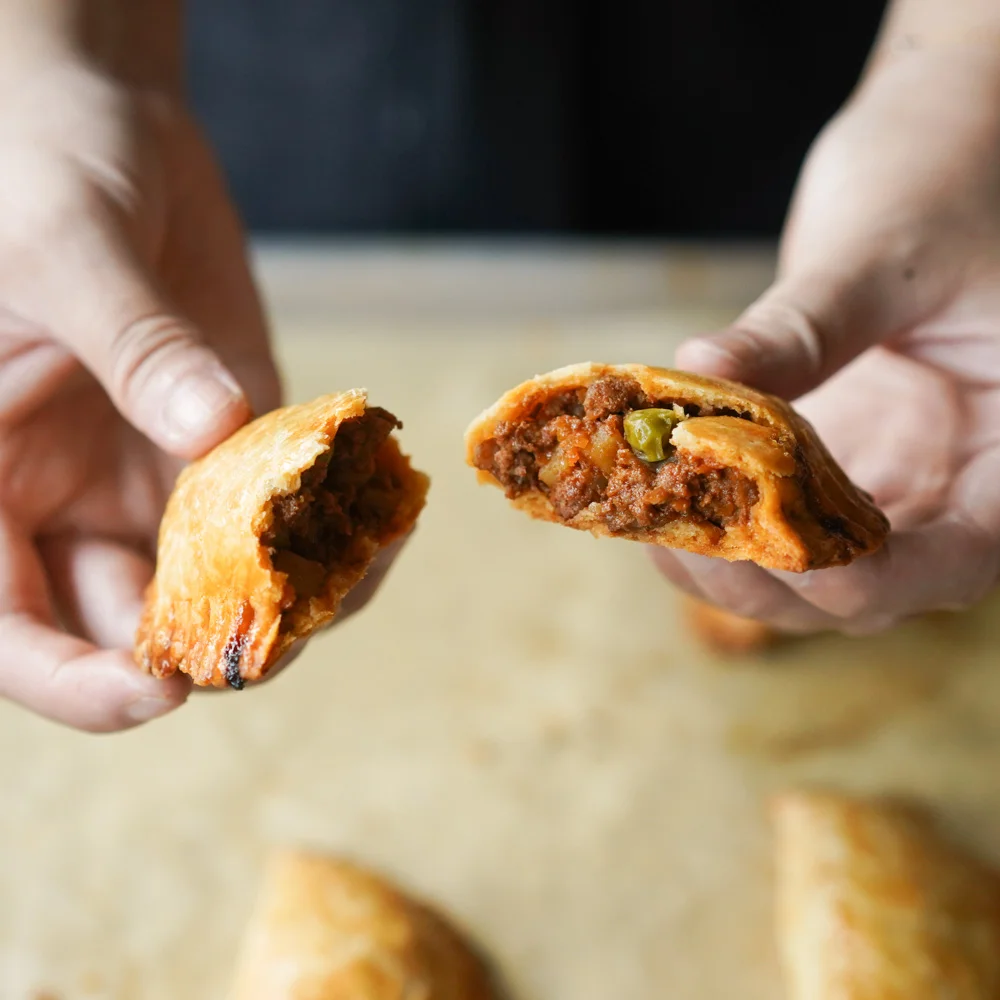
Filipino beef empanadas are flaky pastry parcels filled with sweet-savoury beef, tomato sauce, peas and vegetables. They take a little assembly, but the filling can be made ahead and the golden pastries are handy to serve as a snack or light meal.
Ingredients
- 50 g (⅓ cup)frozen peas
- 237 ml (8 fl oz)filtered water
- 15 ml (½ fl oz)vegetable oil
- ½ cup (½ small onion), choppedonion
- 1 tbsp (5 cloves), mincedgarlic
- 227 g (½ lb)minced beef
- 237 ml (8 fl oz; ½ can)tomato sauce
- 21.5 gbrown sugar
- 2.6 gsalt
- 0.4 gblack pepper
- ⅓ cup (1 medium carrot), mincedcarrot
- ½ cup (1 medium potato), finely choppedgold potato
- 250 gplain flour
- 25 gwhite granulated sugar
- 2 gsalt
- 2 gbaking powder
- 114 g, very cold and cut into 6 mm cubesbutter
- 1egg
- 30 ml (1 fl oz)ice water
- 1egg, beaten for the egg wash
Instructions
- 1
Cook the peas
Put the peas and filtered water in a microwave-safe bowl. Microwave for 1–2 minutes, or until the peas are soft and cooked, following the packet directions if needed.
- 2
Soften the onion
Warm the vegetable oil in a large pan over a medium heat. Add the onion and cook for 1 minute, or until slightly translucent, then add the garlic and cook for 30 seconds until fragrant.
- 3
Brown the beef
Add the minced beef and cook until browned, about 2–5 minutes. It will cook further in the sauce; if checking for food safety, the beef should reach about 71°C (160°F).
- 4
Season the filling
Stir the tomato sauce, brown sugar, salt and pepper into the pan until combined.
- 5
Cook the vegetables
Add the carrot and potato. Cook for about 10–12 minutes, until the potato can be pierced easily with a fork but is not falling apart.
- 6
Add the peas
Stir in the peas and cook for 1 minute to heat them through.
- 7
Cool the filling
The filling should be thick and chunky. Take the pan off the heat and leave the filling to cool until it is cool to the touch before assembling. If making it ahead, transfer it to an airtight container once cooled and refrigerate.
- 8
Mix the pastry
Whisk the flour, white sugar, salt and baking powder in a mixing bowl. Add the cold butter and cut it into the dry ingredients with a pastry cutter until the pieces are about pea-sized; a food processor can also be used.
- 9
Combine the liquids
Beat the egg in a small bowl, then whisk in the ice water.
- 10
Form the dough
Add the egg mixture to the flour and butter. Stir with a wooden spoon or spatula, then use your hands to bring the dough into a ball and wrap it in cling film.
- 11
Chill the dough
Refrigerate the wrapped dough for 15 minutes.
- 12
Heat the oven
Preheat the oven to 177°C (350°F).
- 13
Divide the dough
Take the dough out of the fridge and divide it into 12 balls, about 38 g each. Cut two pieces of baking parchment into 13 × 13 cm (5 × 5 inch) squares.
- 14
Roll each round
Place one dough ball between the parchment squares. Roll it into a circle about 11.5 cm (4½ inches) across and 3 mm thick, without rolling beyond the parchment.
- 15
Lift the pastry
Remove the pastry circle from the parchment and lay it in the palm of your hand.
- 16
Add the filling
Place 1½ tablespoons of meat filling in the centre, shaping it into a log.
- 17
Fold and seal
Fold one side of the pastry over the filling so the log sits inside. Press the edges together with your hands.
- 18
Crimp the edges
Use a fork to crimp the edges closed. Put the empanada on a baking tray lined with parchment.
- 19
Shape the remainder
Repeat the rolling, filling and sealing steps with the remaining dough balls.
- 20
Brush and bake
Beat the egg for the wash and brush it over each empanada. Bake on the oven’s middle shelf for 25–30 minutes per batch.
- 21
Cool and serve
Take the empanadas out when golden brown. Set them on a cooling rack for about 5 minutes before serving.
What are Filipino beef empanadas?
Empanadas are filled pastries found in many cuisines, and Filipino versions often pair savoury meat with a gently sweet filling. This version uses beef, tomato sauce, peas, carrot and potato inside a short, buttery pastry.
The contrast is what makes them work: a tender, chunky centre and a crisp, flaky shell. The recipe’s sugar brings a little sweetness to the tomato-and-beef filling.
Nutrition and macros by portion
The nutrition label shows one serving as written: 246 calories, 7g protein, 24g carbs, 14g fat.
| Portion | Adjustment | kcal | Protein | Carbs | Fat |
|---|---|---|---|---|---|
| Lighter | Serve with extra vegetables | 172 kcal | 5g | 17g | 10g |
| This serving | As written | 246 kcal | 7g | 24g | 14g |
| Hungry | Add another empanada | 369 kcal | 11g | 36g | 20g |
The pastry flour and potatoes provide most of the carbohydrates, while butter and oil contribute much of the fat. Beef supplies the protein, with smaller amounts from the egg and pastry. Pair an empanada with a generous serving of salad or vegetables to balance the plate.
Build a well-textured filling
Beef and tomato: Brown the beef before adding the sauce so the filling has a savoury base. The sauce should reduce until thick rather than watery.
Vegetables: Cut the potato and carrot small so they cook through in the stated time and fit neatly into each pastry. Add the peas near the end to warm them without overcooking.
Keep the pastry cold
Cold butter: Work it into the flour until the pieces are around pea-sized. Leaving small pieces of butter in the dough helps give the baked pastry its flaky texture.
Chilled dough: Rest the wrapped dough in the fridge for 15 minutes before shaping. If it becomes very soft as you work, pause and chill it again.
Cool the filling before shaping
Filling temperature: Let the cooked mixture cool until it is no longer warm to the touch. Warm filling can soften the butter in the pastry and make the rounds harder to seal.
Portioning: Use about 1½ tablespoons in the centre of each round and shape it into a short log. Keep the edges clear so they can meet and seal cleanly.
Look for these doneness cues
Potatoes: During filling preparation, they should be easy to pierce with a fork but still hold their shape. Cook for about 10–12 minutes, checking as needed.
Pastry: Bake for 25–30 minutes, until the tops are golden brown. Leave the empanadas on a cooling rack for about 5 minutes before serving.
Plan the assembly
Make-ahead filling: The filling can be cooled, covered in an airtight container and refrigerated ahead of time. Bring it out when you are ready to assemble, keeping it cool rather than warm.
Work in batches: Roll, fill and seal one pastry at a time, then place each finished empanada on the lined tray. Bake batches for 25–30 minutes on the middle oven shelf.
What to serve alongside
These empanadas can be served as a snack or as part of a light meal. A fresh salad or simply dressed vegetables make a crisp contrast to the buttery pastry and rich filling.
For a more substantial plate, add extra vegetables or serve with a small bowl of soup. Let the pastries cool briefly before eating, as the filling will be hot.
Recipe notes & tips
- Keep the butter very cold until you mix it into the flour.
- Cook the filling until it is thick and chunky so it is easier to enclose.
- Cool the filling fully before it touches the pastry.
- Use the parchment squares to roll each round to an even thickness.
- Leave the edges free of filling so they can seal properly.
- Bake until the pastry is golden brown, checking within the 25–30 minute range.
Variations
- More vegetables: Add extra finely chopped carrot or peas while keeping the filling thick.
- Different mince: Use minced pork in place of the beef for a different savoury filling.
- Warmer spice: Add a pinch of chilli to the beef mixture for a little heat.
- Herby filling: Stir chopped fresh herbs into the cooled filling before assembling.
- Smaller pastries: Divide the dough into smaller portions and adjust the filling amount to match.
Common mistakes to avoid
- Warm filling: It can soften the pastry; cool it until it is no longer warm to the touch.
- Watery mixture: Excess sauce makes sealing difficult; cook the filling until thick and chunky.
- Large vegetable pieces: They may not soften in time; mince the carrot and finely chop the potato.
- Overfilled rounds: Too much filling prevents a clean seal; use about 1½ tablespoons per empanada.
- Soft dough: It can be harder to shape; chill it for the stated 15 minutes before rolling.
- Unsealed edges: Filling may escape during baking; press the edges together by hand, then crimp with a fork.
How to store
Cool leftover empanadas and store them in an airtight container in the fridge for up to 3 days. Reheat in an oven until hot throughout to help crisp the pastry; the recipe also allows the cooled filling to be refrigerated ahead of assembly.
Frequently asked questions
Can I make the filling ahead?
Yes. Cool it first, then transfer it to an airtight container and refrigerate until you are ready to assemble the empanadas.
How do I know when the filling is ready?
The potatoes should be easily pierced with a fork but not falling apart, and the sauce should be thick and chunky.
Why does the filling need to be cool?
A warm filling can soften the butter in the pastry, making the dough harder to handle and seal.
Can I use a food processor for the pastry?
Yes. The recipe gives a food processor as an alternative to cutting the cold butter into the dry ingredients by hand.
How long do the empanadas bake?
Bake them on the middle shelf at 177°C (350°F) for 25–30 minutes per batch, until golden brown.
Can I freeze the empanadas?
Freezing is not specified in this recipe. For best guidance, follow the instructions for the pastry and filling you are using.
Cook it from the original
This recipe comes from hungryhuy.com. Their page has the author’s own photos, notes and tips — the best place to cook it from.
Open the recipe on hungryhuy.com