
Vietnamese Square Sticky Rice Cake (Banh Chung)
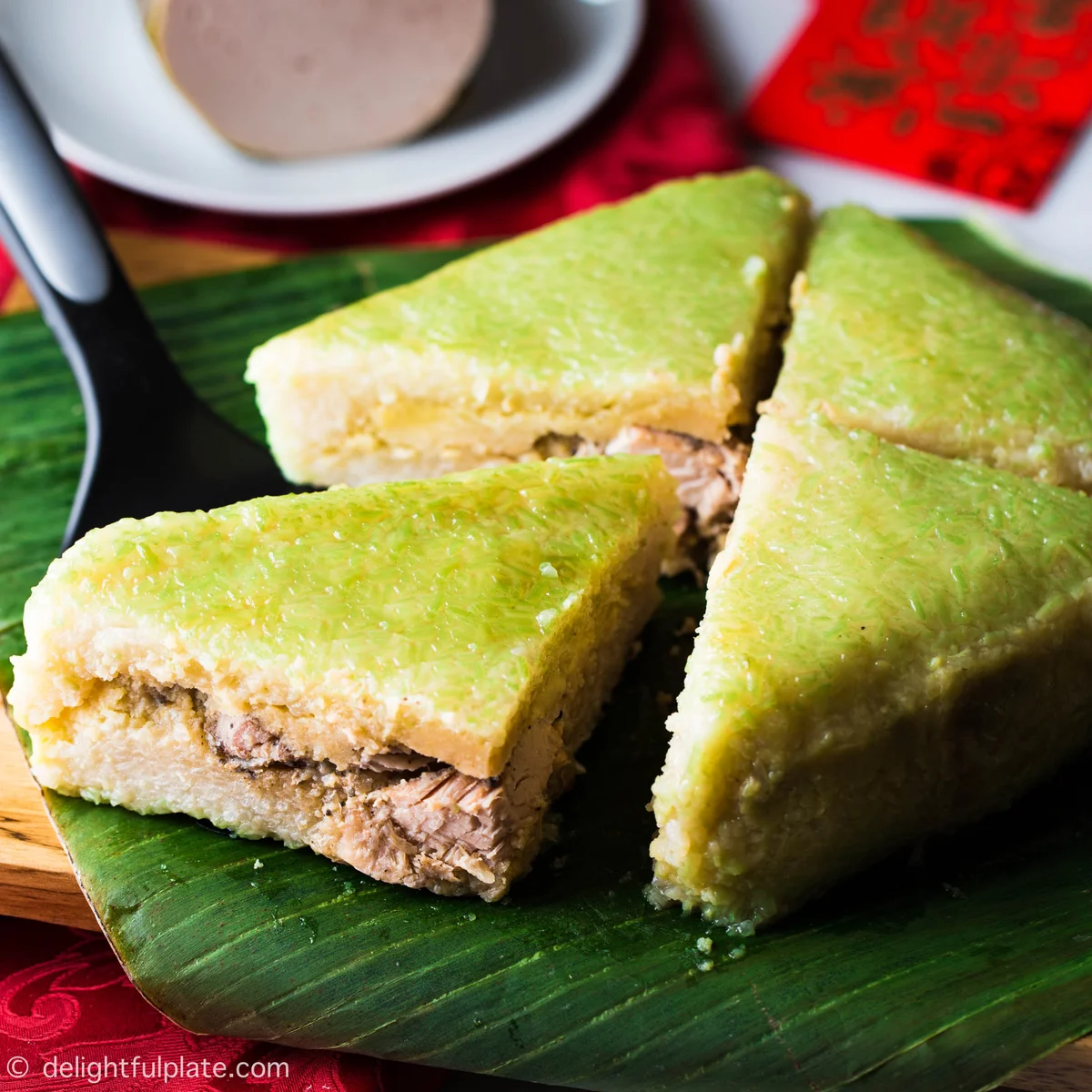
Banh chung is a Vietnamese square sticky rice cake filled with mung beans and seasoned pork belly, traditionally prepared for Lunar New Year. It takes time to soak, wrap and boil, but makes a hearty celebratory dish that can be served soft or fried until crisp.
Ingredients
- 450 g (3 cups)long-grain sticky rice
- 250 g (9 oz)split mung beans
- 450 g (1 lb)pork belly
- 5¼ teaspoons, dividedsalt
- 2 teaspoons, or morefreshly cracked black pepper
- 450 g (1 lb)frozen banana leaves
Instructions
- 1
Soak overnight
The night before, soak the sticky rice and mung beans separately in plenty of water. Move the frozen banana leaves to the refrigerator to thaw.
- 2
Season the pork
Cut the pork belly into pieces about 2.5 cm thick, 9 cm long and 4 cm wide. Mix with 1 teaspoon of salt and 2 teaspoons of black pepper, then set aside.
- 3
Season the rice
Drain the rice, sprinkle over 3 teaspoons of salt and mix well. Set aside.
- 4
Season the beans
Drain the mung beans, add 1¼ teaspoons of salt and mix to combine.
- 5
Steam the beans
Steam the mung beans until soft, about 15 minutes. Mash them or process finely in a food processor, tasting and adding more salt if needed. While still warm, divide into 2 equal portions and shape each into a ball.
- 6
Prepare the leaves
Wash the banana leaves and pat them dry.
- 7
Set up the mould
Place the cake mould on a clean surface and arrange two lengths of kitchen twine beneath it, making sure they are long enough to tie around the cake.
- 8
Cut the leaves
Cut four pieces of banana leaf that will fit inside the mould when each is folded in half twice.
- 9
Line the corners
Stand one folded leaf upright against a corner of the mould. Pull its top corner down clockwise, then lay it flat and pull the farthest corner up to make a triangle at the bottom.
- 10
Finish the lining
Repeat with the other three pieces, placing one in each corner. For the last two pieces, there is no need to pull a corner into a triangle.
- 11
Add a second layer
Cut four more banana leaf pieces about half the size of the first ones and repeat the lining process to help contain the filling.
- 12
Add the first rice layer
Scoop 1 cup of rice into the mould. Spread it gently into an even layer, pressing rice into the sides and corners.
- 13
Layer the first beans
Break one mung bean ball in half with your hands. Hold one half over the rice, break it into smaller pieces and spread them across the layer.
- 14
Add the pork
Place half of the seasoned pork belly in the centre over the mung beans.
- 15
Complete the filling
Break the other half of the mung bean ball into small pieces over the pork. Top with about 1¼–1½ cups of rice, pushing some into the sides and corners.
- 16
Fold and tie
Fold the banana leaves down over the filling and press gently. Tie the two lengths of twine around the cake.
- 17
Secure the cake
Remove the mould and tie two more lengths of twine around the cake, leaving room for the rice to expand. Turn the cake over.
- 18
Make the second cake
Use the remaining ingredients to assemble another cake in the same way.
- 19
Prepare the pot
Line a large pot with 1–2 pieces of banana leaf.
- 20
Submerge the cakes
Put the cakes in the pot and add enough water to cover them. Weigh them down with heavy objects, such as two ceramic bowls, so they stay submerged.
- 21
Boil the cakes
Bring the water to a boil, then lower the heat to maintain a gentle to moderate boil. Cover and cook for 10 hours, checking occasionally that the cakes remain covered; add boiling water if needed.
- 22
Press the cakes
Remove the cakes after 10 hours and rinse them until the outer leaves are no longer sticky. Set them on a rack over a baking sheet, place another baking sheet on top and weigh it down with heavy books for at least 2–4 hours.
- 23
Serve the cakes
Serve after pressing: peel away the leaves and cut each cake into 4 or 8 slices. Enjoy on its own or with Vietnamese pork sausage and condiments such as soy sauce. Alternatively, fry the slices until golden and crisp on all sides.
- 24
Store leftovers
Keep the cakes in the refrigerator for a few days to a week and reheat by microwaving or frying. They can also be frozen for a few months; thaw in the refrigerator, then boil for 1–2 hours before eating.
What is banh chung?
Banh chung is a square Vietnamese sticky rice cake traditionally associated with Lunar New Year. Its layers of glutinous rice, mung beans and pork are wrapped in banana leaves and cooked for a long time until compact and tender.
This version uses a mould and a double lining of leaves to help shape and contain the filling. The extended boil and pressing help the layers hold together for neat slices.
Nutrition and macros by portion
The nutrition label shows one serving as written: 2657 calories, 73g protein, 305g carbs, 123g fat.
| Portion | Adjustment | kcal | Protein | Carbs | Fat |
|---|---|---|---|---|---|
| Lighter | Serve with more vegetables | 1860 kcal | 51g | 214g | 86g |
| This serving | As written | 2657 kcal | 73g | 305g | 123g |
| Hungry | Add another slice | 3986 kcal | 110g | 458g | 185g |
The sticky rice supplies most of the carbohydrate, while pork belly contributes much of the fat and the pork and mung beans provide protein. Balance a slice with vegetables or pickles, and choose a modest amount of sausage or sauce alongside it.
The layers matter
Sticky rice: use glutinous rice, not ordinary long-grain rice; it softens and becomes cohesive during the long cooking.
Mung beans: steaming them first and breaking them into pieces makes it easier to distribute the filling evenly around the pork.
Pork belly: its fat brings richness to the centre of the cake. Cut the pieces to a similar size so they can be arranged consistently.
Wrapping and tying
Leaf lining: fold the first four pieces into the mould’s corners, then add a second, smaller layer. Overlapping the leaves helps keep rice and filling inside as the cake cooks.
Twine: tie the cake securely, but not tightly. The rice expands during cooking, so it needs a little room.
A long, gentle boil
Keep the cakes covered with water throughout the 10-hour cooking time. Check the pot now and then and top it up with boiling water if the level drops.
Pressing: after rinsing, weigh the cakes down for at least 2–4 hours. This firms the shape and makes the cake easier to slice.
How to serve it
Cut the pressed cake into 4 or 8 slices and serve it as it is, with Vietnamese pork sausage or a condiment such as soy sauce.
For a crisp finish, fry the slices until every side is golden. Serve alongside pickles or vegetables for a fresh contrast.
Planning the timing
Start the night before by soaking the rice and beans and thawing the leaves in the refrigerator. The cakes then need 10 hours of boiling and at least 2–4 hours of pressing before serving.
The long cooking time suits a day when you can keep an eye on the pot and maintain the water level.
Recipe notes & tips
- Soak the rice and mung beans separately overnight so both are ready for the next day’s preparation.
- Thaw the banana leaves in the refrigerator ahead of time and pat them dry before wrapping.
- Keep the cakes fully submerged during the long boil, topping up with boiling water as needed.
- Use twine long enough to tie the cake in both directions after removing the mould.
- Let the cakes finish pressing before slicing so their layers stay together.
- Fry leftover slices on all sides for a crisp exterior.
Variations
- Crisp slices: fry pieces until every side is golden and crunchy.
- Soy sauce: serve with soy sauce on the side for dipping.
- Pork sausage: add Vietnamese pork sausage as a traditional accompaniment.
- Fresh contrast: serve with pickles or vegetables alongside the rich cake.
Common mistakes to avoid
- Using ordinary rice: choose glutinous sticky rice so the cooked cake holds together.
- Tying too tightly: leave room for the rice to expand during cooking.
- Letting the cakes float: weigh them down so they remain under the water.
- Allowing the water level to drop: check periodically and add boiling water to keep the cakes covered.
- Skipping the press: weigh the cakes for at least 2–4 hours to help them firm up for slicing.
- Cutting before pressing: wait until the pressing time is complete for cleaner slices.
How to store
Keep the cakes in the refrigerator for a few days to a week, then reheat by microwaving or frying. For longer storage, freeze for a few months; thaw in the refrigerator and boil for 1–2 hours before eating.
Frequently asked questions
Can I make banh chung ahead?
Yes. The rice and beans are soaked overnight, and the cooked cakes can be refrigerated for a few days to a week or frozen for a few months.
How long do the cakes need to boil?
Cook them for 10 hours at a low to moderate boil. Check occasionally that they are still covered with water.
Why should the cakes stay underwater?
Keeping them submerged helps them cook evenly. Use heavy objects to hold them down and add boiling water if the level falls.
How do I know when the cakes are ready to slice?
After the 10-hour boil, rinse them and press under a weighted baking sheet for at least 2–4 hours. The pressing helps the cake hold its shape when cut.
Can I fry banh chung?
Yes. Cut the cake into slices and fry until all sides are golden and crisp.
How should I reheat a frozen cake?
Thaw it in the refrigerator, then boil it for 1–2 hours before serving.
Cook it from the original
This recipe comes from delightfulplate.com. Their page has the author’s own photos, notes and tips — the best place to cook it from.
Open the recipe on delightfulplate.com