
Spicy Pickled Vegetables Recipe
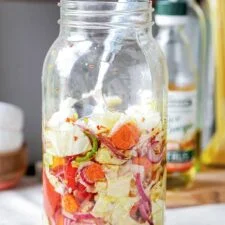
These quick Chinese-style pickled vegetables combine crisp cabbage, cauliflower, carrot and peppers in a sweet, tangy, gently spicy rice-vinegar brine. They add crunch and bright flavour to salads, sandwiches and other meals.
Ingredients
- 1red pepper, cored, deseeded and cut into 3.8 cm chunks
- 250 g (2 cups)cauliflower, cut into bite-sized chunks
- 1 mediumcarrot, peeled and cut into 3.8 cm chunks
- 180 g (2 cups)cabbage, chopped into bite-sized pieces
- 1jalapeño pepper, seeds discarded
- ½red onion, sliced into thin half-moons
- 1 teaspoonsalt
- 480 ml (2 cups)Nakano Citrus Seasoned Rice Vinegar
- 1 teaspoonred pepper flakes
- 3½ tablespoonsgranulated sugar
- 1 teaspoonkosher salt
Instructions
- 1
Dissolve the sugar
Put all the pickling-juice ingredients in a pan and warm over low heat until the sugar has dissolved. Transfer the liquid to a bowl and leave it to cool to room temperature.
- 2
Pack and chill
Put the vegetables in a pickling jar, or divide them between two small jars if needed, and pour the cooled pickling juice over them. Press the vegetables down so they are submerged, seal the jar or jars and refrigerate for 2–3 hours. They will remain crunchy and only mildly tangy; for a stronger flavour, leave them for a further 1–2 days.
What are spicy pickled vegetables?
Pickled vegetables are produce preserved and flavoured in a seasoned acidic liquid. This Chinese-style version is a quick refrigerator pickle rather than a long-fermented one, so it is ready to taste after a few hours.
The mix of crisp vegetables, citrus-seasoned rice vinegar, sugar and chilli gives the recipe a balance of tang, sweetness and heat. Cutting the vegetables into substantial pieces helps them keep their crunch.
Nutrition and macros by portion
The nutrition label shows one serving as written: 45 calories, 1g protein, 11g carbs, 0g fat.
| Portion | Adjustment | kcal | Protein | Carbs | Fat |
|---|---|---|---|---|---|
| Lighter | Use less sugar | 31 kcal | 1g | 7g | 0g |
| This serving | As written | 45 kcal | 1g | 11g | 0g |
| Hungry | Serve a larger portion | 68 kcal | 2g | 16g | 0g |
The carbohydrates mainly come from the sugar and vegetables, while the vinegar and vegetables contribute little fat and the recipe contains only a small amount of protein. Pair a serving with a protein-rich main and a grain or other filling side to make a more rounded plate.
The vegetable mix
Cabbage and cauliflower: these make up the bulk of the jar and catch the brine in their folds and florets. Keep the pieces bite-sized so they are easy to serve.
Pepper, carrot and onion: these add colour and a mix of crisp textures. Cut them to a similar size where practical so they are easy to pack and eat.
Jalapeño and flakes: the jalapeño brings a fresh pepper flavour, while the flakes add extra heat. The recipe removes the jalapeño seeds, so the heat remains adjustable to taste.
Making the pickling juice
Low heat: warm the vinegar, sugar and seasonings gently until the sugar dissolves. There is no need to boil the liquid.
Cool first: let the brine come to room temperature before pouring it over the vegetables. This helps keep the quick pickle crisp rather than exposing the vegetables to hot liquid.
Packing the jar
Fit the vegetables snugly into the jar or divide them between two small jars. Pour in enough brine to cover them, then press the pieces down beneath the liquid.
Keep the vegetables submerged while they chill so the brine can season them evenly. Use a clean utensil when serving.
Choosing the pickle time
After 2–3 hours in the fridge, the vegetables are still crunchy and have a gentle tang. This shorter rest works well when you want them as a crisp, fresh-tasting topping.
For a stronger, more pronounced flavour, refrigerate them for a further 1–2 days. Taste as they sit, since the seasoning develops with time.
Serving ideas
Add a forkful to a sandwich or salad for sharpness and crunch, or serve the vegetables alongside a savoury meal. They can also be used as a bright topping for rice bowls.
Drain the portion lightly before serving if you do not want extra brine in your dish. A little of the liquid can be added to a salad dressing for a tangy note.
Recipe notes & tips
- Cut the vegetables into pieces that fit easily into your jar.
- Use two small jars if one jar will not hold the vegetables without crowding.
- Warm the brine only until the sugar dissolves.
- Let the pickling liquid cool fully before adding it to the vegetables.
- Press the vegetables beneath the brine before sealing the jar.
- Taste after 2–3 hours, then leave longer if you prefer a stronger pickle.
Variations
- Milder heat: reduce the red pepper flakes for a gentler pickle.
- More heat: leave some jalapeño seeds in for a hotter result.
- Extra crunch: add other firm vegetables cut into bite-sized pieces.
- Sweeter brine: add a little more sugar and dissolve it fully over low heat.
- Salad topping: chop the drained vegetables more finely before adding them to a salad.
Common mistakes to avoid
- Boiling the brine: the recipe only needs gentle heat to dissolve the sugar, so keep the pan over low heat.
- Adding hot liquid: cool the pickling juice to room temperature before pouring it over the vegetables.
- Leaving vegetables above the brine: press them down so they are submerged.
- Packing one jar too tightly: divide the vegetables between two small jars if needed.
- Expecting a deep pickle straight away: chill for a further 1–2 days for a stronger flavour.
How to store
Keep the sealed jars refrigerated and use clean utensils to remove portions. For best quality, aim to eat the vegetables within about a week.
Frequently asked questions
How soon can I eat these pickled vegetables?
They can be eaten after 2–3 hours in the fridge. For a stronger flavour, leave them for another 1–2 days.
Will the vegetables stay crunchy?
They are intended to remain crunchy, especially after the shorter chilling time. Cutting them into substantial pieces and cooling the brine before use helps preserve that texture.
Can I make the pickles less spicy?
Yes. Use fewer red pepper flakes and make sure the jalapeño seeds are removed, as specified in the recipe.
Do the vegetables need to be covered by the brine?
Yes. Press them down after pouring in the liquid so they are submerged.
Can I use one large jar?
Yes, if it fits all the vegetables with room for the brine to cover them. Otherwise, divide them between two small jars.
Cook it from the original
This recipe comes from pickledplum.com. Their page has the author’s own photos, notes and tips — the best place to cook it from.
Open the recipe on pickledplum.com