
Chicken Katsu チキンカツ
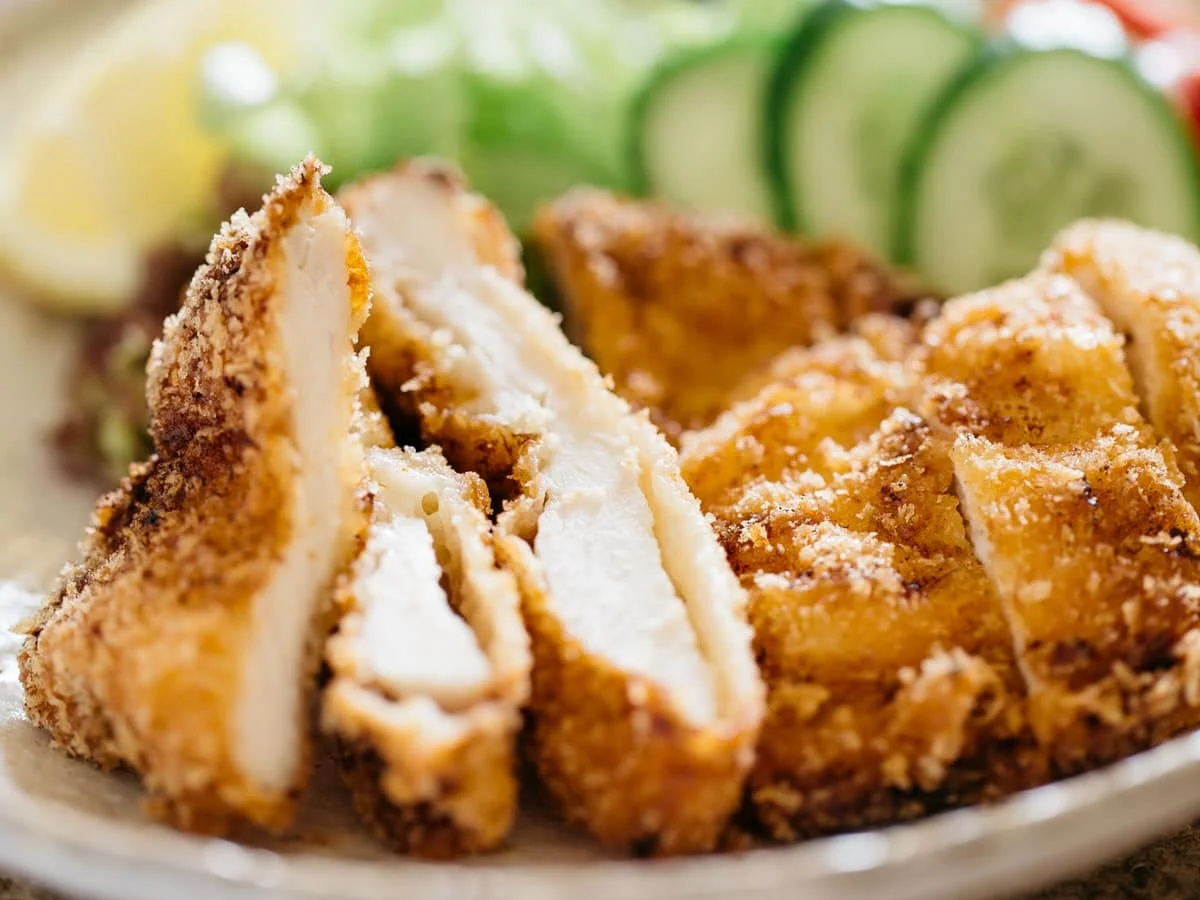
Chicken katsu is a Japanese breaded chicken dish, here marinated with shio koji and coated in crisp panko. It makes a satisfying meal with fresh salad leaves and lemon, and the shallow thickness helps the chicken cook quickly.
Ingredients
- 1chicken breast
- 30 ml (2 tbsp)shio koji
- 2.5 ml (½ tsp)garlic powder
- about 32 g (4 tbsp)plain flour
- 1 large egg (about 50 g)egg
- 15 ml (1 tbsp)mayonnaise
- 60 ml (¼ cup)water
- about 120 g (2 cups)panko breadcrumbs
- 750 mloil, for deep-frying
- about 60 g (2 cups)green salad leaves, to serve
- ¼ lemon, sliced, to servelemon
Instructions
- 1
Prepare the chicken
Trim the chicken breast, then slice it horizontally to make it half as thick as before.
- 2
Add the marinade
Put the chicken in a resealable bag. Add 30 ml (2 tbsp) shio koji and 2.5 ml (½ tsp) garlic powder.
- 3
Massage the chicken
Seal the bag and massage the shio koji and garlic powder into the chicken.
- 4
Chill for 30 minutes
Refrigerate the chicken for 30 minutes to marinate.
- 5
Remove the marinade
Take the chicken out of the bag and remove the shio koji and garlic powder mixture from its surface.
- 6
Mix the batter
Crack the egg into a medium-sized bowl, then add 60 ml (¼ cup) water and 15 ml (1 tbsp) mayonnaise. Mix well, add the flour and combine.
- 7
Coat in panko
Dip the chicken in the batter to coat it, then cover it thoroughly with panko breadcrumbs.
- 8
Check the oil
Heat the oil in a frying pan. Drop in a small piece of panko: the oil is ready when it sinks partway, then rises to the surface with small bubbles around it.
- 9
Fry the chicken
Deep-fry the coated chicken for about 2 minutes on one side. Carefully turn it over and fry for another 2 minutes.
- 10
Check for doneness
Lift the chicken from the oil with wooden chopsticks. The recipe describes a slight vibration through the chopsticks when the meat is cooked.
- 11
Slice into pieces
Cut the chicken into pieces about 2 cm wide, particularly if serving it to eat with chopsticks.
- 12
Serve with salad
Serve with the green salad leaves and sliced lemon.
What is chicken katsu?
Katsu is a Japanese style of breaded and fried cutlet, commonly made with chicken or pork. This version uses chicken breast, shio koji marinade and panko for a crisp coating.
The chicken is sliced thinner before frying, helping it cook in a short time. Salad leaves and lemon bring a fresh contrast to the crunchy coating.
Nutrition and macros by portion
The nutrition label shows one serving as written: 857 calories, 22g protein, 57g carbs, 60g fat.
| Portion | Adjustment | kcal | Protein | Carbs | Fat |
|---|---|---|---|---|---|
| Lighter | Use less frying oil | 600 kcal | 15g | 40g | 42g |
| This serving | As written | 857 kcal | 22g | 57g | 60g |
| Hungry | Add rice on the side | 1286 kcal | 33g | 86g | 90g |
The panko, flour and batter contribute most of the carbohydrates, while the frying oil and mayonnaise are the main sources of fat. The chicken provides the protein. Serve with plenty of salad leaves, or add a modest portion of rice if you want a more filling plate.
Why marinate with shio koji?
Shio koji is a salty, fermented rice seasoning used here with garlic powder to flavour the chicken. The recipe gives the meat 30 minutes in the fridge to take on the marinade.
Remove the marinade mixture from the surface before coating, as directed. This helps the batter cling to the chicken rather than sitting on a wet coating.
Building the coating
Batter: The egg, water, mayonnaise and flour are mixed together to make the layer that holds the crumbs in place. Combine the wet ingredients first, then mix in the flour.
Panko: Coat the chicken thoroughly so the surface is covered all over. Pressing the crumbs gently onto the batter helps avoid bare patches.
Getting the oil ready
The recipe checks the oil with a small piece of panko rather than giving a numerical temperature. It should sink partway and then rise with small bubbles around it.
Use care when adding the chicken and turning it, as the oil is hot. Keep the chicken in the pan for about 2 minutes per side as specified.
Checking the chicken
The method suggests feeling a slight vibration through wooden chopsticks when lifting the chicken from the oil. Since that cue can be difficult to judge, check that the thickest part is fully cooked before serving.
If you have a food thermometer, use it to check the centre has reached a safe temperature for chicken. Avoid relying on the coating’s colour alone.
Serving the katsu
Slice the chicken into pieces about 2 cm wide, then serve it with the salad leaves and lemon. The lemon can be squeezed over the crust just before eating.
For a more substantial plate, serve alongside rice or another simple side. Keep any extra salad separate until serving so it stays fresh.
Recipe notes & tips
- Slice the breast to an even thickness so it fries at a similar rate throughout.
- Massage the shio koji and garlic powder into the chicken before chilling.
- Remove the marinade mixture from the chicken before dipping it in batter.
- Check the oil with a small piece of panko before adding the chicken.
- Turn the chicken carefully after about 2 minutes on the first side.
- Serve the lemon alongside the katsu so it can be squeezed over just before eating.
Variations
- Add curry sauce: Serve the sliced katsu with Japanese-style curry sauce.
- Serve with rice: Add steamed rice for a more substantial meal.
- Use pork: Replace the chicken breast with a thin pork cutlet.
- Add cabbage: Serve shredded cabbage alongside the salad leaves.
- Season the crumbs: Mix a little extra garlic powder into the panko before coating.
Common mistakes to avoid
- Uneven thickness: Slice the breast evenly so thinner areas do not cook much faster.
- Wet surface: Remove the marinade mixture before battering so the coating can adhere.
- Patchy coating: Cover the chicken thoroughly with batter and panko before frying.
- Oil not ready: Test with a panko crumb and wait for it to rise with small bubbles.
- Rough turning: Turn the chicken carefully to keep the crumb coating intact.
- Guessing doneness: Check the thickest part is fully cooked rather than judging by colour alone.
How to store
Refrigerate leftover chicken promptly in a covered container and eat within 2 days. Reheat in an oven or air fryer until piping hot to help crisp the coating; the crumb may soften in a microwave. Store salad leaves separately.
Frequently asked questions
Can I marinate the chicken for longer than 30 minutes?
The recipe specifies 30 minutes. If preparing ahead, keep the chicken covered in the fridge and remove the marinade mixture from the surface before battering.
How can I tell when the oil is ready?
Drop in a small piece of panko. It should sink partway, then float back up with small bubbles around it.
How long should I fry the chicken?
Fry it for about 2 minutes on one side, then carefully turn it and fry for another 2 minutes. Check the thickest part is fully cooked before serving.
Can I prepare the katsu in advance?
You can marinate the chicken ahead, but coat and fry it close to serving for the crispest result. Keep marinating chicken refrigerated.
What can I serve with chicken katsu?
This recipe serves it with green salad leaves and sliced lemon. Rice is another straightforward side if you want a fuller meal.
Cook it from the original
This recipe comes from chopstickchronicles.com. Their page has the author’s own photos, notes and tips — the best place to cook it from.
Open the recipe on chopstickchronicles.com