
Red Braised Pig Trotter
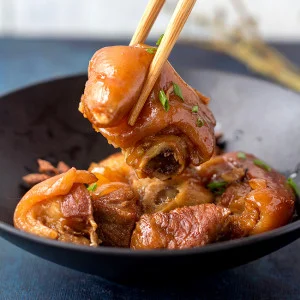
Red-braised pig trotter is a Chinese comfort dish with tender pieces of trotter coated in a savoury, lightly sweet sauce. The two-stage cooking softens the meat first, then reduces the cooking liquid with soy, spices and caramelised sugar.
Ingredients
- 2pig trotters, hair removed and cut into bite-sized chunks
- 1/2 tablespoonginger slices
- as neededwater
- 1spring onion
- 5Sichuan peppercorns
- 2 tablespoonscooking wine
- 1 tablespooncrystal sugar
- 1 tablespooncooking oil
- 2dried chillies
- 5ginger slices
- 2spring onions
- 1/2 teaspoonSichuan peppercorns
- 2bay leaves
- 1/2 tablespoonstar anise
- 1 teaspoonsalt
- 1 tablespoonlight soy sauce
- 1 teaspoondark soy sauce
Instructions
- 1
Clean the trotters
Cut the trotters into small sections. Rinse them with clean water and boiling water, carefully remove any remaining hairs, then leave them to drain.
- 2
Blanch and cook
Bring a large pot of water to the boil and cook the trotters for 2–3 minutes. Take them out and rinse under running water to remove as much of the strong smell as possible. Put them in a pressure cooker, electric cooker or pot, cover with enough water, and add the ginger slices, spring onion, Sichuan peppercorns and cooking wine. Cook until a chopstick can be inserted into the meat; cook for longer if you prefer it softer. Lift out the trotters and reserve the cooking liquid as stock if desired.
- 3
Make sugar colour
Heat 1 tablespoon of oil in a wok and add the crystal sugar. Stir continuously until it melts and large bubbles appear. Carefully pour in around 1 cup of hot water and mix well, keeping away from the wok as you add it. Alternatively, add the sugar directly to the clay pot and skip the oil; this changes the colour, not the taste.
- 4
Braise the trotters
In a clay pot, deep saucepan or wok, fry the ginger slices and remaining spices for 1–2 minutes, until fragrant. Add the trotters and enough of the reserved cooking liquid to almost cover them. Add the sugar colour and both soy sauces. Cook over high heat with the lid off until large bubbles form and the sauce is almost reduced.
- 5
Finish and serve
Scatter over some spring onion and serve warm.
What is red-braised pig trotter?
Red-braising is a Chinese cooking style in which ingredients simmer in a richly coloured sauce, commonly seasoned with soy and aromatics. Pig trotters suit the method because their connective tissue softens during cooking and gives the finished sauce a glossy, coating quality.
This version cooks the trotters until tender before reducing them with sugar, soy, ginger and spices. That two-stage approach helps soften the meat before the sauce is concentrated.
Nutrition and macros by portion
The nutrition label shows one serving as written: 442 calories, 1g protein, 9g carbs, 5g fat.
| Portion | Adjustment | kcal | Protein | Carbs | Fat |
|---|---|---|---|---|---|
| Lighter | Use less sauce | 309 kcal | 1g | 6g | 4g |
| This serving | As written | 442 kcal | 1g | 9g | 5g |
| Hungry | Serve with extra rice | 663 kcal | 2g | 14g | 8g |
The trotters provide most of the protein and fat, while the crystal sugar supplies most of the carbohydrates; the cooking oil and soy sauces also contribute to the dish's fat and sodium. Balance a serving with steamed greens and rice, adjusting the rice portion to suit the rest of your meal.
Clean and blanch the trotters
Hair removal: inspect the cut pieces carefully and remove any remaining hairs before cooking. Rinsing and blanching help prepare the trotters for the longer cook.
Blanching: boil the pieces for 2–3 minutes, then rinse them under running water as directed. This brief step is intended to clear away some of the strong smell before the braise.
Cook until tender
First cook: use a pressure cooker, electric cooker or ordinary pot, adding enough water to cover the trotters along with the ginger, spring onion, peppercorns and cooking wine. The recipe does not specify a cooking time for this stage, so use the stated chopstick test to judge tenderness.
Texture: the trotters are ready for the braise when a chopstick can be inserted into the meat. Cook them longer at this stage if you want a softer result.
Build the braising sauce
Sugar colour: stir the crystal sugar in oil until it melts and large bubbles appear, then carefully add around 1 cup of hot water. Keep your face and hands back from the wok when adding the water.
Spice base: fry the ginger and remaining spices for 1–2 minutes until fragrant before adding the trotters. This brief fry releases their aroma into the oil.
Reduce to a glaze
Liquid level: add enough reserved cooking liquid to almost cover the trotters, then stir in the sugar colour and soy sauces. Keeping the pot uncovered lets the sauce reduce.
Doneness: the recipe describes large bubbles and a nearly dried-up sauce as the cue to finish. Keep an eye on the pot as it reduces so the sauce does not catch.
Serve it warm
Garnish: scatter spring onion over the finished trotters just before serving. The fresh onion adds a contrasting flavour to the sweet-savoury braising sauce.
On the plate: serve with steamed rice to make a meal, or add a simply cooked green vegetable alongside. Both let the rich sauce remain the focus.
Recipe notes & tips
- Cut the trotters into evenly sized pieces so they cook at a similar rate.
- Check carefully for hairs after rinsing and before blanching.
- Reserve the cooking liquid for the braise, as the recipe uses it to cover the trotters almost completely.
- Stir the sugar continuously while it melts to help it colour evenly.
- Add the hot water to the melted sugar carefully, keeping back from the wok.
- Watch closely during the uncovered reduction, especially as the sauce nears the bottom of the pot.
Variations
- Skip the sugar colour: add the crystal sugar straight to the clay pot and omit the oil, as described in the method.
- Adjust the heat: use fewer dried chillies for a milder result.
- Change the cooking pot: use a deep saucepan or wok if you do not have a clay pot.
- Serve with rice: spoon the reduced sauce over steamed rice alongside the trotters.
- Add greens at the table: serve a simply cooked green vegetable with the braise.
Common mistakes to avoid
- Leaving hairs behind: inspect the trotters carefully and remove any remaining hairs before cooking.
- Skipping the rinse after blanching: rinse the pieces under running water after their 2–3-minute boil.
- Pouring water too close: keep away from the wok when adding hot water to the melted sugar.
- Adding too much cooking liquid: use only enough to almost cover the trotters for the braising stage.
- Covering the pot during reduction: leave the lid off so the sauce can reduce as directed.
- Stopping before the meat is tender: check that a chopstick can be inserted before moving on to the braise.
How to store
Refrigerate leftovers in a covered container once cooled, and use within 3 days. Reheat gently in a saucepan with a splash of water until piping hot throughout.
Frequently asked questions
Can I cook the trotters without a pressure cooker?
Yes. The method also allows for an electric cooker or an ordinary pot. Use the chopstick test to check tenderness, as the recipe does not give a fixed cooking time for this stage.
How do I know when the trotters are tender?
A chopstick should insert into the meat. Cook for longer if you prefer the trotters softer.
Do I have to make the sugar colour?
No. The method says you can add the sugar directly to the clay pot and omit the oil. This affects the colour rather than the taste.
Can I use another pot instead of a clay pot?
Yes. A deep saucepan or wok can be used for the braising stage.
What should I do with the first cooking liquid?
Reserve it if you like; the method suggests keeping it as stock and uses some of it to almost cover the trotters during braising.
What should I serve with red-braised pig trotter?
Steamed rice is a practical accompaniment for the sauce. A simply cooked green vegetable also works alongside the rich braise.
Cook it from the original
This recipe comes from chinasichuanfood.com. Their page has the author’s own photos, notes and tips — the best place to cook it from.
Open the recipe on chinasichuanfood.com