
Cantonese Style Braised Pork Belly with Arrowhead Root
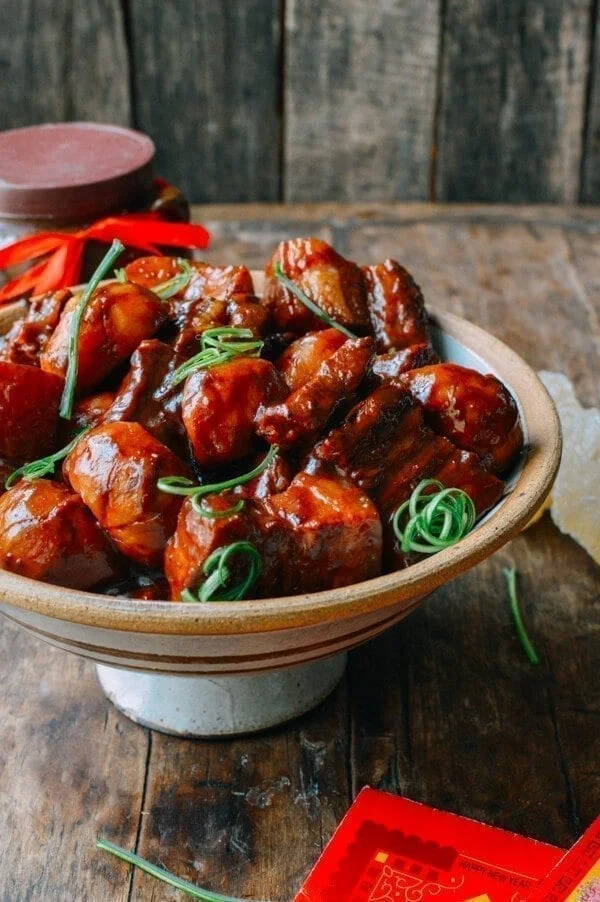
This Cantonese-style braise pairs tender pork belly and earthy arrowhead roots in a savoury, lightly sweet sauce. It is a comforting festive dish often served at Chinese New Year, and most of the cooking happens gently in one wok or pot.
Ingredients
- 1 kg (2 pounds)pork belly
- 10arrowhead roots (or 2–3 large potatoes)
- 30 ml (2 tablespoons)oil
- 20 g (⅔ oz)rock sugar
- 2 pieces, plus 15 ml (1 tablespoon) of the liquid from the jarred fermented bean curd (sometimes labelled bean cheese)
- 60 ml (¼ cup)Shaoxing wine
- 7.5 ml (1½ teaspoons)dark soy sauce
- 1.2 litres (5 cups)water
Instructions
- 1
Blanch the pork
Cut the pork belly into chunks about 2 cm × 4 cm (0.75 × 1.5 inches). Bring a large pot of water to a simmer, blanch the pork just until it turns opaque, then drain, rinse and set aside.
- 2
Prepare the roots
Trim the tops and bottoms from the arrowhead roots and peel them. Put each peeled root straight into a bowl of cold water to prevent discolouration. If using potatoes, leave them whole for now; they will be added later because they cook faster.
- 3
Start the braise
When ready to cook, remove the arrowhead roots from the water and cut each in half. Heat the oil in a wok over low heat, add the rock sugar and let it melt slowly. Add the fermented bean curd and its liquid, stir for 1 minute, then add the blanched pork and arrowhead roots. If using potatoes, do not add them yet.
- 4
Add the liquids
Raise the heat to medium and mix everything well. Add the Shaoxing wine, dark soy sauce and 475 ml (2 cups) of water. Stir, cover the wok and simmer over medium-low heat.
- 5
Simmer until tender
Check the wok every 5–10 minutes. As the liquid evaporates, add more water 240 ml (1 cup) at a time and replace the lid. Continue until the pork is fork-tender and the sauce is thick enough to coat it. The recipe uses 1.2 litres (5 cups) of water in total and takes about 1 hour 15 minutes to cook the pork and arrowhead roots. If using potatoes, cut them into chunks and stir them in after the pork has cooked for about 45 minutes.
- 6
Reduce the sauce
If the pork is tender but there is still a lot of visible liquid, remove the lid and raise the heat to medium-high. Stir constantly until the sauce has reduced to a gravy-like consistency.
What is Cantonese braised pork belly?
慈菇焖腩肉 is a Cantonese braise of pork belly and arrowhead root, a dish associated with Chinese New Year meals. The slow simmer lets the pork become tender while the root absorbs the savoury cooking liquid.
This version builds flavour with red fermented bean curd, Shaoxing wine, dark soy and a little rock sugar. The result is a glossy, rich sauce rather than a heavily spiced one.
Nutrition and macros by portion
The nutrition label shows one serving as written: 555 calories, 11g protein, 4g carbs, 64g fat.
| Portion | Adjustment | kcal | Protein | Carbs | Fat |
|---|---|---|---|---|---|
| Lighter | More arrowhead, less pork | 389 kcal | 8g | 3g | 45g |
| This serving | As written | 555 kcal | 11g | 4g | 64g |
| Hungry | Larger pork portion | 833 kcal | 17g | 6g | 96g |
The pork belly provides most of the fat and protein, while the arrowhead roots or potato contribute most of the carbohydrates. Serve a measured portion with steamed greens and rice if you want a more balanced plate; the rice adds further carbohydrates.
Choosing the main ingredients
Pork belly: its layers of meat and fat give the braise its characteristic richness. Cut it into similarly sized chunks so they cook at a similar pace.
Arrowhead roots: peel them and keep them in cold water until you are ready to cut and cook them. Potatoes are an alternative, but they go into the wok later because they soften more quickly.
Building the flavour base
Rock sugar: melt it slowly over low heat before adding the fermented bean curd. Gentle heat helps it dissolve without scorching.
Fermented bean curd: mash or stir the pieces into the oil and their jar liquid for a minute, then mix them through the pork. It supplies much of the braise’s deep, savoury character.
Why blanch the pork first?
Blanching the pork just until it turns opaque is a quick preparation step before the longer braise. Drain and rinse it as directed, then add it to the wok with the roots.
Keep the first water at a simmer rather than a vigorous boil, and avoid blanching the pork for longer than needed. The recipe calls for this brief blanch, not a long pre-cook.
Managing the simmer
Covered simmer: use medium-low heat and check the wok every 5–10 minutes. Add water a cup at a time as the liquid evaporates, replacing the lid each time.
Potato timing: if substituting potatoes, wait until the pork has cooked for about 45 minutes before adding the cut chunks. This helps them keep their shape during the remaining braising.
How to tell when it is ready
Tender pork: test a chunk with a fork; it should be easy to pierce. The recipe estimates about 1 hour 15 minutes for the pork and arrowhead roots, though the fork test is the useful cue.
Coating sauce: the liquid should cling to the pork. If the meat is tender but the sauce is still thin, uncover the wok and stir constantly over medium-high heat until it has a gravy-like consistency.
Serving the braise
Serve the pork and roots with some of the reduced sauce spooned over them. Plain steamed rice makes a simple accompaniment and helps balance the richness.
A lightly dressed green vegetable can add freshness alongside the braise. Keep the sides uncomplicated so the fermented bean curd sauce remains the main flavour.
Recipe notes & tips
- Keep peeled arrowhead roots submerged in cold water until you are ready to cook them.
- Melt the rock sugar slowly over low heat so it does not scorch.
- Check the wok every 5–10 minutes and top up the water as it evaporates.
- Add water a cup at a time rather than pouring in all the remaining water at once.
- Use the fork test to judge the pork, then reduce the sauce separately if needed.
- If using potatoes, add them after about 45 minutes of cooking the pork.
Variations
- Use potatoes: replace the arrowhead roots with 2–3 large potatoes and add them after the pork has cooked for about 45 minutes.
- Make it less rich: serve smaller pieces of pork belly with a larger share of the roots.
- Add greens: serve with steamed or quickly blanched greens on the side for freshness.
- Serve with rice: spoon the sauce over plain steamed rice for a more substantial meal.
Common mistakes to avoid
- Scorching the sugar: keep the heat low and let the rock sugar melt gradually.
- Adding potatoes too early: wait until the pork has cooked for about 45 minutes so the potatoes do not overcook.
- Letting the wok dry out: check every 5–10 minutes and add water a cup at a time.
- Leaving the sauce too thin: once the pork is tender, uncover the wok and reduce the liquid while stirring.
- Reducing without stirring: stir constantly over medium-high heat so the sauce does not catch on the wok.
How to store
Refrigerate leftovers in a covered container and use within 3 days. Reheat gently in a covered pan or wok, adding a splash of water if the sauce has thickened too much.
Frequently asked questions
Can I use potatoes instead of arrowhead roots?
Yes. Use 2–3 large potatoes, cut them into chunks, and add them after the pork has cooked for about 45 minutes.
Where can I find arrowhead roots?
Look for them in Chinese or other East Asian grocery shops, particularly around the festive season. If you cannot find them, the recipe gives potatoes as an alternative.
What is red fermented bean curd?
It is a fermented bean curd product sold in jars and may be labelled bean cheese. Use the two pieces and include the specified tablespoon of jar liquid.
How do I know the pork is tender?
It is ready when a fork pierces the pork easily. If it is still firm, continue simmering and add water as needed.
What if the sauce is still watery?
Once the pork is fork-tender, uncover the wok and cook over medium-high heat, stirring constantly, until the sauce becomes thick enough to coat the pork.
Can I make this ahead?
Yes. Refrigerate the cooked braise in a covered container and reheat it gently before serving. Add a little water if the sauce needs loosening.
Cook it from the original
This recipe comes from thewoksoflife.com. Their page has the author’s own photos, notes and tips — the best place to cook it from.
Open the recipe on thewoksoflife.com