
Saengseon Jjim (Baked Fish)
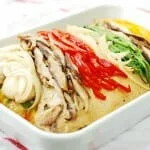
Saengseon jjim is a Korean-style baked fish dish layered with colourful vegetables and a savoury broth-based sauce. Baking the fish between the vegetables keeps it tender while making a generous, colourful meal for the table.
Ingredients
- 680–1,134 g (1.5–2.5 lb)fresh white fish fillets, such as haddock, tilapia, cod or flounder
- ½ largered bell pepper
- ½ largeyellow bell pepper
- 170 g (6 oz)fresh minari (water dropwort; or ½ green bell pepper or a few green chilli peppers)
- 113 g (4 oz)fresh shiitake mushrooms
- ½ largeonion
- about 40 g (⅓ cup)plain flour
- 120 ml (½ cup)dashima broth (dried kelp broth, or another flavoured broth)
- 2 teaspoonssoy sauce
- 1 teaspoonminced garlic
- ½ teaspoonginger
- 15 ml (1 tablespoon)lemon juice
- a littleoil, for frying and greasing
- to tastesalt
- to tasteblack pepper
Instructions
- 1
Preheat the oven
Heat the oven to 200°C (400°F).
- 2
Prepare the fish
Clean the fish and pat it dry with a paper towel. Season with salt and pepper, then leave it to one side while you prepare the other ingredients.
- 3
Slice the peppers
Remove the seeds and ribs from both bell pepper halves. Slice each colour thinly.
- 4
Cut the vegetables
Cut the minari into 5 cm (2-inch) pieces. Thinly slice the mushrooms and onion.
- 5
Cook the vegetables
Warm a little oil in a pan over medium-high heat. Stir-fry the onion until translucent, seasoning lightly with salt and pepper, then transfer it to a plate. Cook each colour of pepper separately for 1–2 minutes, just until softened but still crisp, and transfer them to the plate.
- 6
Mix the sauce
Combine the dashima broth, soy sauce, garlic, ginger and lemon juice in a bowl.
- 7
Coat the fish
Dredge the fish fillets in flour one at a time, shaking off any excess.
- 8
Layer the first half
Lightly oil a baking dish. Spread a quarter of the vegetables over the base and lay half the fish on top in a single layer. Add another quarter of the vegetables, then drizzle over half the sauce.
- 9
Bake the fish
Arrange the remaining fish in a single layer on top and drizzle with the rest of the sauce. Loosely cover the dish with aluminium foil and bake at 200°C (400°F) for 20 minutes.
- 10
Finish the bake
Take the dish out of the oven and arrange the remaining vegetables on top, keeping each type separate. Put the foil back loosely over the dish and bake for another 10 minutes.
What is saengseon jjim?
Saengseon jjim means steamed or braised fish in Korean, and the name is used for fish cooked gently with seasonings and other ingredients. This version is oven-baked, with fish layered among vegetables and a light broth-based sauce.
The method works by briefly stir-frying some of the vegetables first, then baking them with the fish. The peppers and minari added towards the end retain their colour and a little crispness.
Nutrition and macros by portion
The nutrition label shows one serving as written: 220 calories, 32g protein, 13g carbs, 4g fat.
| Portion | Adjustment | kcal | Protein | Carbs | Fat |
|---|---|---|---|---|---|
| Lighter | Use less flour and oil | 154 kcal | 22g | 9g | 3g |
| This serving | As written | 220 kcal | 32g | 13g | 4g |
| Hungry | Serve with extra rice | 330 kcal | 48g | 20g | 6g |
The fish supplies most of the protein, while the flour and vegetables contribute carbohydrates; the small amount of cooking oil and the fish provide most of the fat. Serve it with rice for a more substantial meal, or add extra vegetables alongside it to balance the plate.
Choosing the fish
White fish: Haddock, tilapia, cod and flounder are all listed options. Choose fillets of fairly even thickness so they cook at a similar rate.
Amount: The recipe allows a wide range of fish weight. Use a baking dish that holds the fillets and vegetables in layers without packing them too tightly.
Preparing the vegetables
Separate cooking: The onion is softened first, while the peppers are cooked one colour at a time for 1–2 minutes. This keeps the vegetables from being overcooked before they go into the oven.
Minari: Cut the water dropwort into short pieces for easy serving. If it is unavailable, the recipe suggests green bell pepper or a few green chilli peppers instead.
Getting the layers right
Flour coating: Dredge each fillet just before assembling and shake away loose flour. A thin coating is all that is needed; excess flour can make the sauce overly thick.
Layering: Keep the fish in single layers and divide the vegetables and sauce as directed. This helps the sauce reach the fish throughout the dish.
Checking when it is done
Bake time: The fish cooks covered for 20 minutes, followed by another 10 minutes after the remaining vegetables are arranged on top. The recipe does not give a different timing for thinner or thicker fillets, so check the fish before serving.
Doneness: The fish should be opaque and separate easily into flakes at its thickest point. Avoid leaving it in the oven longer than needed, as lean fish can dry out.
Serving the dish
Serve the fish and vegetables straight from the baking dish, spooning some of the broth-like sauce over each portion. The colourful toppings make it easy to portion the vegetables alongside the fish.
Rice is a natural accompaniment for the savoury sauce. For a meal with more vegetables, add a simple cucumber salad or another lightly dressed vegetable side.
Recipe notes & tips
- Pat the fish thoroughly dry so the flour forms a light coating rather than a paste.
- Slice the peppers and onion evenly so they cook at a similar rate.
- Cook the peppers only until just softened, as they continue baking later.
- Use a baking dish large enough to arrange the fish in single layers.
- Keep the foil loose rather than sealing it tightly over the dish.
Variations
- Change the fish: Use any of the suggested white fish fillets that are available.
- Swap the minari: Use half a green bell pepper or a few green chilli peppers instead.
- Try another broth: Replace the dashima broth with another flavoured broth.
- Add more heat: Choose green chilli peppers as the minari substitute.
- Vary the vegetables: Arrange the peppers, mushrooms and onion in separate sections on top.
Common mistakes to avoid
- Wet fish: Pat the fillets dry before seasoning and dredging.
- Heavy flour coating: Shake off excess flour so the sauce does not become pasty.
- Overcooked peppers: Stir-fry them for only 1–2 minutes, keeping them crisp.
- Crowded layers: Use a dish that lets the fish sit in single layers.
- Tightly sealed foil: Cover the dish loosely as directed.
How to store
Refrigerate leftovers in a covered container and eat within 2 days. Reheat gently in a covered oven-safe dish until hot throughout, or warm individual portions in the microwave; avoid prolonged reheating, which can dry out the fish.
Frequently asked questions
Can I use frozen fish?
Yes, but thaw it fully in the refrigerator first and pat it dry before seasoning and coating it in flour.
What can I use instead of minari?
The recipe suggests half a green bell pepper or a few green chilli peppers. The chilli option will make the dish hotter.
Can I use a different broth?
Yes. Dashima broth can be replaced with another flavoured broth, as specified in the ingredients.
How can I tell when the fish is cooked?
Check the thickest part: it should be opaque and flake apart easily. If it is not ready after the stated baking time, continue baking briefly and check again.
Can I prepare the vegetables in advance?
You can slice the vegetables ahead and keep them covered in the refrigerator. For the best texture, stir-fry and assemble them close to baking time.
Cook it from the original
This recipe comes from koreanbapsang.com. Their page has the author’s own photos, notes and tips — the best place to cook it from.
Open the recipe on koreanbapsang.com