
Cheddar Chive Scones
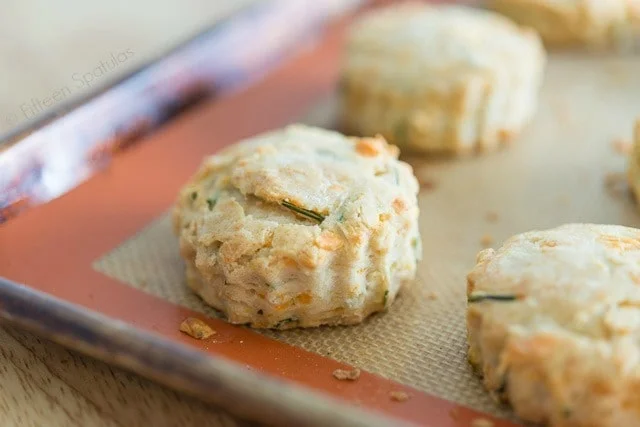
These American-style savoury scones combine sharp cheddar and fresh chives in a tender, cream-rich dough. They come together quickly without special equipment and make an easy addition to brunch, soup or a snack plate.
Ingredients
- 283.5 g (10 oz; 2 cups, measured)plain flour
- 10 ml (2 tsp)baking powder
- 5 ml (1 tsp)sugar
- 2.5 ml (½ tsp)salt
- 142 g (5 oz), gratedcheddar cheese
- 14 g (½ oz)fresh chives
- 270 ml (1 cup + 2 tbsp)double cream
Instructions
- 1
Heat the oven
Preheat the oven to 200°C (400°F). Line a baking tray with baking parchment or a silicone mat.
- 2
Mix the dry ingredients
Whisk together the flour, baking powder, sugar, salt, grated cheddar and chives.
- 3
Add the cream
Make a well in the centre and pour in the cream. Gently bring the dry ingredients into the cream, gradually moistening the mixture. Avoid stirring or working the dough too much, as this can make the scones tough.
- 4
Shape and bake
Shape the dough into a square, then cut it into 12 triangles or use a metal cutter to make 12 pieces. Arrange them on the prepared tray and bake for 15 minutes, until the centre of a scone reaches 88°C (190°F).
What are cheddar chive scones?
Scones are quick breads with roots in the British Isles, while this savoury cheddar-and-chive combination fits naturally into American brunch and baking traditions. They are less sweet than a classic tea-time scone and work just as well alongside a bowl of soup.
Cream brings the dough together, while cheddar adds savoury richness and chives give it a fresh, gently onion-like note. The short mixing method helps keep the finished scones tender.
Nutrition and macros by portion
The nutrition label shows one serving as written: 203 calories, 5g protein, 17g carbs, 12g fat.
| Portion | Adjustment | kcal | Protein | Carbs | Fat |
|---|---|---|---|---|---|
| Lighter | Smaller scone portion | 142 kcal | 4g | 12g | 8g |
| This serving | As written | 203 kcal | 5g | 17g | 12g |
| Hungry | Serve with eggs | 305 kcal | 8g | 26g | 18g |
The flour provides most of the carbohydrates, while cream and cheddar contribute much of the fat; cheddar also supplies some protein. Pair a scone with eggs or a protein-rich soup and vegetables for a more balanced plate.
Why cream works here
Cream: its fat and moisture bring the flour together without needing a separate measure of butter. Add it to the well in the dry mixture, then fold and toss gently until the flour is moistened.
Cheddar: grated cheese spreads through the dough and gives the scones flavour in every bite. Fresh chives add a contrasting herbal note.
Keep the dough gentle
Mixing: stop once the dry ingredients are moistened and the dough can be brought together. Working it heavily can develop the flour and leave the scones firm rather than tender.
Shaping: form the dough into a square with a light touch. Cut 12 triangles or use a metal cutter for 12 pieces, avoiding repeated handling where possible.
Check for doneness
Timing: bake at 200°C (400°F) for 15 minutes as directed. Ovens and scone sizes can vary, so use the recipe's internal temperature cue as well.
Temperature: the centre should reach 88°C (190°F). Let the scones sit briefly after baking so they are easier to handle.
Serve them warm
These scones are good warm on their own, or split and served with a little butter. Their savoury flavour also makes them a useful partner for tomato soup, vegetable soup or a simple salad.
For brunch, serve them with eggs or fresh fruit to make the meal feel more complete.
Cutting the portions
Triangles: cut the square into 12 pieces for a rustic shape. Keep them as even as possible so they bake at a similar rate.
Cutter: a metal cutter makes 12 more uniform pieces. Press straight down rather than twisting, which can compress the edges.
Recipe notes & tips
- Grate the cheddar before you start mixing so it is ready to distribute through the flour.
- Use fresh chives for the brightest flavour.
- Measure the flour by weight for a consistent dough.
- Mix only until the cream has moistened the dry ingredients.
- Arrange the pieces with a little room between them on the lined tray.
- Check the centre temperature after 15 minutes of baking.
Variations
- Sharper cheddar: use a mature cheddar for a more pronounced cheese flavour.
- Extra chives: add more chopped chives for a stronger herbal note.
- Pepper: add a little black pepper to the dry ingredients for gentle warmth.
- Smaller pieces: cut the dough into smaller portions and begin checking them earlier.
- Round scones: use a metal cutter to shape 12 pieces instead of cutting triangles.
Common mistakes to avoid
- Overworking the dough: this can make the scones tough; mix gently and stop as soon as the flour is moistened.
- Uneven pieces: they may bake at different rates; cut the dough into 12 similarly sized portions.
- Skipping the tray lining: the scones may stick; use baking parchment or a silicone mat.
- Judging by colour alone: check that the centre reaches 88°C (190°F) after the 15-minute bake.
- Twisting the cutter: this can compress the edges; press it straight down.
How to store
Keep cooled scones in an airtight container at room temperature for up to 2 days. Reheat briefly in a low oven until warmed through; they can also be frozen and reheated from frozen.
Frequently asked questions
Can I make the dough ahead?
For the best texture, mix and bake the dough shortly before serving. Once baked and cooled, the scones can be stored or frozen.
Can I use a different cheddar?
Yes. Mild or mature cheddar both work; a stronger cheese will give a more noticeable flavour.
How do I know the scones are done?
Bake for 15 minutes at 200°C (400°F) and check that the centre reaches 88°C (190°F).
Can I cut them into triangles?
Yes. Shape the dough into a square and cut it into 12 triangles, or use a metal cutter to make 12 pieces.
What should I serve with them?
Serve them warm with butter, soup or a simple salad. They also fit well on a brunch plate with eggs.
Cook it from the original
This recipe comes from fifteenspatulas.com. Their page has the author’s own photos, notes and tips — the best place to cook it from.
Open the recipe on fifteenspatulas.com