
Easy Chicken Noodle Soup
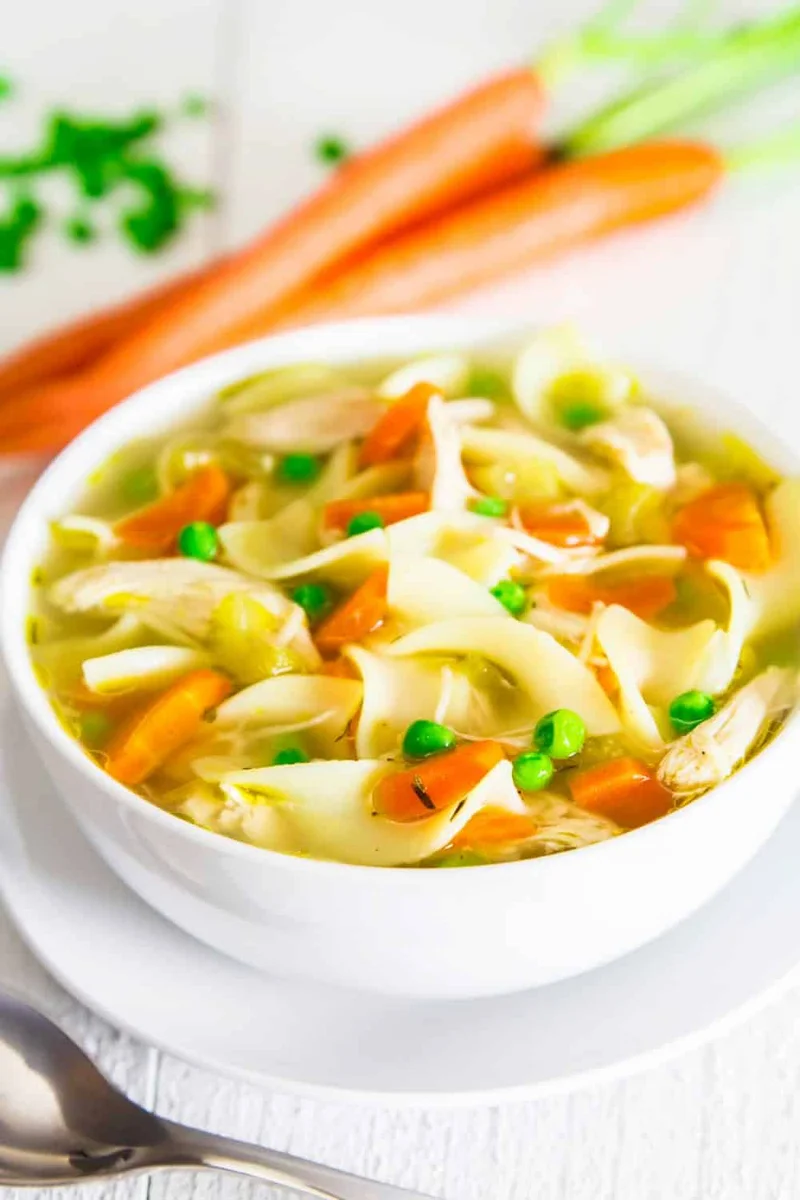
This American-style chicken noodle soup brings together tender chicken, egg noodles and a generous mix of vegetables in a savoury broth. It makes a comforting family meal and is ready in about 45 minutes.
Ingredients
- 30 ml (2 tbsp)olive oil
- 150 g (1 cup)onion, finely chopped
- 256 g (2 cups)carrots, chopped
- 100 g (1 cup)celery, chopped
- 3.8 litres (4 quarts)homemade chicken broth
- 240 g (3 cups)dry egg noodles
- 2.5 ml (1/2 tsp)dried thyme
- 150 g (1 cup)peas
- 420 g (3 cups)shredded chicken breast
- 2.5 ml (1/2 tsp)black pepper
- 10 ml (2 tsp), or to tastesalt
Instructions
- 1
Soften the onion
Heat the olive oil in a large pot over medium-high heat. Add the chopped onion and sauté until translucent.
- 2
Cook the vegetables
Add the carrots and celery and sauté for 5–6 minutes.
- 3
Add the broth
Pour the chicken broth into the pot and cook over medium heat for about 15 minutes.
- 4
Cook the noodles
Carefully add the egg noodles and cook for another 8 minutes, or until al dente.
- 5
Finish the soup
Turn off the heat, then add the dried thyme, peas, shredded chicken, salt and pepper.
What is chicken noodle soup?
Chicken noodle soup is a familiar American comfort food built around chicken, noodles and vegetables in broth. This version pairs carrots and celery with peas for a little extra sweetness and colour.
Cooking the vegetables in the pot before adding broth helps start the soup with a savoury base. Adding cooked, shredded chicken at the end keeps the method straightforward.
Nutrition and macros by portion
The nutrition label shows one serving as written: 243 calories, 23g protein, 19g carbs, 7g fat.
| Portion | Adjustment | kcal | Protein | Carbs | Fat |
|---|---|---|---|---|---|
| Lighter | Use less oil | 170 kcal | 16g | 14g | 5g |
| This serving | As written | 243 kcal | 23g | 19g | 7g |
| Hungry | Larger portion | 365 kcal | 35g | 29g | 11g |
The egg noodles and vegetables provide most of the carbohydrates, while olive oil contributes much of the fat. Chicken breast supplies most of the protein, with some also coming from the broth. Serve it with a green salad or extra vegetables for a balanced plate.
Build a savoury base
Onion: sauté it in olive oil until translucent, rather than letting it brown heavily. This gives the broth a mellow, aromatic starting point.
Carrots and celery: give them 5–6 minutes in the pot so they begin to soften before the broth goes in.
Choose the broth and chicken
Broth: homemade chicken broth gives the soup its main savoury flavour. If yours is already salted, wait until the end before deciding how much extra salt to add.
Chicken: the recipe uses shredded chicken breast, which is added after the noodles cook. This warms it through without asking it to simmer for the full cooking time.
Get the noodles right
Timing: cook the noodles in the broth for about 8 minutes, checking the packet guidance if your noodle shape differs. Stop when they are al dente, with a little bite remaining.
Serving: noodles continue to soften as they sit in hot soup, so serve promptly if you prefer them firm.
Finish with peas and thyme
Peas: they go in with the heat turned off, so they retain their bright colour and gentle texture as they warm in the soup.
Thyme: dried thyme is also added at the end in this method. Stir it through with the chicken, salt and pepper so the seasoning is distributed.
What to serve alongside
A slice of crusty bread or a simple roll is an easy match for the broth. For a fuller meal, serve the soup with a crisp green salad.
Taste the broth before serving and adjust the salt and pepper to suit, especially if the broth was seasoned beforehand.
Recipe notes & tips
- Chop the vegetables to a similar size so they cook at a similar rate.
- Use a large pot to leave room for the noodles and broth to move freely.
- Check the noodles near the end of their cooking time to avoid overcooking them.
- If the broth is salted, taste the soup before adding the full amount of salt.
- Add the peas and chicken after turning off the heat, as directed, to warm them gently.
Variations
- More herbs: Add a little extra dried thyme if you want a stronger herbal note.
- Leafy greens: Stir in a handful of spinach with the peas for another vegetable.
- Different noodles: Use another small pasta shape and cook it until al dente.
- Extra vegetables: Add chopped mushrooms alongside the carrots and celery.
- Fresh finish: Scatter chopped parsley over each bowl just before serving.
Common mistakes to avoid
- Browning the onion too much: Keep the heat at medium-high and sauté only until it turns translucent.
- Skipping the vegetable sauté: Give the carrots and celery their full 5–6 minutes in the pot.
- Overcooking the noodles: Check for al dente texture at about 8 minutes.
- Adding salt too early: Taste the broth first, particularly if it is already seasoned.
- Boiling the chicken at length: Add the shredded chicken after switching off the heat, as the recipe directs.
How to store
Cool leftovers promptly and store them in a covered container in the fridge for up to 3 days. Reheat gently in a saucepan until hot throughout; the noodles may soften as they sit. If making ahead, the noodles are best cooked separately and added when serving.
Frequently asked questions
Can I use shop-bought chicken broth?
Yes. Use the same quantity and check its seasoning before adding the salt.
Can I use cooked chicken from another meal?
Yes, shredded cooked chicken breast works well. Add it with the peas after turning off the heat so it warms through.
How do I know when the noodles are done?
They should be al dente after about 8 minutes: cooked through but still slightly firm when bitten.
Can I make the soup ahead?
You can prepare the broth and vegetables ahead. For the best noodle texture, cook the noodles shortly before serving or keep them separate until then.
Why are my noodles softer in leftovers?
They keep absorbing liquid while stored. Reheat gently, and consider cooking and storing the noodles separately if you expect leftovers.
Cook it from the original
This recipe comes from simplyhomecooked.com. Their page has the author’s own photos, notes and tips — the best place to cook it from.
Open the recipe on simplyhomecooked.com