
Spanish-Style Garlic Shrimp (Gambas al Ajillo)
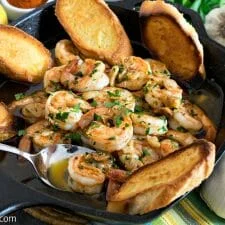
Spanish-style garlic shrimp, or gambas al ajillo, cooks gently in olive oil with sliced garlic, chilli, paprika and a splash of cognac. Serve it hot with crisp bread to catch every drop of the fragrant oil.
Ingredients
- To serveCrusty sliced bread, such as Italian or French bread
- As neededExtra virgin olive oil, for brushing the bread
- 454 g (1 lb)Large uncooked shrimp (16–20 per pound)
- 2.5 ml (½ tsp)Kosher salt
- 5 ml (1 tsp)Paprika
- 240 ml (1 cup)Good-quality extra virgin olive oil
- 60 ml (¼ cup)Fresh garlic, thinly sliced (6–8 good-sized cloves)
- A good pinch, or more to tasteRed pepper flakes
- 30 ml (2 tbsp)Cognac
- 5 ml (1 tsp)Fine fresh lemon zest
- 1.25 ml (¼ tsp)Freshly ground black pepper
- 60 ml (¼ cup)Fresh Italian flat-leaf parsley, minced and divided
Instructions
- 1
Toast the bread
Brush the bread slices with olive oil and brown them on a ribbed grill pan or under the grill for a few minutes. Set aside.
- 2
Prepare the shrimp
Peel the shrimp, leaving the tail pieces attached, and arrange them on a plate.
- 3
Season the shrimp
Sprinkle the salt over the shrimp and leave them for 10 minutes, then add the paprika.
- 4
Warm the oil
Set a cast-iron skillet over low heat and add the olive oil. Let it warm, then add the garlic and red pepper flakes.
- 5
Cook the garlic
Cook over low heat for about 10 minutes, stopping just before the garlic begins to brown.
- 6
Cook the shrimp
Arrange the shrimp in a single layer and raise the heat just above low. Cook for about 6–8 minutes, turning once; they should be starting to turn pink but not fully cooked.
- 7
Finish the sauce
Keep the burner on and add the cognac, lemon zest, black pepper and all but 1 tablespoon of the parsley. Heat for 1 minute, then switch off the burner and leave the shrimp in the mixture for up to 5 more minutes, or until cooked through.
- 8
Serve the shrimp
Transfer the shrimp to a serving bowl, pour the oil mixture from the pan over them and scatter the reserved parsley on top. Serve with the bread for dipping.
What is gambas al ajillo?
Gambas al ajillo is a Spanish tapa of shrimp served in olive oil infused with garlic, often with chilli and parsley. It is associated with Spanish bar food, where a small hot dish is shared with bread.
This version adds paprika, lemon zest and cognac for extra savoury and aromatic notes. Gentle cooking keeps the oil fragrant and gives the bread plenty of flavour to soak up.
Nutrition and macros by portion
The nutrition label shows one serving as written: 569 calories, 24g protein, 4g carbs, 52g fat.
| Portion | Adjustment | kcal | Protein | Carbs | Fat |
|---|---|---|---|---|---|
| Lighter | Use less dipping oil | 398 kcal | 16g | 2g | 36g |
| This serving | As written | 569 kcal | 24g | 4g | 52g |
| Hungry | Add extra bread | 854 kcal | 35g | 5g | 78g |
Most of the energy and fat come from the olive oil, while the shrimp provide most of the protein; the bread contributes carbohydrates. To balance the plate, serve a moderate amount of bread with a crisp salad or vegetables alongside.
Choosing the ingredients
Shrimp: Large shrimp are easy to turn individually and give a generous bite. Keep the tails on as directed; they also make the shrimp easier to pick up.
Olive oil: The oil is a substantial part of the finished dish, so choose one whose flavour you enjoy. Use a little separately to brush the bread.
Garlic and parsley: Thinly sliced garlic flavours the oil as it warms, while fresh parsley brings a bright finish. Keep the parsley divided so some can be added at the end.
Keep the garlic pale
Low heat is important while the garlic and chilli steep in the oil. The garlic should soften and flavour the oil without taking on a deep brown colour, which can make it taste harsh.
Use a skillet that lets the garlic sit in the oil, and keep an eye on it as it cooks for about 10 minutes. If it begins browning early, lower the heat.
Watch the shrimp closely
First stage: The shrimp cook for about 6–8 minutes over slightly-above-low heat, with one turn. At this point, they should be starting to turn pink rather than fully cooked.
Finishing stage: The hot oil mixture continues cooking the shrimp after the burner is switched off. Leave them for up to 5 minutes, checking that they are cooked through but still tender.
Build flavour in stages
The salt rests on the peeled shrimp for 10 minutes before the paprika is added. This gives the seasoning time to cling to the shrimp before they meet the oil.
Cognac, lemon zest and black pepper go in near the end, along with most of the parsley. Heating them for 1 minute adds their flavour without subjecting them to the long, gentle garlic-cooking stage.
Serve with something to dip
The toasted bread is part of the experience: use it to mop up the garlic- and chilli-scented oil. Put the shrimp and sauce on the table while hot, so the oil stays inviting.
For a fuller meal, serve alongside a green salad or simply cooked vegetables. Their freshness offers a contrast to the rich oil.
Recipe notes & tips
- Slice the garlic evenly so the pieces soften at roughly the same rate.
- Pat the peeled shrimp dry if they are wet before seasoning them.
- Keep the shrimp in a single layer so they cook evenly.
- Have the cognac, zest, pepper and parsley ready before the shrimp finish cooking.
- Serve straight from a warm bowl so the oil does not cool too quickly.
Variations
- More chilli: Add extra red pepper flakes for a sharper heat.
- No cognac: Omit it if needed; the garlic and olive oil still make a flavourful sauce.
- Lemon finish: Add a little extra lemon zest at serving for a brighter aroma.
- Herb change: Replace some of the parsley with finely chopped fresh coriander.
- Smokier paprika: Use smoked paprika in place of the paprika for a more pronounced smoky note.
Common mistakes to avoid
- Browning the garlic: It can turn bitter; keep the heat low and stop before it colours.
- Crowding the pan: Shrimp may cook unevenly; use a pan large enough for a single layer.
- Overcooking the shrimp: They can become firm and dry; use the pinking cue and finish them gently off the heat.
- Adding the parsley too early: Its fresh flavour can fade; reserve a tablespoon for the top.
- Skipping the bread: The seasoned oil is a key part of the dish; have toasted slices ready for dipping.
How to store
Refrigerate leftover shrimp and oil in a covered container for up to 2 days. Reheat gently in a pan over low heat just until warmed through; avoid prolonged heating, which can toughen the shrimp. Store the bread separately.
Frequently asked questions
Can I use frozen shrimp?
Yes. Thaw them completely and drain well before peeling and seasoning, so excess water does not dilute the oil.
How can I tell when the shrimp are cooked?
They should be opaque and pink throughout, with a firm but tender texture. Check during the off-heat resting time, since they continue cooking in the hot oil.
Can I make this without cognac?
Yes. Leave it out if you prefer; the dish will still have plenty of garlic, chilli and olive-oil flavour.
What bread works best?
Choose a crusty loaf with slices sturdy enough to dip, such as Italian or French bread. Brown the slices as directed before serving.
Can I prepare the dish ahead?
It is best cooked just before serving, because shrimp are most tender when freshly cooked. You can slice the garlic, zest the lemon and mince the parsley in advance.
Cook it from the original
This recipe comes from afamilyfeast.com. Their page has the author’s own photos, notes and tips — the best place to cook it from.
Open the recipe on afamilyfeast.com