
Homemade Chicken Broth Recipe
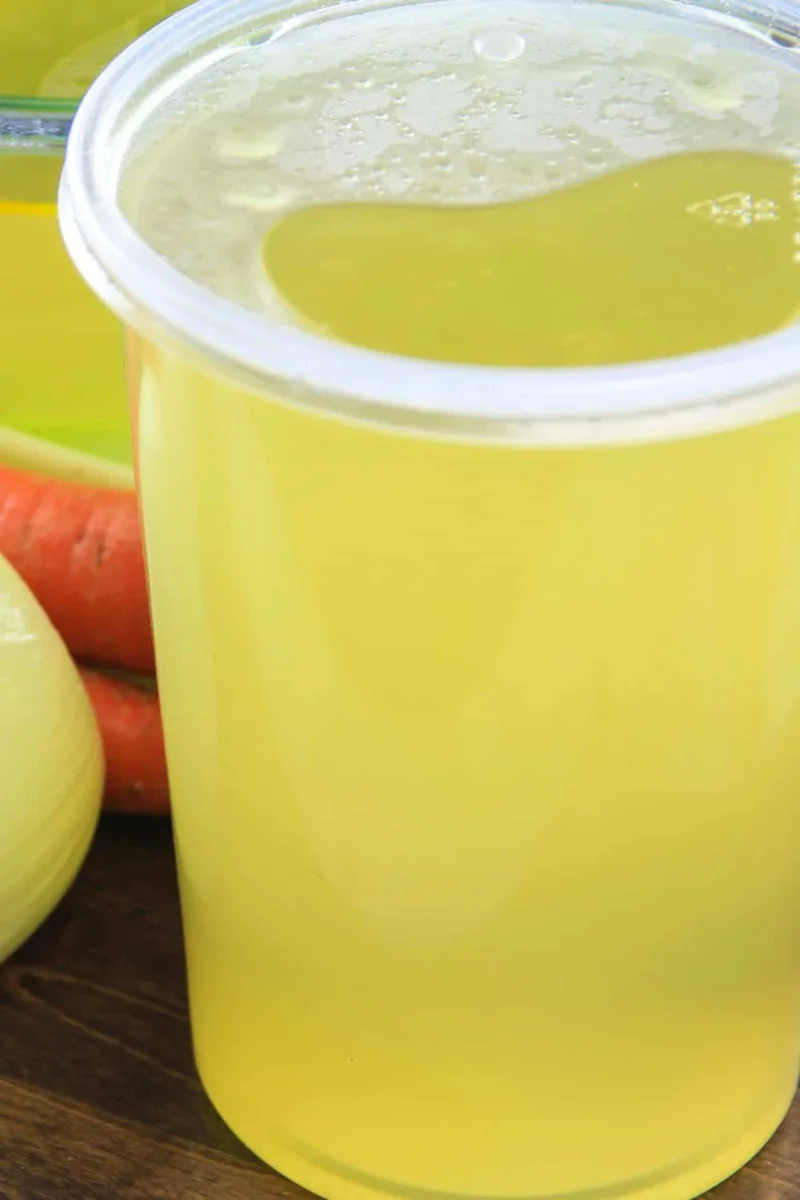
This homemade chicken broth simmers a whole chicken with onions, celery, carrots and garlic for a flavourful base for soups, stews and sauces. Make a batch ahead and freeze it in portions for later cooking.
Ingredients
- 3,360 ml (14 cups)water
- 1whole chicken
- 1½–2onions
- 2 largecelery sticks
- 2 largecarrots
- 4garlic cloves
- 1 tbspsalt
Instructions
- 1
Prepare the ingredients
Peel the vegetables and rinse the chicken. Put them together in a large stockpot.
- 2
Bring to the boil
Add about 3,360 ml (14 cups) of water and 1 tbsp of salt to the pot, then bring it to the boil.
- 3
Skim the surface
As the stock comes to the boil, scum from the chicken will rise to the surface. Skim it off with a mesh sieve.
- 4
Simmer the stock
Once the scum has been removed, cook the stock over low heat for about 2–3 hours.
- 5
Cool and strain
Let the broth cool to room temperature, then transfer it to a large bowl. Strain it through cheesecloth; you can set the cloth in a sieve to help keep it in place.
- 6
Freeze the broth
Pour the stock into plastic containers and store them in the freezer for up to 6 months.
What is chicken broth?
Chicken broth is a savoury liquid made by simmering chicken with vegetables in water. It is a familiar staple in American home cooking, used as a base for soups, stews and sauces.
Whole chicken: this recipe cooks the chicken and vegetables together, giving the broth a rounded savoury flavour. Straining removes the solids for a clear, versatile liquid.
Nutrition and macros by portion
The nutrition label shows one serving as written: 186 calories, 15g protein, 5g carbs, 12g fat.
| Portion | Adjustment | kcal | Protein | Carbs | Fat |
|---|---|---|---|---|---|
| Lighter | Use less skin-on chicken | 130 kcal | 11g | 4g | 8g |
| This serving | As written | 186 kcal | 15g | 5g | 12g |
| Hungry | Serve with extra bread | 279 kcal | 23g | 8g | 18g |
The recipe’s stated nutrition lists 5 g of carbohydrate, 12 g of fat and 15 g of protein per serving; the chicken contributes most of the protein, while the vegetables provide some carbohydrate. Pair a serving with vegetables and a wholegrain side if you want a more complete meal.
Why these ingredients work
Aromatic vegetables: onion, celery, carrot and garlic add gentle sweetness and depth as they simmer. Peeling the vegetables first also makes them ready to go straight into the pot.
Salt: the recipe adds 1 tbsp at the start, so the broth is seasoned as it cooks. If you plan to use it in a strongly seasoned dish, taste the finished broth before adding more salt to that dish.
Skimming and simmering
Skimming: chicken scum rises to the surface as the pot comes to the boil. Remove it with a mesh sieve before lowering the heat.
Low heat: simmer the stock gently for about 2–3 hours after skimming. A steady, gentle cook is easier to manage than a vigorous boil.
Straining for a clean broth
Cheesecloth: strain the cooled broth through cheesecloth to catch the vegetables and other solids. Setting the cloth in a sieve helps support it while you pour.
Room temperature: the method calls for cooling the broth before straining. Avoid leaving it out longer than needed; divide it into shallow containers to help it cool promptly before chilling or freezing.
Ways to use it
Soups and stews: use the broth as the liquid base, adjusting the seasoning to suit the rest of the ingredients. It also works in sauces that call for a savoury cooking liquid.
Serving idea: pair a broth-based soup with bread or a sandwich for a more substantial meal. For a lighter use, serve it as a simple warm broth alongside vegetables.
Recipe notes & tips
- Choose a stockpot large enough to hold the chicken and water without filling it to the brim.
- Keep a mesh sieve nearby so you can skim the surface when the stock first boils.
- Maintain a low simmer for the full 2–3 hours rather than letting the pot boil hard.
- Support the cheesecloth in a sieve to make straining easier to handle.
- Freeze the broth in portions that suit the soups and sauces you usually make.
Variations
- Herb aroma: add a few fresh herbs to the pot if you would like an additional savoury note.
- Peppery broth: add whole peppercorns while the stock simmers for a gentle spice.
- Salt to taste: reduce the salt at the start if you prefer to season the broth when using it.
- Rich finish: chill the broth and lift off the solidified fat before using it for a leaner result.
- Smaller batches: divide the ingredients proportionally and use a smaller pot for less broth.
Common mistakes to avoid
- Hard boiling: a vigorous boil can make the broth cloudy; lower the heat after skimming.
- Skipping the skim: scum can remain in the finished liquid; remove it as it rises at the start.
- Rushing the simmer: the recipe allows about 2–3 hours; give the stock that time to cook.
- Pouring without support: cheesecloth can slip; set it inside a sieve before straining.
- Leaving broth out too long: cool it promptly in shallow containers rather than letting it stand at room temperature for an extended period.
How to store
The recipe recommends freezing the strained broth in plastic containers for up to 6 months. Cool it promptly, refrigerate or freeze it in sealed containers, and reheat only the amount needed until steaming hot.
Frequently asked questions
How long should the broth simmer?
After skimming the scum, simmer it over low heat for about 2–3 hours, as directed in the recipe.
Do I need to skim the broth?
Yes. As the stock comes to the boil, chicken scum rises to the surface; remove it with a mesh sieve before simmering.
Can I strain the broth without cheesecloth?
Cheesecloth is specified for straining. A fine sieve can catch larger solids, but the broth may not be as clear.
How long can I freeze homemade chicken broth?
The recipe gives a freezer storage time of up to 6 months. Use sealed, freezer-safe containers and leave room for expansion.
What can I use the broth for?
Use it as a base for soups, stews and sauces, or wherever a savoury chicken cooking liquid is needed.
Cook it from the original
This recipe comes from simplyhomecooked.com. Their page has the author’s own photos, notes and tips — the best place to cook it from.
Open the recipe on simplyhomecooked.com